
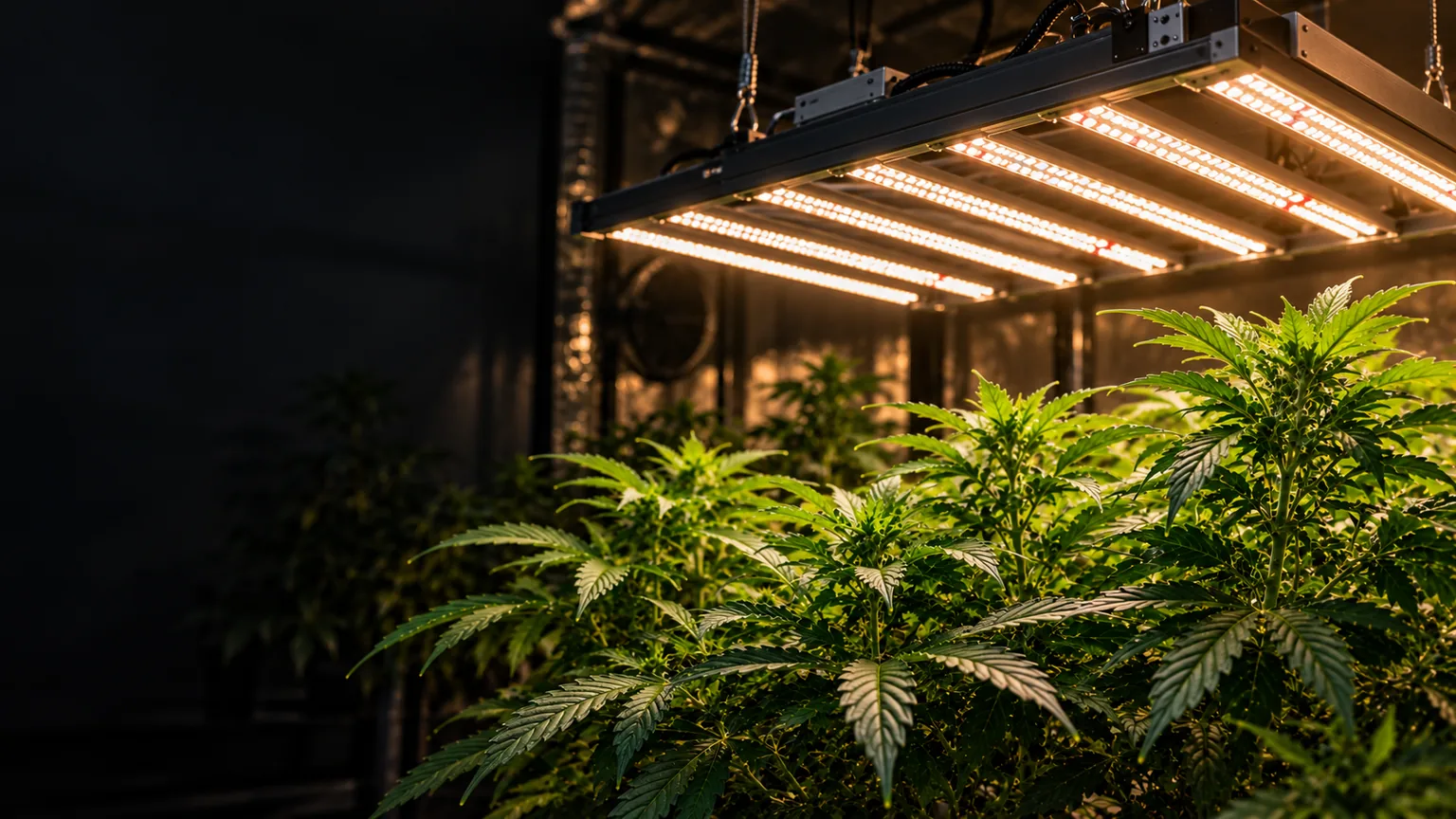
Buy the light you can measure, not the wattage on the box.
A useful LED fixture is one that delivers an appropriate, even spread of usable light over your actual canopy, with dependable cooling, safe mounting and a power draw you can afford. “Full spectrum,” “1000W equivalent,” and promised yields cannot establish those qualities.
Four specifications worth comparing
Measured in µmol/s. Describes the photons the fixture emits, but not how evenly they land across your growing area.
Measured in µmol/m²/s. Request a coverage map at a stated hanging height and test area; check weak edges as well as the bright center.
Measured in µmol/J. Higher efficacy means more plant-usable photons per unit of electrical energy, all else equal.
Check measured input power, not the model name or an “HPS-equivalent” number. Actual watts determine much of the electricity and cooling load.
For qualified fixtures, the DesignLights Consortium Horticultural V4.0 requirements use a minimum PPE of 2.5 µmol/J. That is a qualification threshold, not a promise that a particular lamp will produce more flowers in your room.
Know what you are actually hanging
Two fixtures with similar wattage can perform differently because of optics, diode layout, driver placement and thermal design. The diagram identifies components to inspect before buying.
Check actual input draw, dimming, replaceability, and whether the driver is protected from excess moisture.
Leave the manufacturer's required clearance. LEDs still produce heat that the room must remove.
Look for a suitable spread and even canopy coverage, not only a bright center or advertised diode brand.
Use rated supports and the specified attachment points. Never rely on loose wiring to suspend the fixture.
Confirm dimmer compatibility, timer behavior and practical access after the fixture is installed.
Efficiency and total output answer different questions
Consider two hypothetical fixtures, assuming each reaches its published full-power rating. This arithmetic explains why a higher efficacy number does not automatically mean higher total light output.
Higher total photons, greater input watts. Coverage still depends on fixture shape and hanging distance.
Better energy efficiency but lower total photons. May be a better match for a smaller canopy.
These are illustrative calculations, not tested products, a recommended target, or a yield forecast. Use the complete PPFD map at your chosen height to decide whether either fixture fits.
Estimate the cost before you buy
Electricity charges depend on actual fixture watts, hours per day and your utility rate. The grow-light electricity cost calculator estimates that load; the Grow Room Builder helps plan a complete space. For installing, measuring and adjusting lights already in your room, use the indoor lighting placement guide.
Compare what will still matter after a year
Prefer a dated spectrum graph and full PPFD map. Treat unverifiable yield claims and “watts equivalent” naming cautiously.
Look for an appropriate independent safety certification and enclosure rating for your environment. Keep electrical connections out of wet areas.
Drivers and diodes lose performance under excessive temperatures. Preserve airflow, mounting clearance and manufacturer operating conditions.
Check driver replacement, support availability, warranty exclusions, and the practical cost of downtime before selecting a fixture.
Full-spectrum white LEDs often make visual inspection easier than older red/blue-only fixtures, but the label alone cannot describe a fixture's photon output or efficiency. Compare measured spectrum and electrical data, not color alone.
What older LEDs—and older experiences—can teach
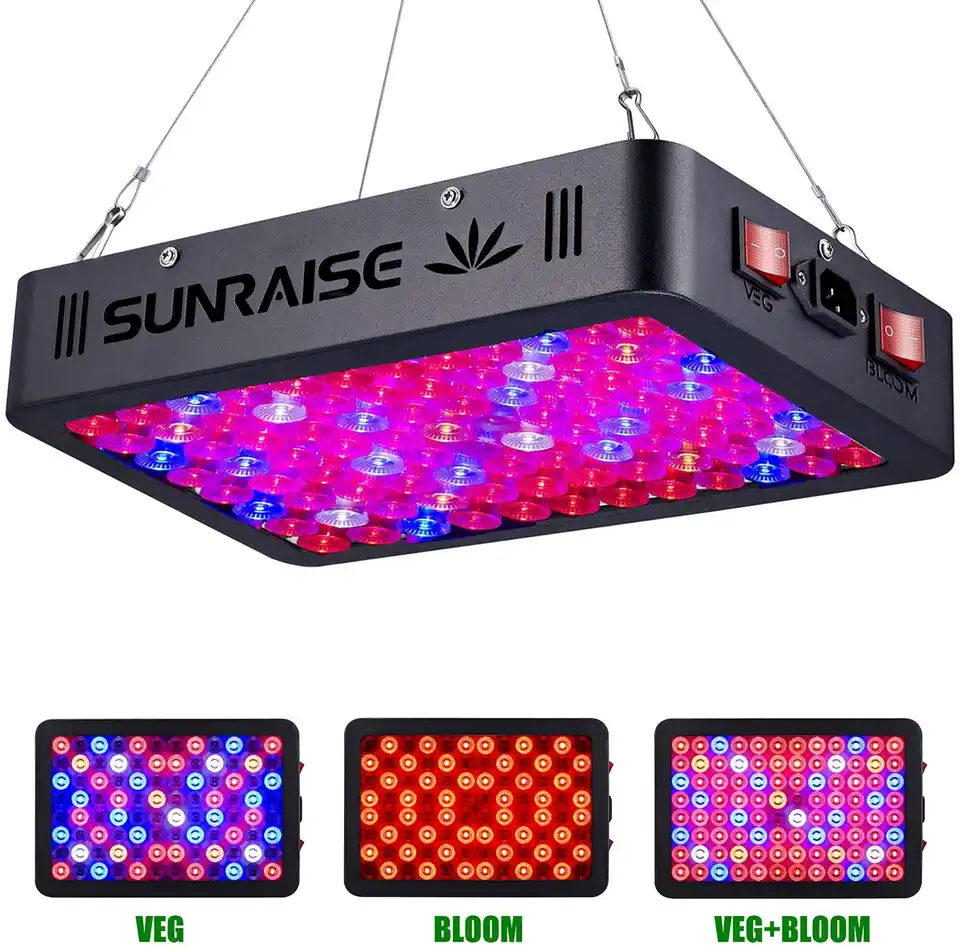
The Weed Scene previously tried LED grow lights and reported that the results did not justify switching from its established grow-room setup. That is a valid account of the fixtures and conditions used at the time, not proof that modern LED designs fail. Earlier products were promoted as “UFO,” “Supernova” or “Mothership” lights; those names are not reliable specifications for today's fixtures.
An earlier generation of LED grow lights
This is the site's original LED product photograph. Its diode arrangement illustrates how older fixtures were marketed; it should not be used to infer the capabilities of current equipment.
For a broader technology comparison, read Grow Lights. The older high-pressure sodium guide documents HID designs, while Fluorescent Grow Lights covers another legacy fixture category.
University of Missouri Extension: Understanding Grow Lights explains PPF, PPFD, efficacy and selection; DesignLights Consortium HORT V4.0 details commercial fixture qualification and safety standards. Always follow the actual manufacturer's electrical and environmental requirements.