

LIGHTING FIELD GUIDE / INDOOR HORTICULTURE
Grow lights differ in usable light, heat, coverage and power use. Compare real PPFD maps and wall draw to find a fixture suited to your canopy—not an advertised “equivalent wattage.”
A quality, appropriately sized full-spectrum horticultural LED is a versatile starting point for many indoor setups because modern fixtures can deliver efficient light over a defined footprint. High-pressure sodium, metal halide and fluorescent systems can also support plant growth, but differ in efficiency, heat, hardware and intended use. Compare independent or manufacturer PPFD maps, actual wall draw, efficacy and safety ratings—not “equivalent wattage” marketing alone.
01 / THE FIXTURES
Four kinds of grow lights. Four different trade-offs.
There isn't a universally superior fixture for every environment. Modern LEDs have changed the efficiency conversation, while older discharge-lamp systems still appear throughout indoor growing history. Evaluate the actual fixture and room rather than assuming an entire technology wins every comparison.
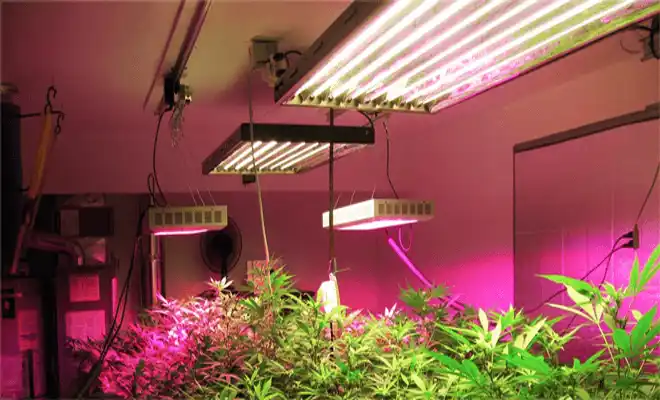
Full-spectrum LEDs
Often compact, dimmable and efficient. Check true input wattage, photon efficacy (PPE), coverage maps and how the fixture spreads photons across a canopy. “Full spectrum” isn't a guarantee of good distribution.
Plan fixture coverage →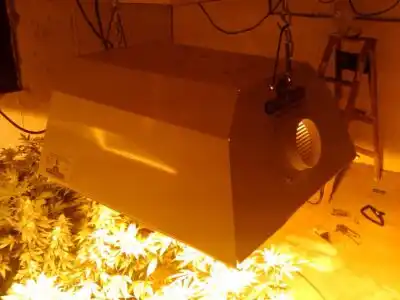
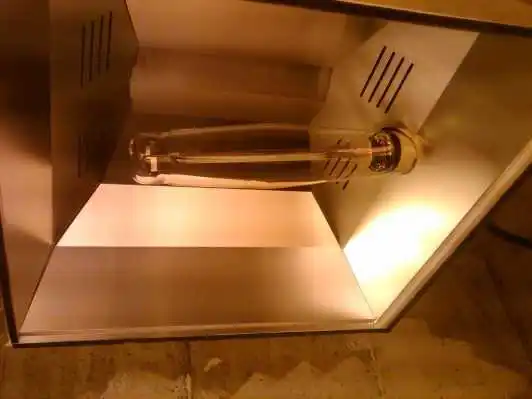
High-pressure sodium (HPS)
HPS systems produce useful plant-growth light but also substantial radiant heat and need compatible ballasts and reflectors. Historical flowering preferences do not make HPS categorically more efficient than a current horticultural LED.
Explore HPS lighting →
Metal halide (MH)
Traditionally selected for vegetative production because of its spectrum. Modern LED fixtures provide alternatives; assess efficacy, heat, lifespan and replacement components before selecting older HID hardware.
Explore MH lighting →
Fluorescent and T5
Useful historically for propagation and shallow growing areas. Light output and system efficiency vary, so fluorescent fixtures should be assessed against available LED alternatives rather than treated as automatically cheaper.
Explore fluorescent lighting →| Lighting type | What to compare | Typical consideration |
|---|---|---|
| Full-spectrum LED | Published PPFD map, PPF/PPE, true watts, dimming | Fixture quality and light uniformity matter more than brand slogans. |
| HPS | Ballast, lamp age, reflector, heat, power draw | Legacy lighting can demand more cooling and maintenance. |
| Metal halide | Ballast compatibility, spectrum, efficiency, lamp replacements | Blue-rich light does not automatically outperform good LED lighting. |
| Fluorescent / T5 | Output at canopy, fixture geometry, tube replacement | Often considered for smaller propagation tasks. |
02 / MEASURE THE LIGHT
PPFD matters more than how bright a lamp looks.
Plants use photons for photosynthesis. Human-visible lumens and color temperature describe other characteristics, but don't measure how much photosynthetically active radiation arrives at the leaves. For comparing horticultural fixtures, learn these three related measurements.
For example, a measured average PPFD of 300 μmol/m²/s over a 16-hour photoperiod gives a DLI of 17.28 mol/m²/day. The formula describes cumulative photon delivery, not a universal recommendation for cannabis. Different genetics and growth stages require appropriate environmental decisions.
Distance and fixture placement can change the light that reaches the canopy. Look for PPFD maps at a stated hanging height and growing footprint, and check whether measurements represent averages or only the brightest point beneath the fixture. A Kelvin number alone cannot determine suitability.
Light duration depends on plant genetics and growth stage. Compare photoperiod basics in the vegetative light cycle and flowering light cycle guides.
03 / THE ELECTRIC BILL
Look at operating cost, not marketing wattage.
Operating expense depends on actual power draw, operating hours and the electricity rate where the fixture is used. Cooling, ventilation and other equipment add separate costs.
At an assumed electricity rate of $0.15/kWh, that example fixture uses about $16.20 of electricity over 30 days. This is arithmetic, not a quoted price, local utility rate or actual project budget. Use the fixture's measured input power and your own rate.
Use the Grow Room Builder for planning →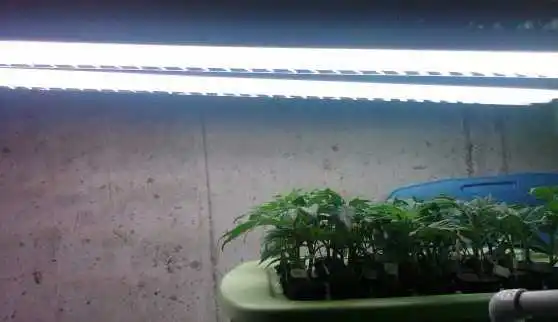
04 / BEFORE YOU BUY
A practical equipment checklist.
Choose a light as part of the whole growing environment. The light itself may be only one part of the electrical and thermal design.
Lighting gear worth comparing
Compare actual fixture coverage, load ratings and safety details. Illustrations show equipment categories; verify the exact models and specifications at the retailer.
Full-spectrum LED grow light
Primary indoor lighting
What matters: Match real canopy area and manufacturer flowering coverage; avoid wattage-name marketing claims.
Check current options on Amazon (paid link)Adjustable grow-light hangers
Raise/lower fixtures as canopy develops
What matters: Load rating and adjustment range matter more than branding.
Check current options on Amazon (paid link)Heavy-duty light timer
Automate photoperiod
What matters: Choose a timer rated for the actual electrical load.
Check current options on Amazon (paid link)Grow tent
Light/environment containment
What matters: Size from canopy and equipment footprint, not plant-count marketing.
Check current options on Amazon (paid link)(paid links) As an Amazon Associate I earn from qualifying purchases.
06 / COMMON QUESTIONS
Grow lights: the answers that matter.
- Are LED grow lights better than high-pressure sodium lights?
- Many modern horticultural LEDs achieve higher photon efficacy than older HID technologies, but actual performance depends on model, coverage and conditions. An individual comparison requires reliable manufacturer or independent fixture data.
- How many watts of grow light do I need?
- Wattage alone cannot determine suitable coverage. Start with canopy area, required photon delivery, fixture efficiency, hanging height and a PPFD map. Avoid “equivalent watts” as the sole purchase criterion.
- What is the difference between lumens, PPF and PPFD?
- Lumens weight visible brightness for human perception. PPF describes the fixture's emitted plant-relevant photons per second; PPFD measures photons reaching an area at a given location.
- Is 3000K or 5000K better for cannabis?
- Color temperature describes the appearance of white light, not the complete photon distribution or growing performance. Spectrum, PPFD, efficacy and the plant's development stage should be considered together.
- Should a grow light run 24 hours a day?
- Not as a universal rule. Photoperiod needs vary by crop, life stage and genetics. See the vegetative and flowering guides for context.
- Can I use an ordinary household bulb as a grow light?
- Some plants can grow under general-purpose lamps, but output, coverage and safety may be unsuitable for a particular space. Check measured light at the canopy and the installation's electrical requirements.
- How do I compare electricity costs for two fixtures?
- Use measured power, planned hours, electricity price and any additional cooling demand. A fixture's nameplate marketing number is not a substitute for actual power use.