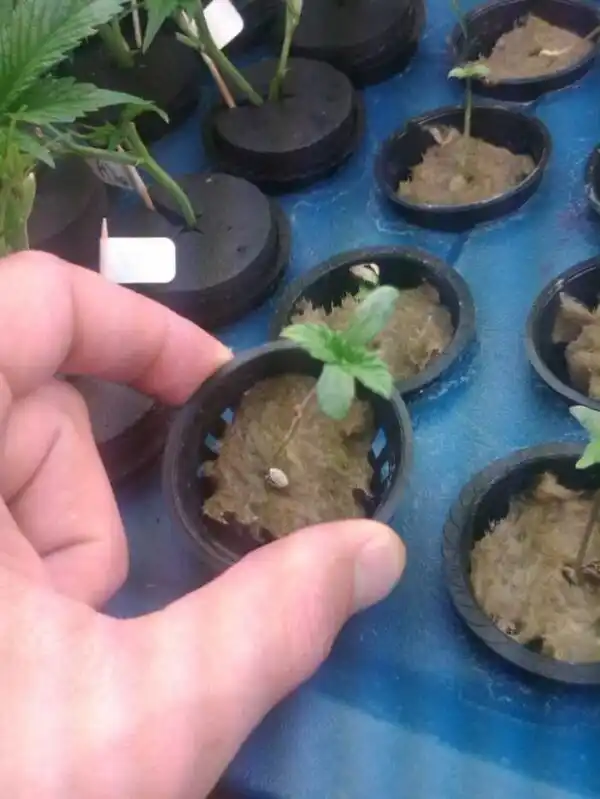
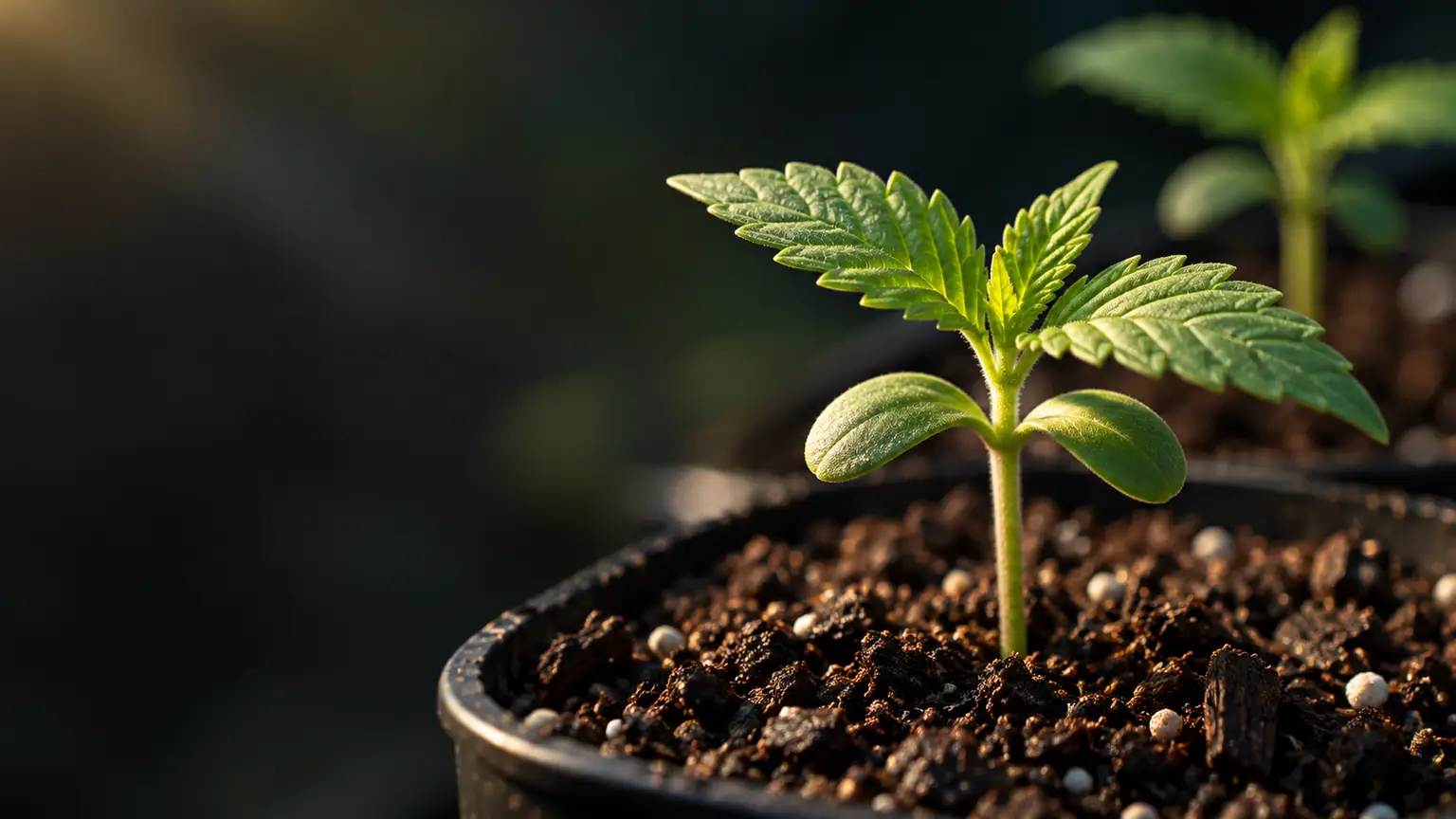
After a cannabis seed germinates, the first shoot pushes above the growing medium and opens two rounded seed leaves. The first serrated leaves follow. During these early weeks, steady light, a damp but airy root zone, and patient observation matter more than aggressive feeding.
From first sprout to true leaves
Watch the plant's structure rather than counting down to a fixed calendar date.
Emergence
The shoot breaks the surface and straightens as the seed coat comes away. Avoid pulling at a stuck shell or disturbing the new root.
Cotyledons
Two smooth, rounded seed leaves unfold and support early growth. They look different from the serrated leaves that come next.
True leaves
The first serrated pair develops, then newer leaves and nodes follow. Root growth may outpace visible leaf growth at first.

Seedlings vary by genetics, medium, lighting and environment. A healthy plant making new leaves is a better sign of progress than an exact day count. For the stage before emergence, see seed germination.
Give seedlings consistent, gentle light
Young leaves need useful light for photosynthesis, but intense fixtures placed too close can cause stress. An 18-hour light / 6-hour dark schedule is a common indoor starting point, not a biological requirement for every setup. Aim for steady coverage, then adjust fixture height or intensity to the plant's response and the manufacturer’s guidance.
Stems that stretch rapidly toward the light may indicate insufficient intensity. Pale, curled or damaged upper leaves can signal excessive light or heat. Check the whole environment before changing multiple settings at once.
Moist roots need air, too
A small seedling has a small root system. Moisten the medium around that root zone rather than repeatedly soaking an oversized container. It should feel damp, not waterlogged; allow drainage and adjust watering as roots spread.
Repeated saturation restricts oxygen at the roots and can favor damping-off or root disease. Bone-dry media can also injure young roots. Container size, airflow, temperature and the type of medium all affect how quickly moisture changes.
What about nutrients?
Cotyledons supply reserves early in development. Many starter mixes already contain some nutrients, so additional fertilizer is not automatically needed when the first leaves appear. If the medium is unfertilized and growth shows a need, begin conservatively according to the product and growing-medium guidance. Too much fertilizer can harm delicate roots.
What common seedling problems look like
Long, leaning stem
Check: Light intensity, distance and airflow. Inadequate light can lead to stretching; reposition gradually and support the plant without burying unhealthy tissue.
Drooping in wet medium
Check: Drainage, watering frequency and the root zone. Saturated conditions can limit oxygen. A droop alone does not prove overwatering.
Yellowing or pale new leaves
Check: Light stress, root conditions, growing-medium nutrients and water quality before adding fertilizer. Similar symptoms can have several causes.
Dark, pinched stem at soil level
Check: Possible damping-off. A collapsing, constricted seedling may not recover. Improve sanitation, drainage and ventilation for nearby plants.
When is a seedling ready for vegetative growth?
Look for expanding true leaves, steady new nodes and roots established well enough to support continued growth. If the plant has outgrown its plug or starter pot, transplant carefully into a suitable, draining medium. Handle the root ball gently and give the plant time to adjust; don't force a transplant solely because a chart says it is time.
Further reading
University of Saskatchewan — Seedlings · University of New Hampshire Extension — Growing Seedlings Under Lights · Penn State Extension — Seed and Seedling Biology