
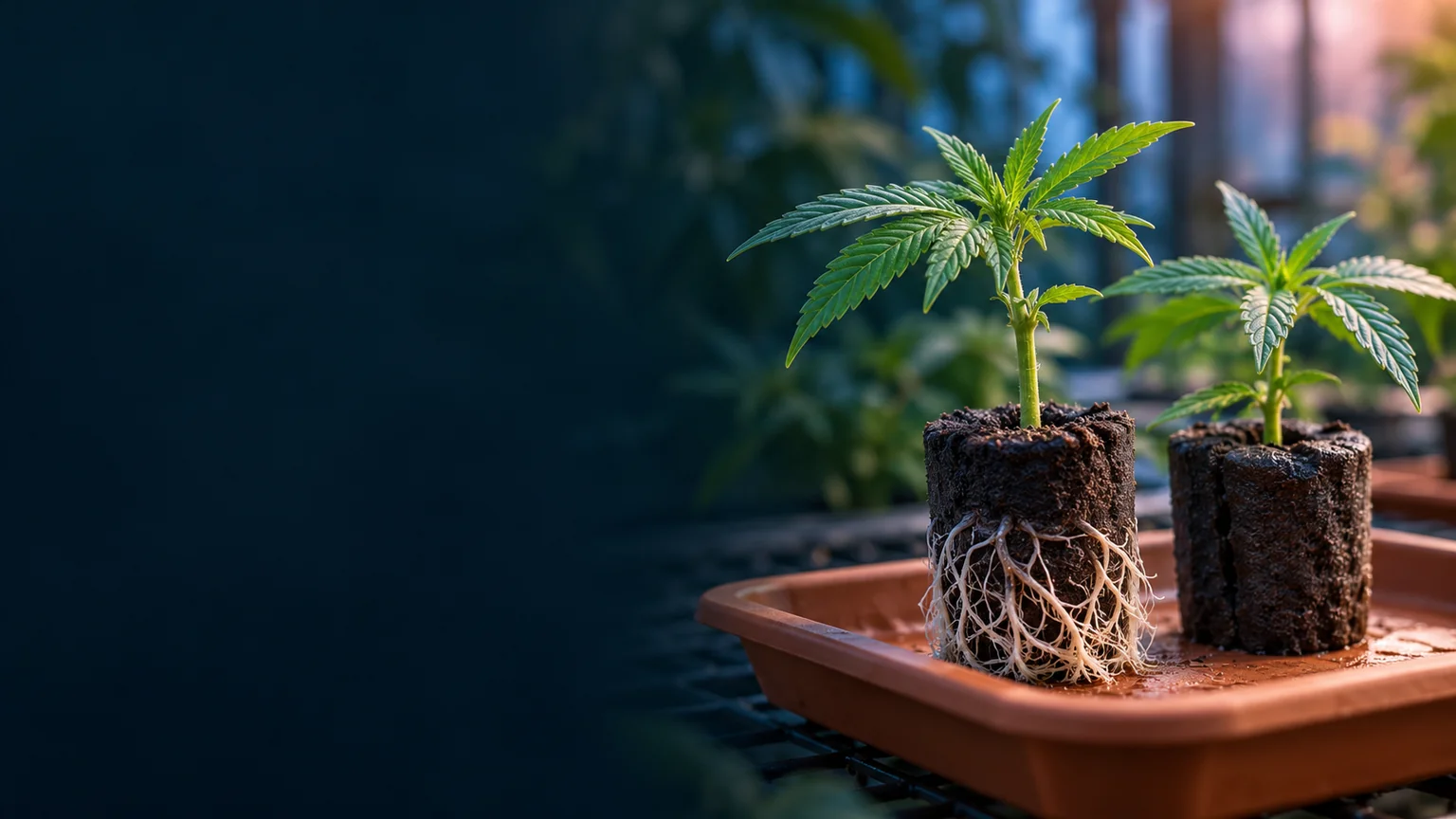
CUTTING → ROOTED PLANT
A clone needs roots before it needs a bigger workload.
Cannabis cloning usually means rooting a stem cutting from a parent plant. The cutting carries the parent's genetics, but its condition still depends on sanitation, root development and environment. A rooted cutting is beginning independent growth; it is not automatically ready for intense light or a full-strength feeding program.
Choose a healthy parent, keep tools and propagation equipment clean, and monitor the plant rather than relying on a fixed rooting deadline.
FIND THE RIGHT STAGE
Follow the part of propagation you are working on
OBSERVE THE WHOLE CUTTING
Look beyond the first white root
Look for a developing root system and leaves that remain hydrated under the intended growing conditions. Rooting time varies with the plant, cutting and propagation system. A few exposed roots do not establish how well the cutting can supply its leaves after a move.
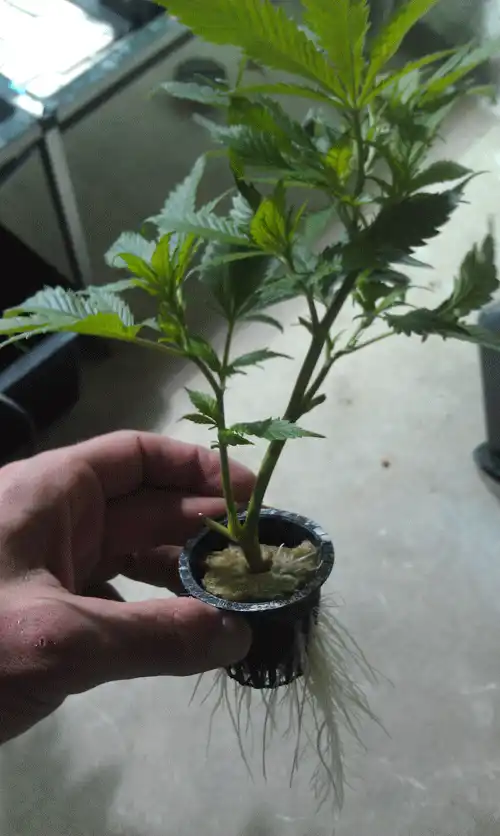
A rooted cutting in a net pot
Fine roots extend below this cutting’s support. Protect them from drying and physical damage during transfer; assess the whole plant’s condition as it establishes.
Metal halide is one possible light source, not a requirement for vegetative growth. Suitable LEDs and other horticultural fixtures can also support it. Match intensity and placement to a newly established plant; the MH guide explains that equipment option.
MAKE THE TRANSITION GENTLY
From a propagation tray to vegetative growth
- Prepare the receiving medium. Use a clean, appropriate container with drainage or the intended hydroponic root support. Have water and the correct nutrient formulation ready.
- Protect the roots. Support the plug or root system, avoid pulling on the stem, and minimize exposure that could dry delicate roots.
- Adjust gradually. A sudden change in light, humidity or root-zone conditions can overwhelm a small root system. Observe leaf posture and moisture after the move.
- Confirm establishment. New growth and stable hydration are more useful than a calendar date. Continue with the vegetative growth guide.
Rooted photoperiod-sensitive clones can eventually be flowered at different sizes, but rooting alone does not prove readiness. Give the plant time to establish in its new system; genetics, space and the intended canopy shape affect the decision.
Cloning questions
- Do all cuttings root on the same schedule?
- No. Genetics, parent condition, cutting quality and the propagation environment all affect the outcome.
- Does a clone need a metal halide lamp?
- No. Choose an appropriate horticultural fixture and manage the amount of light reaching the cutting.
- Where is the cutting demonstration?
- The mother-plant cloning guide contains the demonstration. More first-party videos are on The Weed Scene's YouTube channel.