
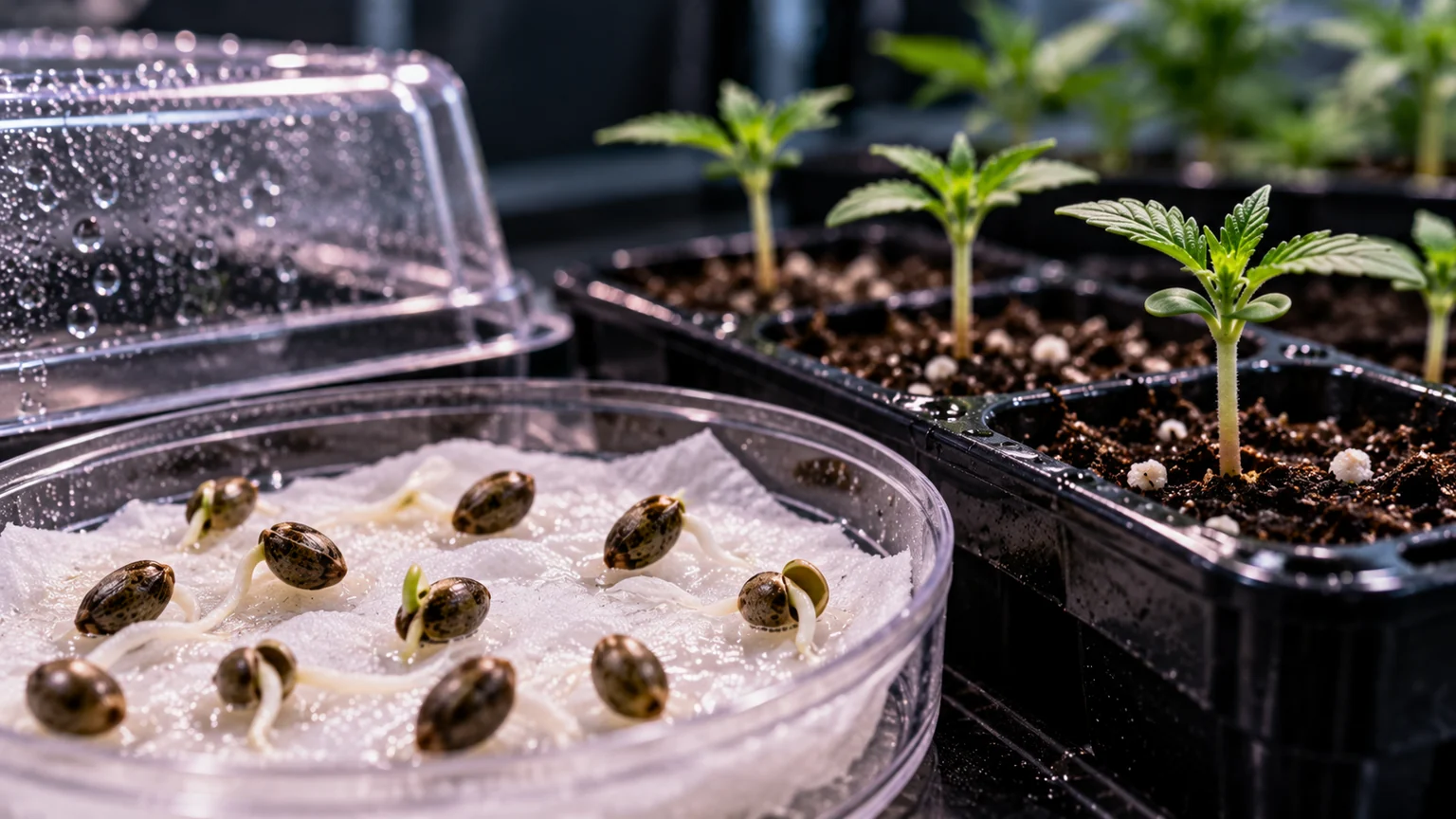
01 / START WITH THE PLANT YOU WANT
Choose the genetics before judging the shell.
A seed is a starting point, not a guarantee of a particular plant. The most useful choice comes from the type of seed, what the breeder can substantiate, how much room you have and the conditions you can maintain. Color and striping alone cannot tell you whether a seed will be healthy, female, indica-leaning or high yielding. For a broader start-to-finish reference, browse the growing from seeds guides.
If yes, compare regular and feminized photoperiod seeds. If you want flowering that is largely age-triggered, consider an autoflower—then plan for its particular space and timing needs.
02 / THREE SEED TYPES
Regular, feminized or autoflower?
Each option solves a different problem. “Feminized” and “autoflower” describe different traits: autoflower seeds may also be feminized.
For growers who need both sexes
Regular seeds can produce male or female plants. They are useful for breeding or maintaining a broader selection of genetics, but anyone seeking seedless flowers needs to identify and manage male plants. If you would rather reproduce an established plant, compare propagation from cuttings.
For mostly female photoperiod plants
Feminized seeds are bred to produce predominantly female plants; they do not guarantee every plant's sex or stability. Photoperiod varieties normally initiate flowering in response to longer nights.
For flowering driven largely by age
Autoflower genetics flower without requiring the classic photoperiod change. Plant size and development time vary widely by cultivar and growing conditions; shorter does not automatically mean easier.
03 / READ THE BREEDER NOTES
Look for evidence, not superlatives.
Genetics and traceability
Choose a breeder that identifies its cultivar, lineage when known, and whether the line is regular, feminized or autoflower. Ask how consistently the stated traits have appeared in actual grows.
Fit for the space
Compare expected growth habit, stretch, likely plant height, odor and flowering behavior. These are ranges, not promises. Measure the usable height beneath your fixture before choosing a vigorous cultivar. Plan safe access and grow-room security with the equipment layout.
Environment and resistance
Look for credible reports on performance in your humidity and temperature range. No seed is immune to pests or mildew, and a high-THC claim says little about how a cultivar performs in your room.
Freshness and seller practices
Prefer a reputable, lawfully operating supplier with clear storage, germination and replacement policies. Avoid listings that promise identical yields or guaranteed results from every seed.
04 / INSPECT THE SEED LOT
What the seed coat can—and cannot—tell you.
An intact coat without visible cracks, mold or crushing is encouraging. But viable seeds can vary in size, color and markings across cultivars and even within the same batch. The often-repeated idea that large, striped seeds must be indica and small seeds must be sativa is not a reliable identification method.
Do not squeeze or crack seeds to “test” hardness. Germination is the meaningful viability test; how long a seed takes to sprout depends on its condition and the environment.

05 / BEFORE GERMINATION
Store well, then start with a clean setup.
Cool, dark and dry
Keep unused seeds in a labeled, sealed container away from direct light, moisture and big temperature swings. If refrigerated, allow the sealed container to return to room temperature before opening so condensation does not settle on the seeds.
Prepare the next stage
Have a clean, well-draining medium and a suitable seedling environment ready. Moisture and oxygen matter together: soaked, stagnant conditions can harm a developing root. Follow the seed-to-harvest guide as the plant establishes.
Check cultivation and seed-purchase rules where you live. Legality depends on jurisdiction and circumstances, so broad claims about all U.S. seed orders are misleading.
06 / YOUR NEXT STEP