
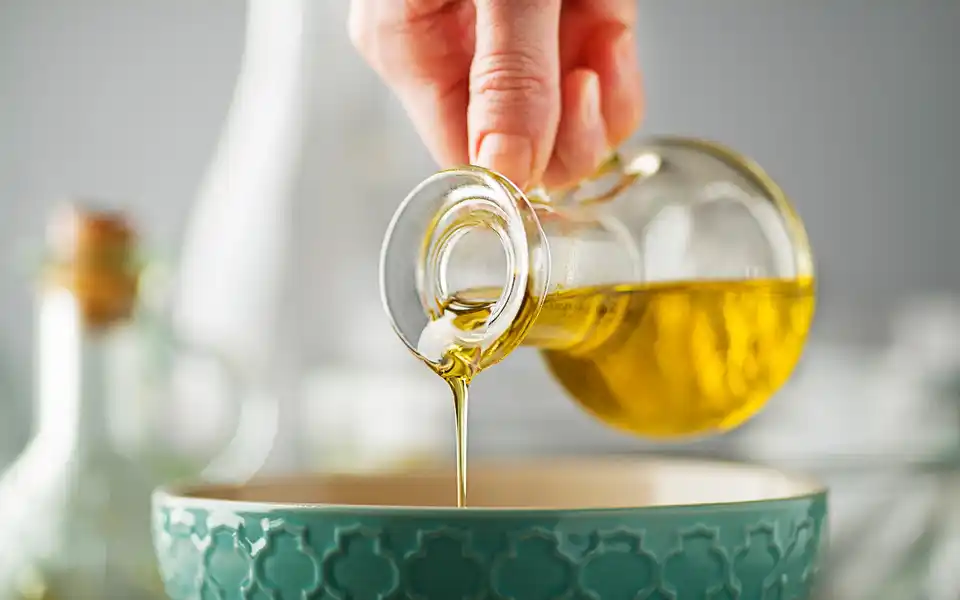
THE KITCHEN / INFUSED OIL
Make an infused oil you can measure, mix and store.
Cooking oil is a food ingredient, not shatter, wax or a dab concentrate. The finished strength depends on the starting cannabis, decarboxylation, transfer into oil and losses during preparation; a home method does not produce a laboratory-verified dose.
Pick an oil suitable for the recipe and use clean tools.
Avoid frying, smoke and unattended hot oil.
Track ingredients and divide servings deliberately.
01 / WHAT YOU NEED
Ingredients and equipment
Ingredients
- 1 cup (240 mL) olive oil, coconut oil or another food-grade cooking oil
- A measured quantity of cannabis flower with known cannabinoid content where possible; do not infer a safe dose from a flower-to-oil ratio
Equipment
- Clean, food-safe jar or bowl and a fine-mesh strainer or cheesecloth
- Double boiler or temperature-controlled water bath
- Thermometer, measuring cup and clearly labeled storage container
For the underlying activation chemistry, see the separate decarboxylation guide. Do not assume that simply leaving raw flower in warm oil for hours fully converts THCA into THC.
02 / METHOD
A cautious, repeatable kitchen workflow
- Record the ingredients. Note the amount of oil and cannabis used. Potency without tested starting material remains uncertain.
- Prepare the cannabis separately. Follow a carefully controlled decarboxylation method if the intended preparation calls for it. Long heating alone is not a promise of activation.
- Warm oil indirectly. Combine the prepared cannabis with oil in a food-safe vessel over a gentle water bath. Use a thermometer, stir occasionally and avoid scorching or boiling away the water bath.
- Strain cleanly. Allow the mixture to cool enough for safe handling; strain out plant solids into a clean container. Pressing solids changes yield and flavor but does not verify potency.
- Label and refrigerate. Write the date, ingredients and clearly visible cannabis warning. Keep in child-resistant storage away from children and pets.
Exact heating times and extraction efficiency vary by equipment and material. This is a practical method outline, not a validated potency or microbial-safety process.
03 / SAFETY & STRENGTH
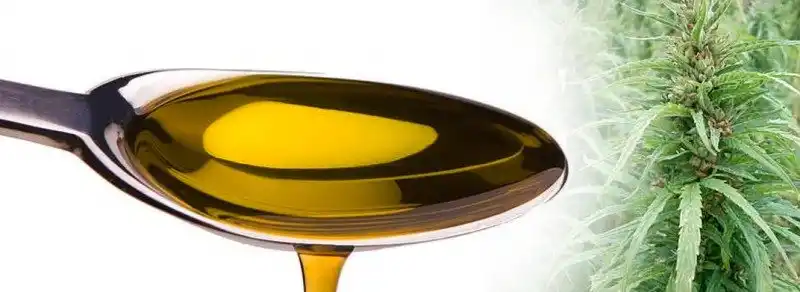
Estimate carefully; store like a perishable food
If the starting cannabinoid content is known, the THC potency estimator can illustrate a theoretical per-serving amount. It cannot measure extraction efficiency or the actual dose. Mix the finished infusion thoroughly when adding it to a recipe.
Edibles may take 30 minutes to two hours or longer to be felt. Avoid taking more while waiting, and never drive after consuming intoxicating cannabis. Keep infused food out of reach of children and pets.
Refrigerate homemade infused oil promptly rather than assuming a two-month room-temperature shelf life. When fresh herbs, garlic or other moist ingredients are mixed into oil, food-safety extension guidance recommends refrigeration and using promptly, commonly within four days. Freezing is an option for longer storage. See Colorado State University Extension.