
TWS FIELD GUIDE / CULTIVATION 001
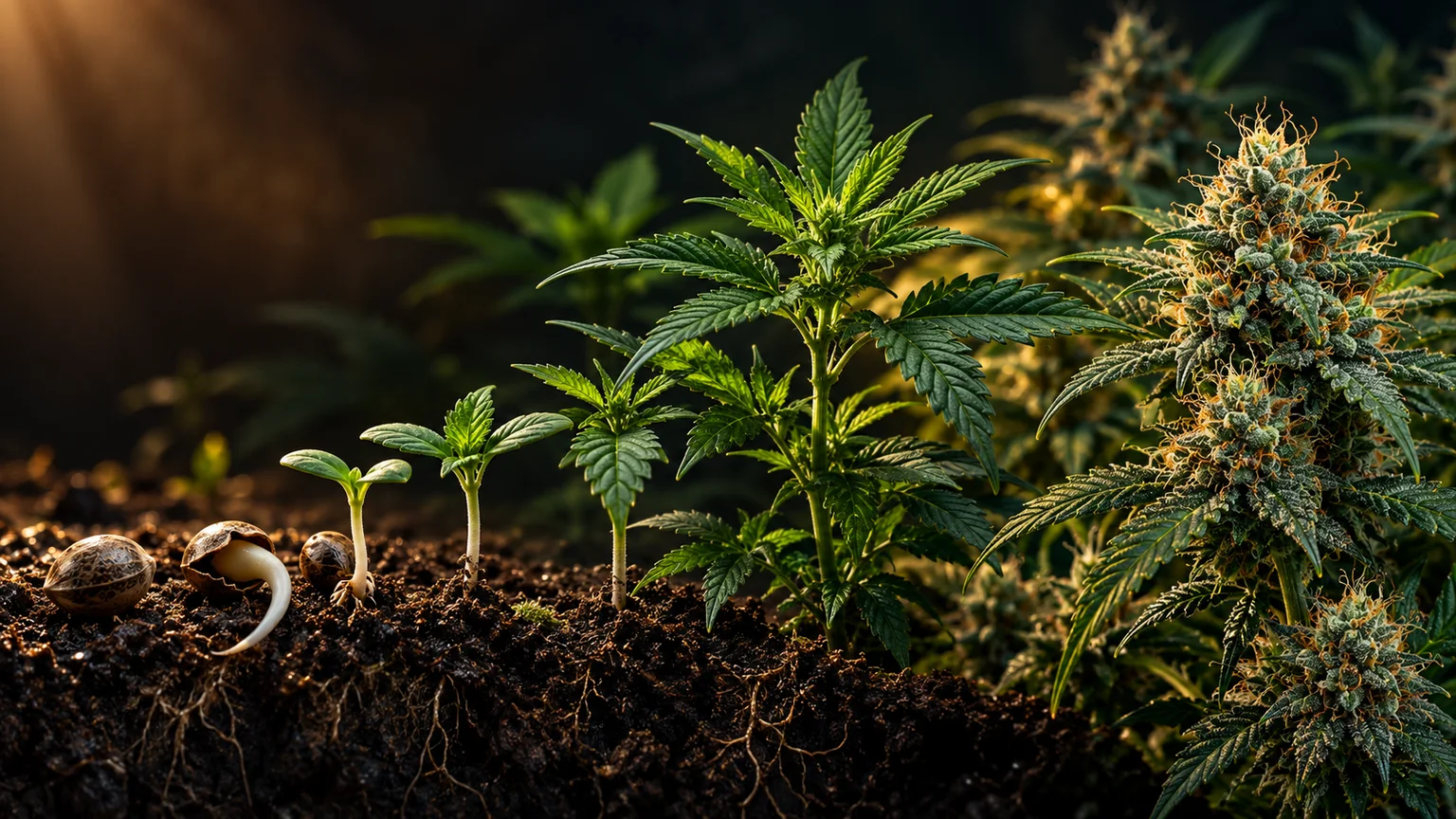
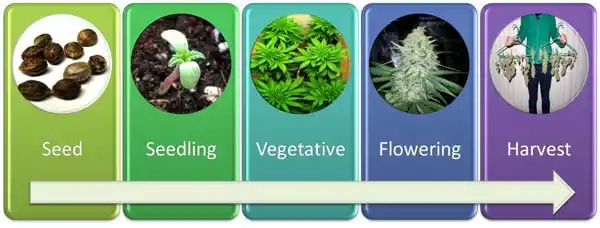
Every cannabis plant follows a biological sequence: seed, root, seedling, vegetative growth, flowering and harvest. Understanding the whole sequence helps you know what comes next—and where to find the detailed guidance for each stage.
Begin with viable seeds and a lawful growing location. Germination starts root growth; the seedling establishes leaves and roots; vegetative growth builds the plant; flowering develops the reproductive structures; and harvest is followed by post-harvest handling. Light, water, airflow, growing medium and plant genetics influence the stages. This guide covers the complete sequence and links to The Weed Scene's specialist articles for individual tasks.
BEFORE THE FIRST SPROUT
How to start growing cannabis from seed.
- Check local rules and choose a space. Confirm home-growing restrictions and plan for light, airflow, water, drainage and safe electrical access.
- Choose your seeds. Compare regular, feminized and autoflowering genetics; select a lawful source and a plant suited to your available space. Understand seed types.
- Prepare a growing medium. Have an appropriate clean medium and container ready before starting germination. Indoor setups also need a manageable environment. Plan a grow room.
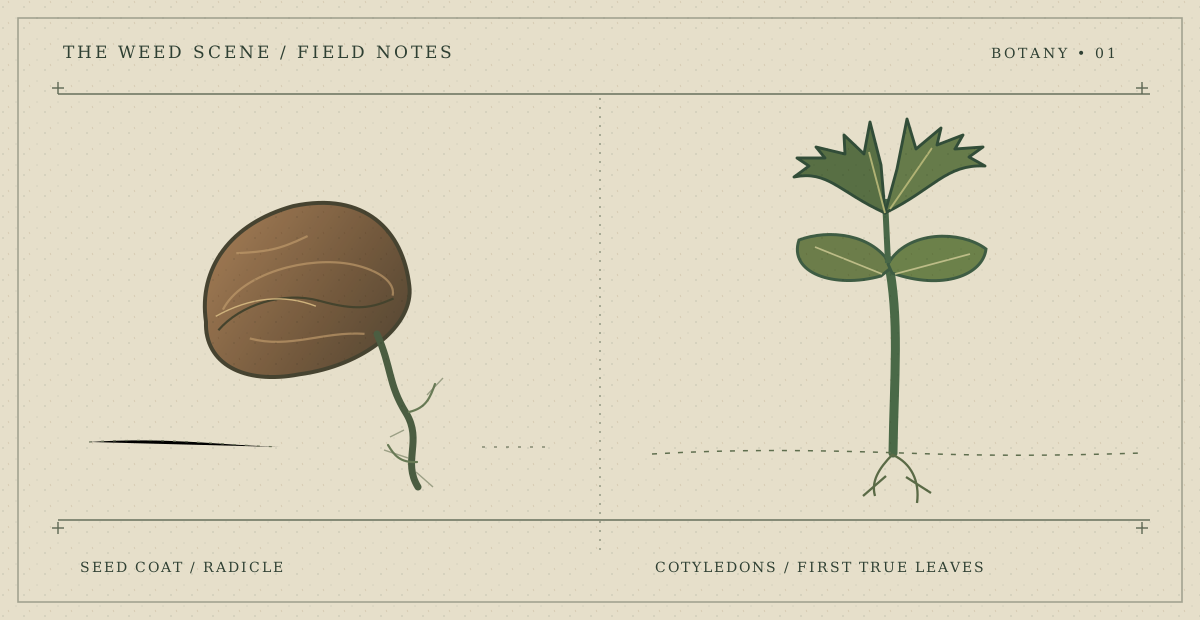
- Germinate and establish the seedling. Provide moisture, oxygen and suitable warmth; handle an emerging root gently and avoid a waterlogged medium. See germination methods.
- Observe growth before changing conditions. Watch for cotyledons, true leaves and healthy root development. As the plant matures, follow the vegetative, flowering and harvest guides.
01 / AT A GLANCE
The journey from one seed to a finished harvest.
Thinking of cannabis cultivation as a single task makes it harder than it needs to be. Every stage has a distinct biological purpose, and problems often arise when assumptions from one stage are applied to another. Use this sequence as a roadmap rather than a fixed calendar.
Timing is not universal. A photoperiod plant, an autoflowering cultivar and an outdoor plant can progress differently. The age of a plant alone does not determine whether it is ready for the next stage.
Cannabis growth / Seeds to mature plants


02 / STAGE BY STAGE
What changes, what matters, and where to go deeper.
Choose the seed and understand the genetics.
Seeds carry the genetic starting point for the entire plant. Regular, feminized and autoflowering seeds are different categories; the differences matter to plant development and the expectations you bring to the project. A seed's appearance cannot establish its future potency, yield or sex with certainty.
Before choosing genetics, consider whether cultivation is permitted where you live, your growing environment and the plant's expected mature size. Purchase and possession rules are not identical across jurisdictions.
Watch for: credible provenance, physical damage, lawful sourcing and claims that sound too absolute.
Read: Choosing the Best Cannabis Seeds →Germination: the seed begins to grow.
Germination is the transition from a dormant seed to an actively growing embryo. Water uptake initiates biological activity, and the first visible sign is often a small root emerging from the seed coat. Moisture, oxygen, temperature and seed condition all influence whether germination succeeds.
Growers use several approaches to observe or start this process. The linked guides explore the methods in more detail.
Watch for: signs of an emerging root rather than expecting leaves immediately.
Read: Cannabis Seed Germination → · Compare germination methods →Seedling: the first visible plant.
After germination, the young shoot emerges and unfolds its first seed leaves, called cotyledons. These are followed by the plant's first true leaves. At this stage, a small root system is still developing and the plant is more vulnerable to environmental stress than an established specimen.
A seedling is not ready to be classified as male or female simply because it has sprouted. Sex-related traits generally become visible later as the plant develops. Avoid treating leaf shape or an early seedling's size as proof of sex or future quality.
Watch for: leaf development, root establishment and signs of stress before rushing ahead.
Explore early growth and vegetative guides →Vegetative growth: the plant builds its structure.
Vegetative growth emphasizes the formation of stems, branches, leaves and roots. Increasing leaf area allows the plant to capture more light, while a developing root system supports water and nutrient uptake. Environmental decisions made during this period affect the structure carried into later stages.
Plant structure changes in response to genetics and growing conditions. Learn more about lighting, growing media, training and nutrient needs in the vegetative-growth guide.
Watch for: developing plant structure and changing needs as the root and leaf systems expand.
Read: Vegetative Growth Stage → · Nutrient fundamentals →Flowering: reproductive development.
Flowering is the stage in which reproductive structures develop. Female plants can produce the flower clusters associated with cannabis products; male plants typically produce pollen-producing flowers. Pollination of receptive female flowers can result in seed formation.
The timing and triggers vary with plant genetics and environment, including whether the cultivar is photoperiod-sensitive or autoflowering. Physical signs of plant sex generally develop later; an emerging seedling's appearance is not enough to determine its sex.
Watch for: actual reproductive structures and cultivar-specific maturation, not a fixed date on the calendar.
Read: Flowering Cannabis → · Read: Male or Female Plants →Harvest: maturity matters more than the calendar.
Harvesting is a decision about the maturity and condition of the plant's reproductive growth. A universal week number cannot reliably describe every cultivar, environment or outcome. Plant condition, visible development and the intended use all affect the decision.
Assess maturity using the plant's visible development and health, and consult the harvest guide for more on recognizing readiness.
Watch for: maturity evidence specific to the plant, rather than promises that every plant finishes on the same schedule.
Read: Harvesting Marijuana Buds →Drying, curing and storage: harvest is not the end.
Once harvested, plant material changes as moisture leaves it. Handling and storage affect quality and the risk of mold or spoilage. The post-harvest phase is important enough to distinguish from the harvest itself.
Fixed drying times are not dependable across different plants and environments. A finished product should not be assumed safe based on smell, appearance or a single elapsed-time rule.
Watch for: contamination risk, handling conditions, labeling and secure storage away from children and pets.
Explore harvest and drying guidance → · Model wet-to-dry weight →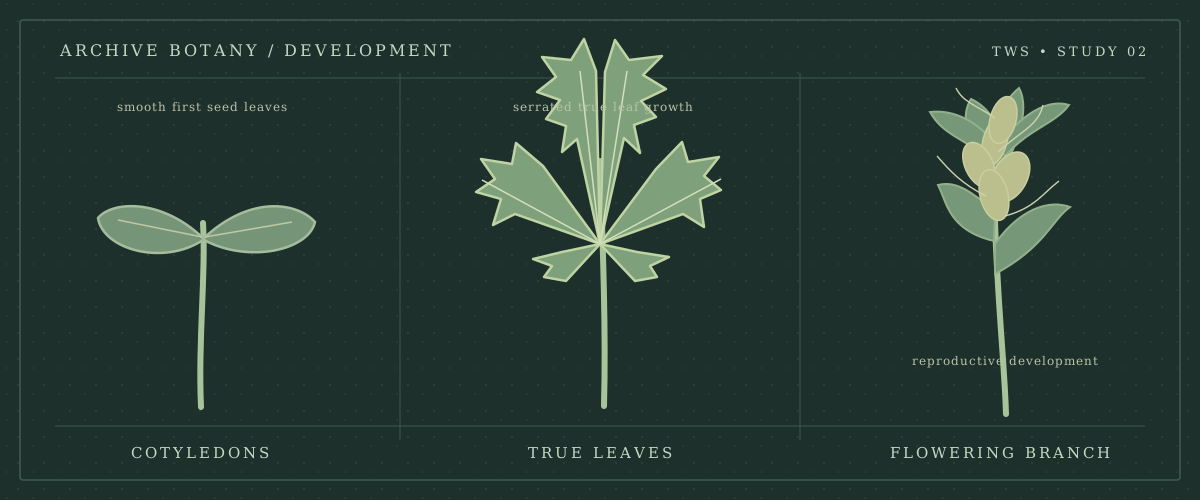
03 / UNDER THE HOOD
Six ideas that make the lifecycle easier to understand.
Different techniques can work in different environments. The most transferable skill is recognizing the forces that govern plant development, without confusing estimates and marketing claims with guarantees.
Light and temperature
Light enables photosynthesis; temperature influences plant metabolism. Genetics and life stage change how plants respond.
Water and oxygen
Roots need a functioning growing environment, not simply more water. Conditions that displace oxygen or encourage pathogens can damage a plant.
Nutrients and medium
Soil and hydroponic systems supply resources differently. Nutrient needs change as plant structures develop.
Genetics and variation
Seedlings may differ even within a named cultivar. Neither a strain name nor a category guarantees uniform growth or results.
Inspect before adjusting
A drooping leaf, slow growth or discoloration can have several explanations. Diagnosing the cause matters more than guessing a fix.
Law and safe planning
Rules govern age, plant counts, visibility, location, ownership and disposal. Read current official local regulations before acting.
Grow estimates are estimates. Plant counts, projected canopy, lighting costs and harvest-weight conversions depend on inputs and assumptions. They do not establish legal compliance, actual yield or product quality.
04 / CONTINUE LEARNING
Deeper guides for the part you're actually learning.
Explore individual growth stages in more depth, compare indoor setups and growing systems, or try the planning calculators to understand different growing scenarios.
Guides and growing methods
Planning and opportunities
05 / DIRECT ANSWERS
Questions about growing cannabis from a seed.
- What are the stages of growing cannabis from seed to harvest?
- The broad progression is seed selection, germination, seedling development, vegetative growth, flowering, harvest and post-harvest drying and storage. Different cultivars move through these stages at different rates.
- How long does growing cannabis from seed take?
- There is no single accurate duration. Genetics, environment, the plant's growth pattern and the grower's objectives all affect the timeline. Be wary of calendar claims presented as universal guarantees.
- Can you tell a cannabis plant's sex from its seed?
- No, appearance alone does not reliably determine the sex of an ordinary seed. Feminized seed products and genetic testing relate to different questions. Sex-related physical traits generally emerge as a plant matures, not at first sprouting.
- Is germination the same as the seedling stage?
- No. Germination is the initiation of growth within and out of the seed; the seedling stage follows, when the young shoot, cotyledons, true leaves and roots begin developing. See the germination article for more detail.
- Do all cannabis seeds produce the same kind of plant?
- No. Genetics vary and even seedlings from the same cultivar can differ. Terms such as regular, feminized and autoflowering describe different seed categories and should not be treated as promises of identical results.
- Can a plant start flowering before getting large?
- Yes. Flowering depends on biology and genetics as well as environment; different growth patterns mean plant size and chronological age do not perfectly predict flowering.
- What should beginners study before equipment or nutrients?
- Start with local law, the plant lifecycle and the requirements of the growing environment. Then use the Grow Room Builder as a planning model, and follow the dedicated growing guides.
- What should I read after learning the growing stages?
- If you are at the beginning, continue to seed selection. If you already have a seed, the germination guide is the next specialized page. Or browse the site index for the wider archive.
WHERE TO GO NEXT
Follow the stage you are in.
When you are ready to move beyond the overview, begin with germination. Each stage above links to a more focused guide when you need it.
Learn about germination →