
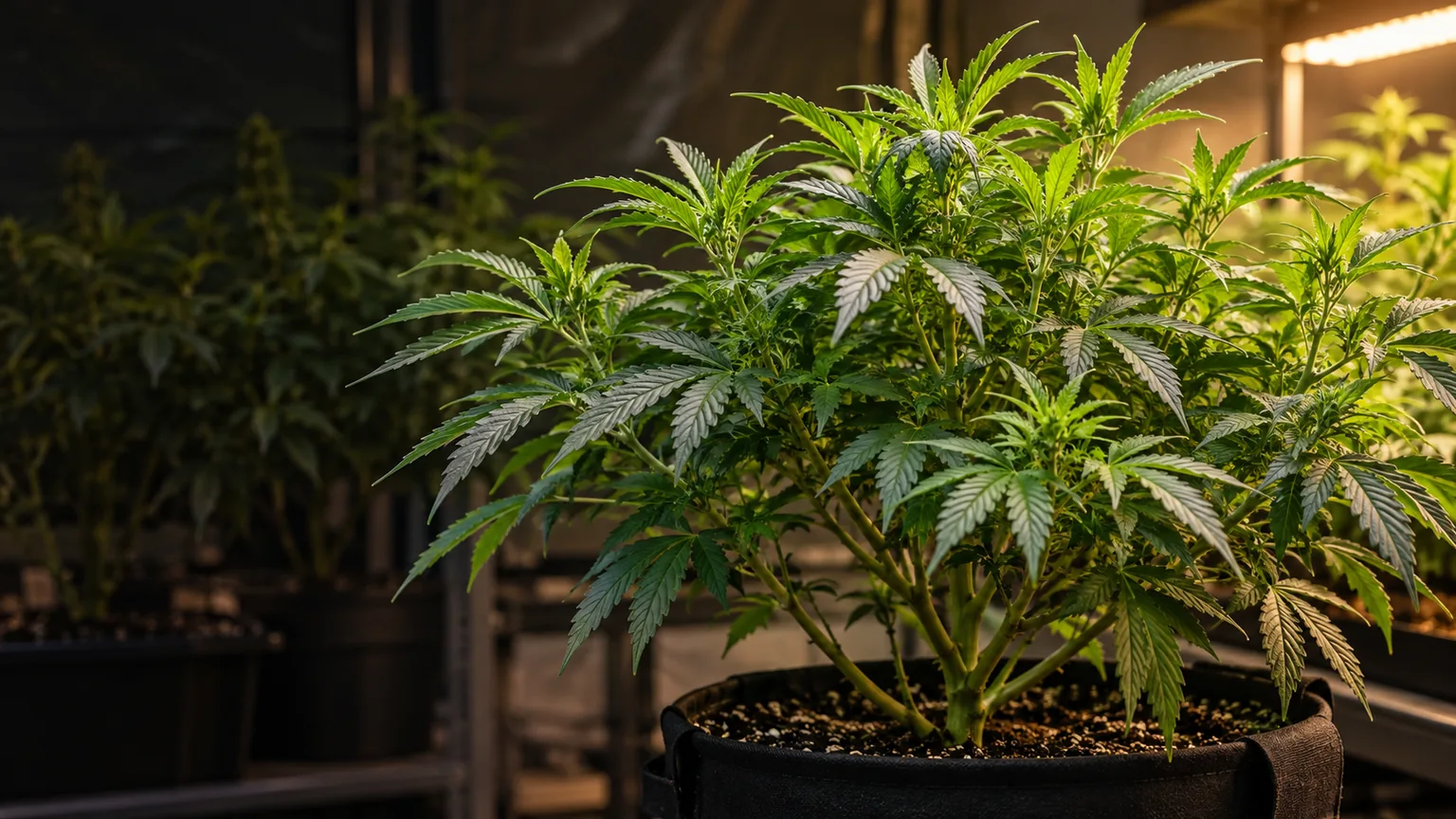
A mother plant is a selected cannabis plant kept in vegetative growth so healthy shoots can be propagated as cuttings. The goal is not the largest plant: it is a manageable, clean, consistently growing source of new branches.
Browse the mother plant topic archive for more propagation resources.
Start with a plant worth keeping
Select a healthy, vigorous plant with traits you have actually observed rather than assuming a seedling's eventual quality. For flower-focused propagation, verify a female plant and confirm the characteristics of the cultivar through a completed grow when feasible. A cutting produces a genetic copy of the source plant, but growing conditions, pests and disease still affect its performance.
Look for
Strong new shoot growth, intact leaves, branch sites that can replenish after pruning, a dependable root system and a plant free of visible pest or disease symptoms.
Do not select on one trait
Short internodes or a bushy shape can make a plant easier to manage, but compact stature alone does not guarantee exceptional flowers or successful rooting.
When working with regular seed-grown plants, confirm sex rather than guessing from height or leaf shape. Our plant sex identification guide explains which reproductive structures provide reliable evidence.
A stable environment matters more than a particular lamp
Mother plants need a long-day vegetative photoperiod that does not induce flowering in photoperiod-sensitive cultivars. An 18-hour light and 6-hour dark cycle is a common practical choice, not a requirement to run a particular lamp or keep lights on without interruption. Quality LEDs, fluorescent fixtures and other suitable horticultural lights can work when their intensity, distribution and heat are appropriate to the plant.
Adjust intensity to steady, compact growth and leaf condition. Watch for bleaching, upward-curling leaves, pronounced stretching or uneven canopy exposure rather than treating one PPFD number as universal.
Provide gentle circulation and accessible spacing between branches. Avoid persistently wet foliage and crowded interior growth, especially when taking cuttings repeatedly.
Use a medium matched to the irrigation system. A well-draining potting mix, coco-based medium, rockwool or expanded clay can each succeed when water, oxygen and nutrient management fit the setup.
Feed for sustained vegetative growth without chasing rapid expansion. Use manufacturer guidance as a starting reference; monitor leaf color, growth, drainage and, when relevant, solution pH and electrical conductivity.
Inspect roots when growth stalls despite adequate light. Root binding, prolonged saturation, poor drainage and salt accumulation can all undermine new shoots. Transplant only when the root system and container condition justify it. For the broader plant-stage context, see Vegetative Growth Stage.
Read the branches before making a cut
Keep an open, low-stress canopy with several active growing tips. Pruning a dominant shoot can encourage side branches by changing apical dominance. Avoid stripping the plant of the healthy foliage and shoots it needs to recover.
Where new cuttings come from
Find the nodes
A node is where leaves and branches attach to the stem. New lateral shoots commonly develop at these points.
Choose productive tips
Use vigorous, non-flowering shoots with clean leaves and flexible stems. Avoid stressed, woody or visibly infested material.
Leave a framework
Keep healthy lower branches and foliage so new growth can emerge after the upper cutting is removed.
Clean and disinfect cutting tools between plants. Make deliberate cuts and allow recovery; repeated severe topping on an already stressed plant is counterproductive.
Take cuttings only from active, healthy growth
Before harvesting cuttings, make sure the mother is actively producing new shoots, watered appropriately and free of visible pests. Choose a cutting with multiple nodes and leaves that are functioning normally; avoid wilted, chlorotic or flowering stems. Prepare clean tools and the rooting area first so the cut material is not left drying out.
The detailed rooting process belongs in our cloning guide, and the clone machine guide covers propagation hardware. Neither a selected mother nor a particular rooting method guarantees a successful clone: rooting depends on genotype, shoot condition, hygiene and propagation conditions.
Prevent small problems from spreading through every clone
Look for stippling, distortion, sticky residue, moving insects and webbing. Isolate suspicious plants and identify the cause before propagating.
Slow growth, drooping and discolored foliage are not proof of a nutrient shortage. Check irrigation frequency, drainage, roots and the medium first.
Sanitize tools, label plant lines, and avoid carrying pests between mother, clone and flowering areas. Healthy-looking plants can still harbor latent problems.
If a mother shows repeated decline or persistent pest or pathogen issues, stop using it for propagation until the cause is resolved. Our leaf symptoms guide helps separate common symptoms from possible causes.
Replace the mother based on condition, not a strain-expiration date
A mother plant does not have a scientifically established cultivar-specific expiration date. How long it remains useful depends on vigor, available space, root health, disease pressure, pruning history and the grower's propagation needs. A new mother can be established from a healthy, verified cutting before the older plant declines.
Watch for persistently reduced new growth, increasingly congested branches, difficult-to-manage roots or repeated rooting problems. Those observations justify reassessment, but a failed clone batch alone does not prove the source plant is too old. In a 2025 controlled study, mother age up to six months did not reduce the fraction of cuttings that rooted in the two tested cultivars; outcomes outside those cultivars and conditions should not be assumed.
The author favored short, bushy mothers with several branches and used fluorescent lighting with expanded-clay buckets for rooted clones. Those details describe one workable setup. They are not universal requirements or proof that every branch will root.
Mother plants and young clones
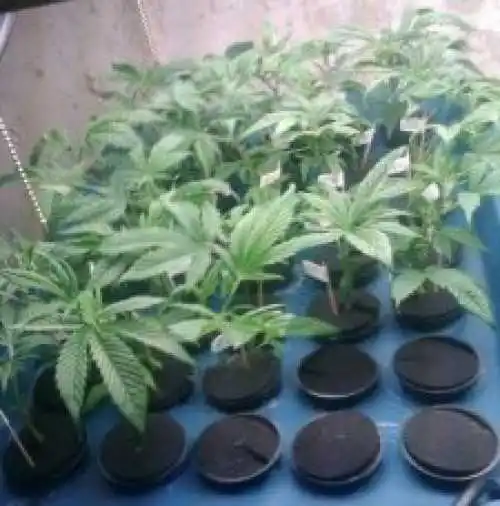
Young cuttings from the original grow, photographed in individual growing containers.
Research and propagation context
For additional evidence, see Wageningen University & Research's mother-age and light study and the 2025 published vegetative-propagation protocol. Both describe studied conditions, not universal performance guarantees.