
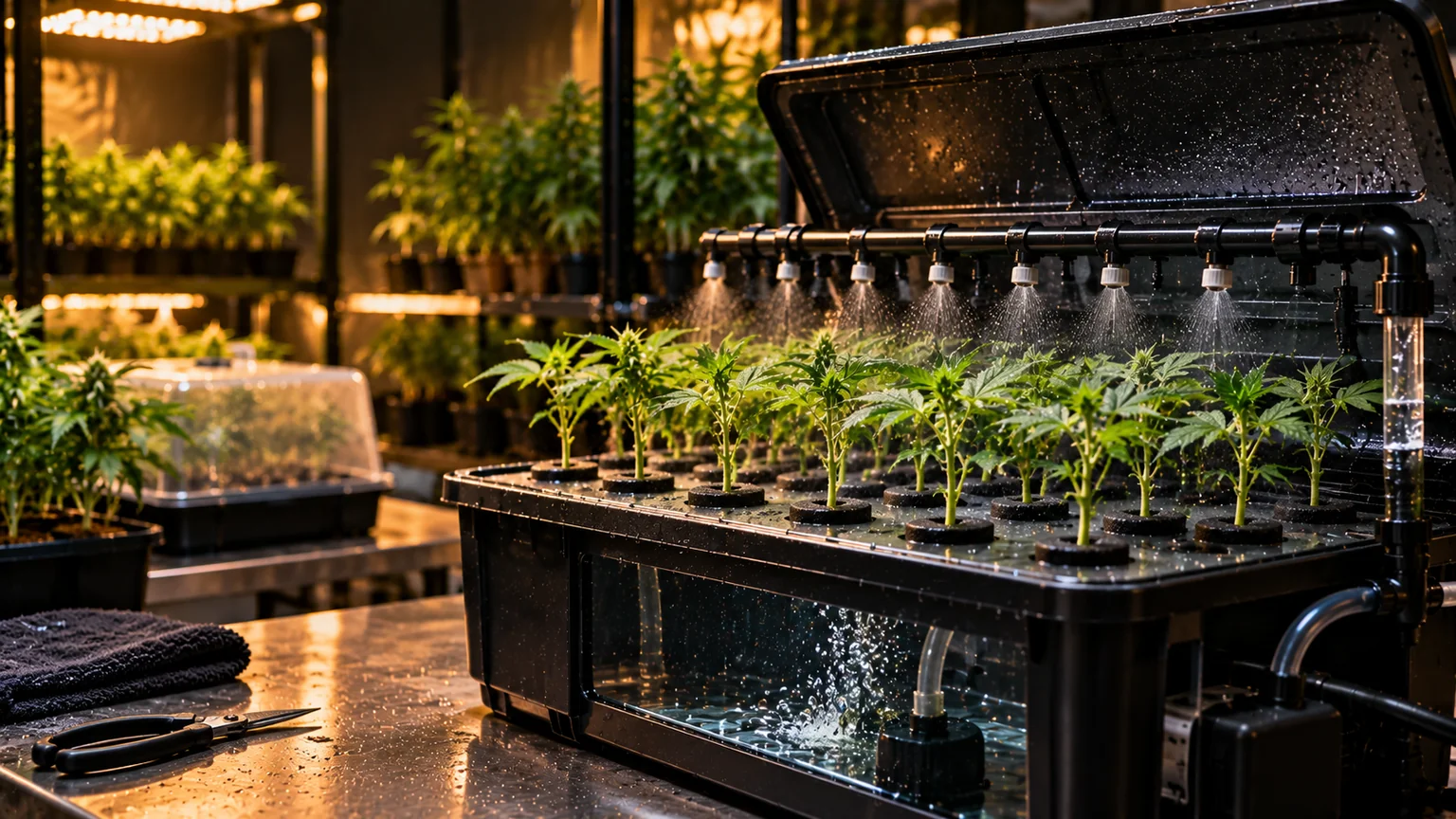
The most useful cloning machine is one you can inspect, clean and keep running. A spray cloner uses a water pump and nozzles to keep cut stem bases moist; a bubble cloner moves air through water instead. Both need healthy cuttings, reliable water delivery and attention to temperature. Neither guarantees rooting in a fixed number of days.
Which cloning setup fits your routine?
The number of holes on a lid is less important than whether every occupied site receives moisture and whether you can remove and service the hardware.
Follow the water, not the marketing
For a spray machine, water has to complete a loop. If any point fails, some cuttings can dry even while the reservoir is full.
The pump's advertised maximum flow is not the delivery rate at every nozzle. Fittings, spray heads and blockages all affect distribution. Before loading cuttings, test every nozzle and inspect the return path with plain water.
A five-minute start-up inspection
Remove residue from the lid, collars, reservoir, manifold and nozzles. Rinse according to the equipment manufacturer's instructions before placing cuttings.
Fill to the marked operating level and run the pump or air system. Check flow at each site, leaks, noise, and whether the return water stays contained.
Use healthy stems and clean tools. Hold each stem securely without crushing it. Use rooting hormone only as directed on its label; do not routinely add fungicide.
Check reservoir temperature, cut-stem wetting, leaf turgor and light intensity. Adjust conditions when a problem appears instead of relying on a universal spray timer.
What about EZ-Clone?
EZ-Clone is a recognizable spray-cloner brand, not proof of a faster or guaranteed rooting result. Compare usable site count, replacement collars, nozzle access, reservoir cleaning space, pump compatibility and warranty before buying. A working secondhand machine still needs a thorough inspection and sanitization.
Diagnose problems at the machine
Check spray coverage in that row, missing or obstructed nozzles, collars, and nearby airflow before changing the nutrient mix.
Confirm the pump has power, the water level is adequate, the intake is clear and the pump has not overheated or lost prime.
Remove failing cuttings, review sanitation and water temperature, and check whether stem bases are continuously soaked without sufficient aeration.
Wait for several firm, healthy roots that can be handled without tearing; transfer gently into a prepared growing medium rather than transplanting on a calendar deadline.
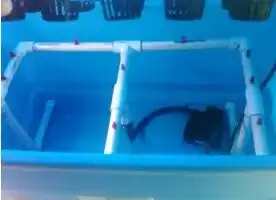
What the reservoir looks like
A compact cloner shows why lid access, plumbing fittings and the pump compartment matter when selecting a machine.
Continue exploring
For broader growing topics, see Growing Marijuana Using Advanced Nutrients, Grow Apps and How to Grow Cannabis Indoors.
Penn State Extension: Propagating Houseplants explains water, humidity and cutting hygiene. Penn State Extension: Damping Off covers sanitation and excess moisture. Apply manufacturer-specific pump and reservoir instructions to your machine.