
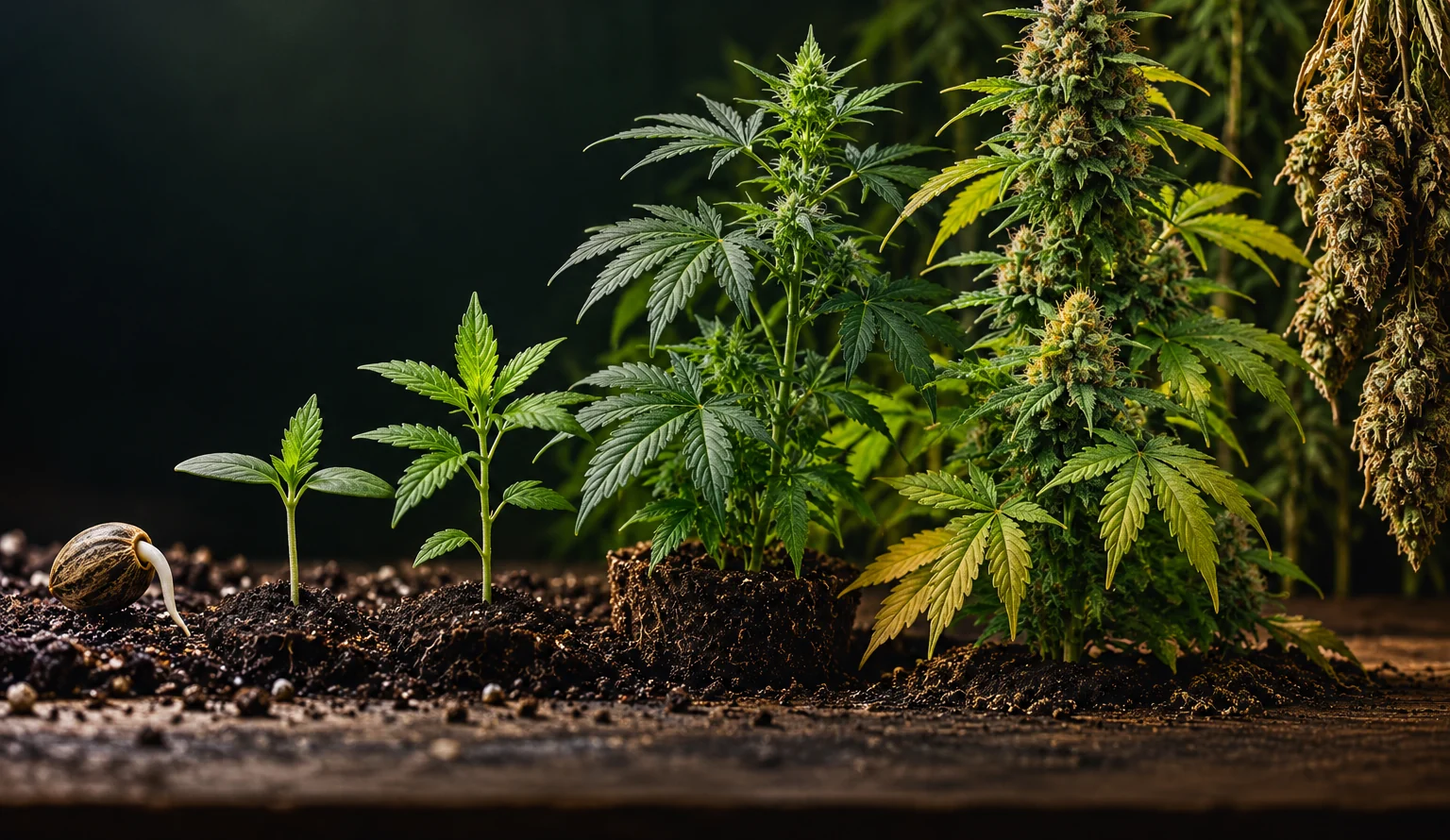
THE PLANT / FROM SEED TO FLOWER
One plant. Distinct phases of development.
Cannabis begins as a germinating seed, establishes its first leaves and roots, builds stems and branches, and eventually develops flowers. The sequence is predictable; the schedule is not. Genetics, light, climate, growing space and plant health all affect how quickly the stages unfold.
A VISUAL FIELD GUIDE
Recognize the stage by what the plant is doing.
Changes in roots, leaves and reproductive structures matter more than a date on a calendar.
- 01ROOT EMERGESGermination
- 02TRUE LEAVESSeedling
- 03BRANCHINGVegetative
- 04FLOWER CLUSTERSFlowering
- 05MATURE FLOWERSHarvest decision
This is a sequence, not a five-week schedule. Flowering duration and harvest readiness differ by cultivar and growing conditions.
Germination: the first root appears.
A viable seed absorbs moisture and the embryonic root (radicle) emerges. Soon the shoot reaches the surface and opens its seed leaves, called cotyledons. Germination needs moisture and oxygen, but saturated, stagnant conditions can damage the seed.
Look for: the first white root, followed by emergence above the medium. A calendar estimate is only a guide; avoid repeatedly digging up seeds to check them.
Compare germination methodsSeedling: roots establish, true leaves unfold.
The first serrated true leaves follow the round cotyledons. Young plants are establishing roots and begin supplying themselves through photosynthesis. Stronger light is not always better; seedlings can suffer from excessive heat, intense light or persistently wet media.
Look for: steady new leaf development, a firm stem and healthy roots—not a fixed height or a required number of days.
Read the seedling field guideVegetative growth: the canopy takes shape.
Leaf area, stems, branches and the root system develop rapidly. A long-day light schedule, often 18 hours indoors for photoperiod plants, helps maintain vegetative growth. Water and nutrient needs generally rise as the plant gets bigger, but there is no universal feeding schedule.
Look for: vigorous new shoots, expanding roots and a structure suited to the available space. Training and transplant decisions belong here rather than during delicate germination. Learn how lighting schedules work in the vegetative light cycle guide, or see the second vegetative week journal for an example of early canopy development.
Understand vegetative growthWHY TWO PLANTS MAY FOLLOW DIFFERENT CLOCKS
Photoperiod and autoflowering are not the same.
Indoor growers commonly use a 12-hour light / 12-hour uninterrupted dark schedule to initiate and sustain flowering once the plant is mature enough. Outdoors, seasonal day length influences the transition.
Autoflowering genetics can begin flowering without a deliberate 12/12 switch. This changes the timing strategy, not the basic need for suitable light and healthy roots.
An HPS lamp does not supply nutrients. Plants use light energy for photosynthesis and obtain mineral nutrients through their roots.
Flowering: reproductive structures develop.
After the flowering transition, stems may stretch before floral clusters become more prominent. Female plants produce clusters of flowers with bracts and often visible stigmas; male plants produce pollen-bearing structures. Actual onset and duration vary by genetics and environment.
Look for: emerging flower structures, canopy stretch and later maturation—not an automatic promise of harvest after a certain week. Light intensity must be managed to avoid heat and light injury. The first flowering week journal documents an early transition.
Explore the flowering stageHarvest, then postharvest handling.
Harvest is a decision made near the end of flower development, not a separate vegetative phase. Flower appearance, cultivar characteristics and signs of maturity all matter; trichome color alone is not a precise clock. After cutting, drying and curing involve moisture management and safe storage.
Look for: mature flowers and plant condition, then use a clean, controlled drying area with airflow and humidity management. Avoid drying harvested material in conditions that encourage mold.
Continue to harvestingIN THE GROW ROOM
What vegetative growth looks like in practice.
A branching canopy with healthy fan leaves shows the plant investing in photosynthetic growth before flowers mature. A photograph captures one plant at one point—not a universal schedule.

Further botanical reading
For more detail on plant development and the distinction between photoperiod and autoflowering traits, see the University of Saskatchewan cannabis life cycle reference and the Canadian Food Inspection Agency's cannabis biology overview.
CONTINUE LEARNING