

A good feed starts with the water—not the bottle. Dissolved mineral nutrients, oxygen, water temperature, and the condition of the root zone all matter. A meter gives you a useful trend, but one number cannot tell you whether every nutrient is balanced.
Four things worth checking in your reservoir
EC
Electrical conductivity estimates the total dissolved ions, not individual nitrogen, calcium, or phosphorus levels. Use one consistent unit and compare with the nutrient maker’s guidance.
pH
pH affects nutrient availability. Many soilless crops are managed around pH 5.5–6.5, but confirm crop, media, and product requirements instead of treating one number as universal.
Temperature
Warm water holds less oxygen and can stress roots. Track changes, prevent stagnant hot spots, and keep the reservoir shaded and accessible.
Water level
Falling volume changes concentrations. Log top-ups and inspect leaks, feed lines, pump operation and root health before changing the fertilizer mix.
How to prepare a fresh nutrient solution
A repeatable mixing routine reduces precipitation, clogged emitters, and inconsistent readings. Follow your actual fertilizer label for order, quantities, and target concentrations; the sequence below explains the underlying steps.
- 01Start with measured water.
Record reservoir volume and baseline EC/pH. High-alkalinity or mineral-heavy tap water can affect later readings and may warrant a water test.
- 02Add components separately.
Mix one fertilizer part thoroughly into water before the next. Do not pour concentrated A and B nutrients into each other: calcium may react with phosphates or sulfates, leaving insoluble sediment.
- 03Let the solution circulate.
Stir or recirculate until it is uniform; do not judge a reading from an unmixed pocket near an inlet or freshly added concentrate.
- 04Measure EC, then pH.
Use calibrated, rinsed meters. Adjust gradually according to the product directions, allow the water to mix again, and confirm the measurement before irrigation.
- 05Record a baseline.
Write down the date, water added, nutrient products and amounts, EC, pH and temperature. Trends over several checks are more useful than chasing one isolated value.
What changes in the readings can mean
Read EC alongside water level, pH, delivery conditions, and plant appearance. These are investigative clues—not automatic instructions to increase or dilute the fertilizer.
| What you observe | Check before adjusting |
|---|---|
| EC rising as water drops | Water may be leaving faster than salts; verify volume, evaporation and top-up water before changing feed strength. |
| EC falling as water drops | Nutrients may be taken up along with water; check plant development, intake, and whether the readings were taken consistently. |
| pH drifting repeatedly | Review source-water alkalinity, fresh-mix timing, crop uptake and meter calibration. |
| Cloudy water or residue | Inspect incompatible mixing, biofilm, poor circulation, old solution and filter/line hygiene. Replace contaminated solution and clean equipment as needed. |
When should the solution be replaced?
There is no universal weekly calendar for every reservoir. Change frequency depends on tank size, water quality, recirculation, crop demand and the nutrient product. Replace or correct a solution when monitoring shows unacceptable drift, contamination, buildup or imbalanced composition—not merely because a fixed number of days has passed.
Does plain-water flushing remove “chemicals” from buds?
That claim should not be treated as established. Finished plant tissue is not rinsed clean of minerals through the root zone. Follow a validated crop and nutrient program rather than assuming a ten-day plain-water period guarantees improved flavor or safety. See the flushing evidence guide.
Choosing a fertilizer formulation
Complete water-soluble formulations commonly supply nitrogen, phosphorus, potassium, calcium, magnesium, sulfur and trace minerals. Multi-part nutrients keep incompatible ingredients separate in concentrated form. Organic inputs may work in compatible systems but can behave differently in reservoirs and plumbing; avoid assuming “natural” means residue-free or “synthetic” means harmful.
Measure the actual nutrient solution
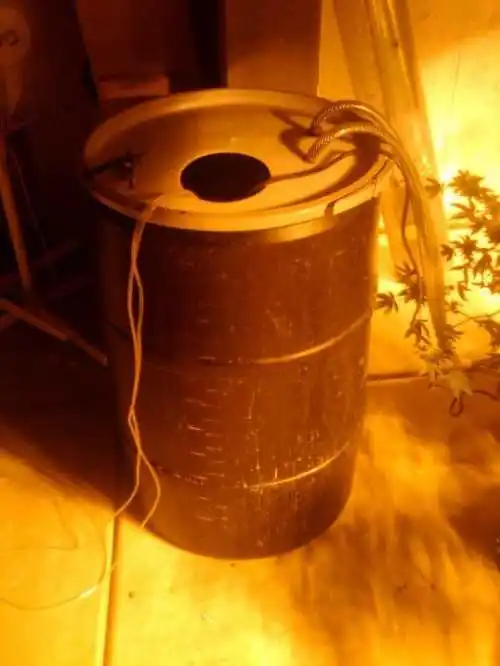
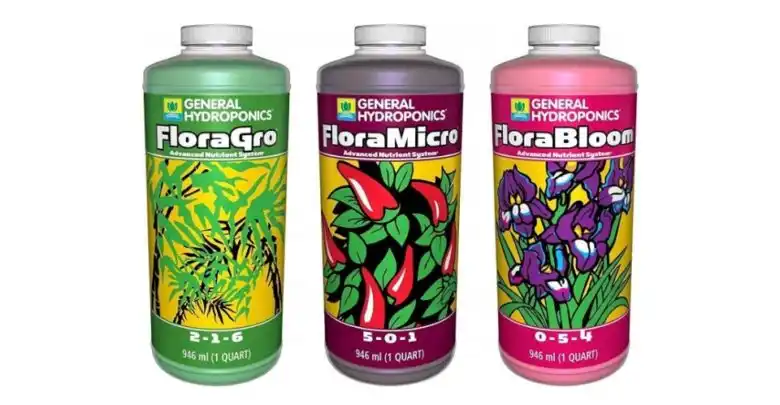
A reservoir and bottled formulation are only part of the setup. Record comparable EC, pH and water-level readings from the circulating solution.
Continue exploring
For the related archive topics, explore hydroponic cultivation, cannabis strains, water and nutrient movement, and Advanced Nutrients in cultivation.
Further reading
University of Missouri Extension: Hydroponic Nutrient Solutions explains compatibility, EC and pH; Oklahoma State Extension: EC and pH covers source water and measurement; New Mexico State University: Hydroponic Water and Nutrients discusses A/B concentrates and water testing.