

START WITH THE WATER
Water carries nutrients. Roots regulate uptake.
Plant roots absorb water and dissolved mineral nutrients through related but distinct processes. Osmosis describes water moving across a selectively permeable membrane; nutrient ions also depend on transport proteins and the conditions around the roots. Adding more fertilizer does not automatically make either process work better.
A useful starting point is a source-water analysis, followed by measurements of the mixed solution and the root zone. The hydroponic nutrient guide covers the fertilizer side of that balance.
THE ROOT INTERFACE
What osmosis actually explains
Water moves from higher to lower water potential. Dissolved salts lower water potential, while pressure and the growing medium also matter. A highly concentrated root-zone solution can make it harder for a plant to obtain water even when the medium looks wet.
MEASURE DIFFERENT THINGS
Three readings that answer different questions
pH
How acidic or alkaline is the solution right now? The appropriate target depends on the medium and nutrient program. See pH levels.
Alkalinity
How strongly does the water resist acidification? A pH reading alone cannot show its buffering capacity.
EC and composition
Electrical conductivity indicates the combined contribution of dissolved ions. A laboratory analysis identifies minerals such as calcium, magnesium, sodium and chloride.
Tap water varies by supply and season. Geography, taste and smell cannot establish whether it is suitable for a particular crop or fertilizer formulation. Sample the actual water you use, and keep the report with your feeding records.
TREAT A MEASURED PROBLEM
When reverse osmosis helps
Reverse osmosis uses pressure to move water through a membrane while rejecting much of the dissolved salt load. It can help when testing identifies unsuitable source-water chemistry. It also produces a concentrate stream and needs maintenance; performance depends on the source water and equipment.
RO treatment reduces source-water salts; the finished solution still needs a suitable nutrient formulation. Account for the minerals removed when choosing and mixing fertilizer, then verify the finished solution. A suitable tap supply may need less treatment. For a recirculating example, explore ebb and flow systems.
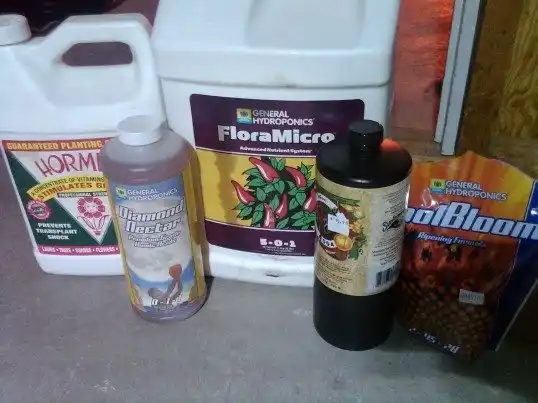
Fertilizer containers show products, not source-water chemistry. Use a water analysis and current product labels to plan the finished solution.
Water and nutrient questions
- Does a low EC mean water contains everything a plant needs?
- No. EC does not identify individual nutrients or prove that the solution is nutritionally complete.
- Should every grow use reverse osmosis?
- No. Choose treatment from the water analysis, growing medium and fertilizer requirements.
- Can a plant wilt in a wet medium?
- Yes. High salinity and poor root function are possible causes. Check drainage, root condition and measurements before adding fertilizer.