

LIGHT CONTROL / VEGETATIVE GROWTH
Choose the schedule, then measure the light.
For photoperiod cannabis kept in vegetative growth, 18 hours on and 6 hours off is a common, reliable starting schedule. It keeps the day long without requiring fixtures to run continuously. Duration alone does not tell you how much usable light reaches the leaves: intensity, coverage and the daily light integral matter too.
24-HOUR SCHEDULE COMPARISONGold = light / Indigo = dark
18/6Common vegetative baseline
18h on6h off
24/0Continuous lighting
24h on
12 + 1Experimental night break
12h5.5h1h5.5h
0006121824h
Timelines show the distribution of hours, not measured light intensity or a prediction of yield. The short gold segment in the third row is a one-hour interruption of darkness.
01 / NORMAL OPERATION
18/6 offers a clear baseline.
A reliable timer provides a repeatable long day and a predictable off period for temperature management. Check the fixture's coverage and plant response rather than adjusting hours arbitrarily.
02 / CONTINUOUS LIGHT
24/0 is not automatically better.
Running the same fixture continuously uses more lighting electricity than 18/6. It may be used for some plants or propagation environments, but it is not a general guarantee of faster or healthier vegetative growth.
03 / CULTIVAR DIFFERENCES
Photoperiod and autoflowering are different.
Photoperiod-sensitive plants are kept vegetative with sufficiently long days; flowering is generally initiated by longer uninterrupted dark periods. Autoflowering plants can begin flowering regardless of a deliberate 12/12 switch.
04 / LIGHT MEASUREMENT
Time and intensity work together.
A longer day can increase daily light delivery at the same canopy intensity, but energy use, fixture efficiency, plant variety and environment affect the result. Aim for even coverage and avoid assuming a schedule alone fixes poor lighting.
ROOM CONDITIONS
Look beyond the timer.
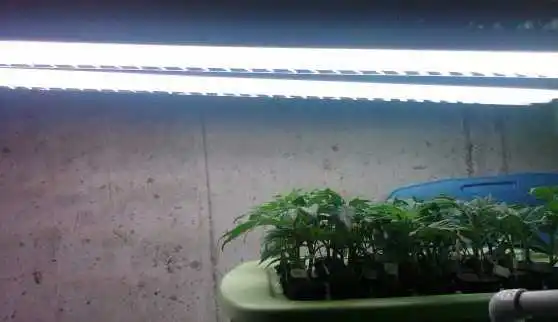
Keep fixtures securely mounted and follow their installation and electrical load specifications. Watch canopy height, temperature, airflow, leaf condition and the light reaching different parts of the plant—not just the number displayed on the timer.
A timer sets the hours, but it cannot measure how much useful light reaches the canopy. That difference is especially important when considering schedules that shorten the daily lighting period.
THE NIGHT-BREAK QUESTION
Can one hour of light interrupt a long night?
A split-night method uses 12 hours of light, 5.5 hours of darkness, another hour of light, then 5.5 hours of darkness. The aim is to maintain a vegetative photoperiod response with only 13 fixture-on hours per day. It is an experimental approach, not a proven replacement for 18/6 across cannabis cultivars.
A controlled study published in Plants in 2025 compared a one-hour night break with conventional vegetative lighting. The night-break treatment reduced daily light integral, and the tested plants had less vigor and approximately 22% lower extractable floral biomass per tent at harvest. That result does not mean every cultivar will respond identically, but it directly challenges a guaranteed energy-and-yield win.
The tradeoffFewer lamp-on hours can save lighting electricity, but a reduction in delivered light may affect growth and later harvest. Judge efficiency by the whole crop outcome, not the timer alone.
PUT THE SCHEDULE TO WORK
A short setup checklist
- Identify whether the variety is photoperiod-dependent or autoflowering.
- Start from an established long-day schedule such as 18/6 for photoperiod vegetative growth.
- Use a dependable timer and check all fixture connections, ventilation and power limits.
- Observe plants and keep other growing conditions consistent before comparing schedules.