
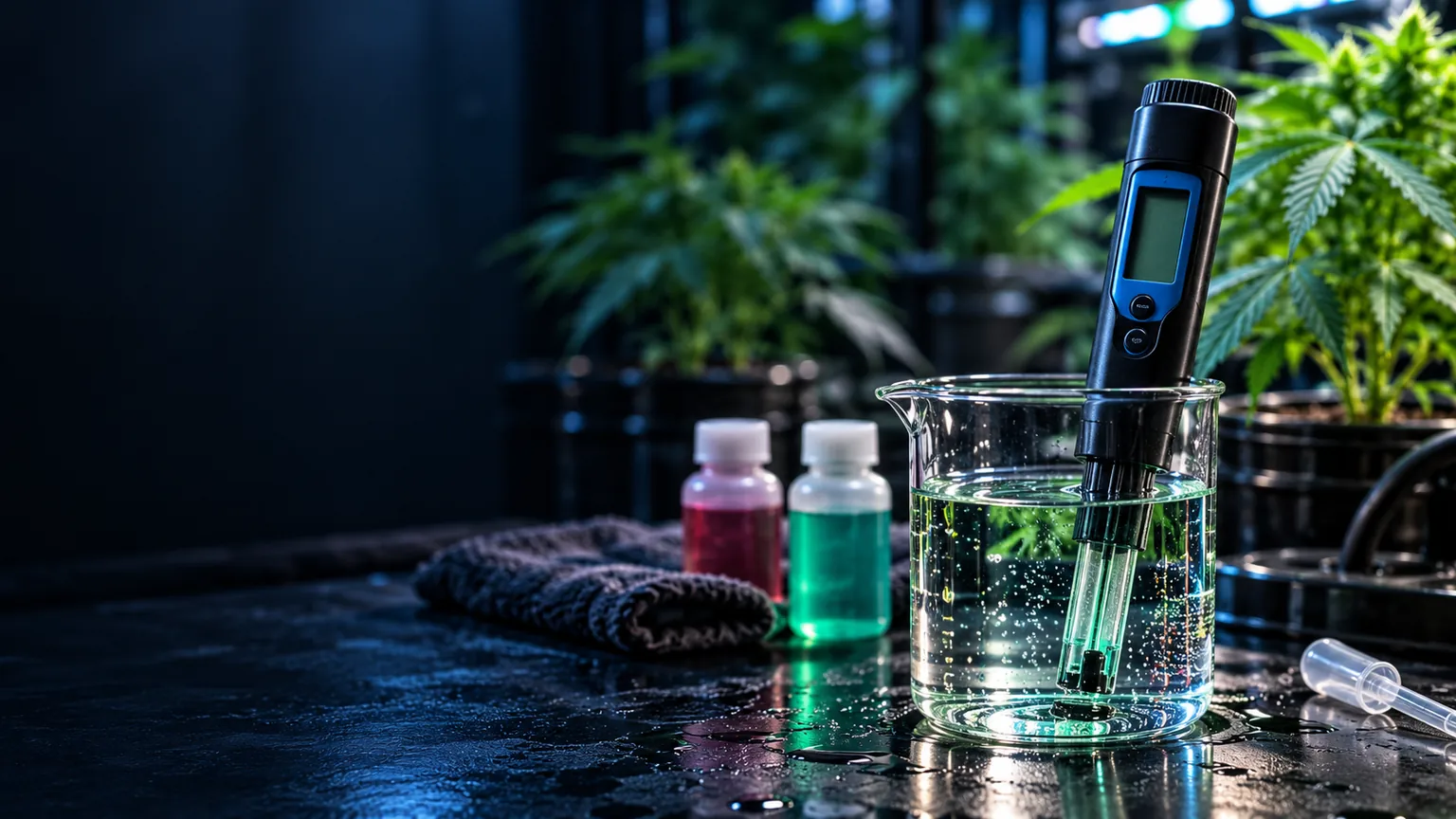
MEASUREMENT / PROBE CARE
Trust the Meter Before You Change the Solution
Good pH decisions start with a clean probe, correct calibration and a sample taken consistently. Testers measure acidity or alkalinity, not the full nutrient profile. A stable number is useful only when you know what was measured.
01 / WHICH TESTER
Choose a Method That Fits the Job
Portable pH Meter
Fast, repeatable readings when properly calibrated and stored. The sensing electrode is delicate and needs the recommended storage solution.
Indicator Drops
Useful as a rough cross-check, but sample color, lighting and the kit's range affect interpretation.
Appropriate Sampling
Test strips are approximate. Media pH needs a standardized extraction or slurry method; dipping a pen into random runoff is not a universal substitute.
02 / CALIBRATION
Keep Calibration and Testing Separate
Many common meters use pH 4 and 7 references, but your instrument may specify a different calibration sequence or buffer set. Use fresh compatible solutions, rinse between standards, let the reading stabilize and never pour used buffer back into the stock bottle.
- 01Inspect and rinse.
Remove visible residue gently; never scrub a glass sensing bulb.
- 02Calibrate as specified.
Use uncontaminated standards at the recommended temperature and sequence.
- 03Measure a mixed sample.
Use a clean vessel; allow stabilization and document the meter's units and conditions.
- 04Rinse and store correctly.
Use storage solution recommended by the probe maker. Many glass pH electrodes must not be stored dry or indefinitely in pure water.
03 / TROUBLESHOOTING
When a pH Reading Seems Wrong
Numbers Drift
Check probe cleanliness, age, storage and sample temperature. Repeat calibration before treating the solution.
Readings Disagree
Compare probes or use a new buffer, then confirm both methods sample the same medium under similar conditions.
Solution Changes After Mixing
Check fertilizer mix, water alkalinity, and reservoir chemistry. Avoid chasing an exact universal pH value.
pH Appears Normal, Leaves Decline
Inspect roots, moisture, salts, pests and light; pH alone cannot diagnose a nutrient deficiency.
For nutrient-solutions, use a medium-specific pH reference alongside EC measurements. Handle adjustment chemicals according to their labels; never mix concentrates together.
Reference Photographs
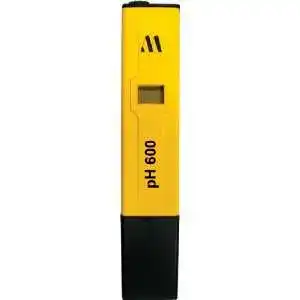
References
Oklahoma State: EC and pH Guide · Missouri Extension: Hydroponic Nutrient Solutions
CONTINUE LEARNING