
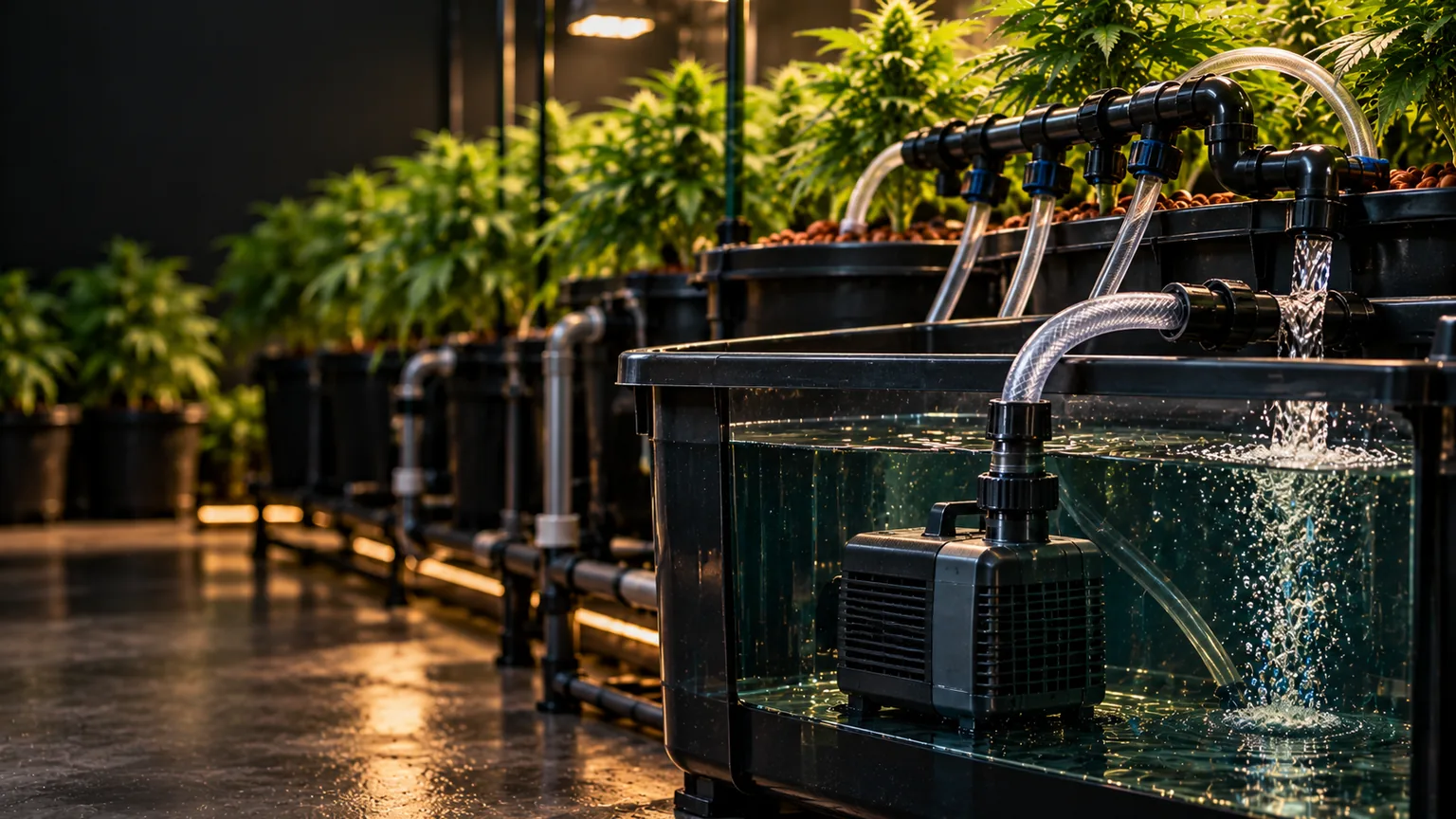
Choose for flow at the installed height, not the biggest GPH number on the box. A pump's headline output is usually measured under minimal lift. Elevation, pipe length, elbows, filters and emitter pressure change the water that actually reaches the roots. The manufacturer's head–flow curve tells you whether the pump can do the job.
How to size a hydroponic water pump
Define the water demand for every channel, tray or emitter operating at the same time. Then determine the total dynamic head (TDH): vertical lift, pipe and fitting resistance, and any required outlet pressure. Compare that requirement against the pump's actual performance curve, not its maximum GPH and maximum head listed separately.
Measure the difference in elevation between the operating reservoir level and the delivery outlet. The water level dropping can increase the needed lift.
Long or narrow tubing, elbows, splitters, valves and filters reduce flow. Review fitting specifications and keep pipe runs as simple as practical.
Drip emitters and misting nozzles may need minimum operating pressure; open channels usually do not. Read the component specifications.
Trace the highest outlet before shopping
Head is a system requirement, not a promise from a maximum-flow label.
Test the actual flow at your outlet
Once the system is assembled, collect water from the actual outlet for a timed interval while the normal height, plumbing and filters remain connected. This checks installed delivery rather than relying on a product label. Test each branch if a manifold splits the flow.
Measured flow calculator
Use a measured water volume and collection time. This is a delivery test, not a pump-sizing guarantee.
Example: collecting 2 litres in 20 seconds. Change both fields to use your own test.
These example results assume the collection method does not change the normal outlet head.
Pump choice depends on the delivery method
NFT channels and drip irrigation
A circulation pump moves solution to the highest channel or feeds emitters. Size for combined outlet demand at the working head. Drippers may require a pressure-rated pump and filtration.
See the bucket return pathEbb-and-flow trays
A fill pump must raise solution to the intended flood level within the designed cycle. Ensure the return drains as expected when the pump switches off; flood volume, tubing resistance and timer behaviour all matter.
See the flood-and-drain sequenceDeep-water culture
A basic standalone DWC bucket can rely on an air pump and diffuser rather than a water circulation pump. Recirculating DWC adds water circulation; air and water pumps are not interchangeable.
Compare delivery mechanismsKeep circulation dependable
Verify the manufacturer's head–flow curve, continuous-duty rating if used continuously, voltage, materials compatibility, wattage and accessible intake. Match tubing diameter and fittings.
Test with plain water, check every outlet, watch the highest fill level, confirm gravity return, protect power connections from splashes and use suitable GFCI/RCD electrical protection.
Remove debris from screens, check for reduced flow, leaks, trapped air, blocked drippers and unusual vibration or heat. Keep spare seals or a compatible replacement where downtime matters.
Switch off electricity safely before inspecting the pump, tubing or reservoir. Do not run a pump dry unless its manual specifically allows it. Check the water level, intake, obstruction and power supply.
Original water pump photograph
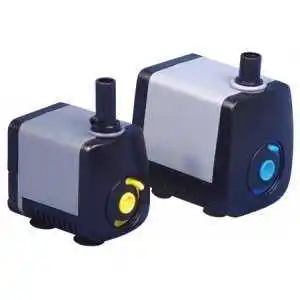
Small submersible pumps fit inside some nutrient reservoirs. External pumps may make servicing easier for larger, plumbed systems; choose based on installation and manufacturer specifications rather than a universal reservoir size.
Further reading
See Virginia Cooperative Extension's NFT irrigation guide for continuous-duty pump and system flow considerations, NC State Extension's pump selection guide for total dynamic head and head–flow curves, and UF/IFAS's pump sizing publication for reading performance charts.
Continue exploring
More related guides: Hydroponic cannabis growing and Advanced Nutrients guide.