
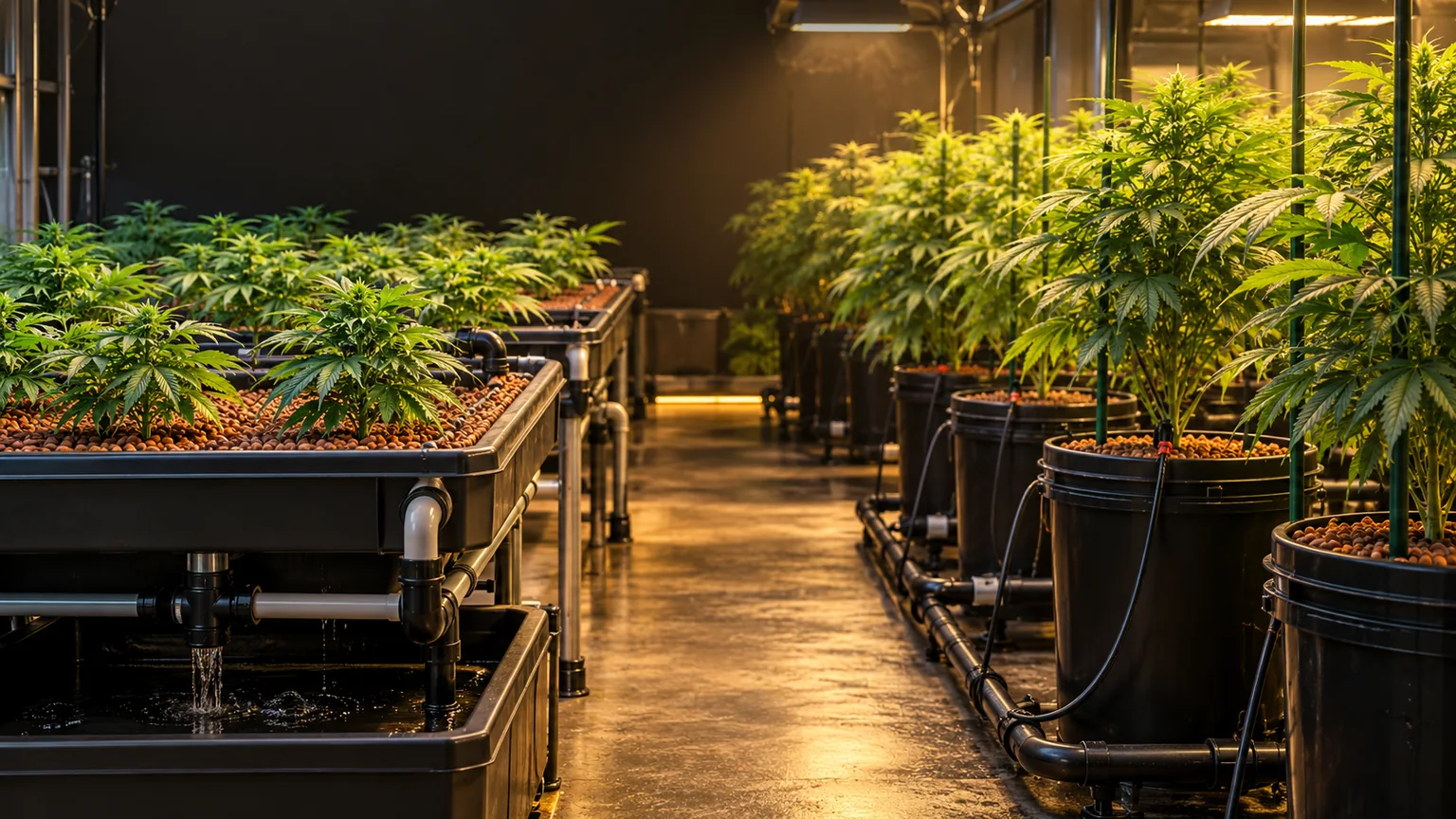
Choose the water-delivery layout before choosing a brand. Tray tables make it easy to group and move smaller plants; individual buckets provide more space around larger plants. The plumbing determines whether each setup is flood-and-drain, top-fed drip, or deep-water culture—not the shape of the container.
Which hydroponic layout fits your room?
Start with plant spacing, access, and how the nutrient solution reaches the roots. These are practical starting points, not claims that one system yields more than another.
Tray tables with drip-fed containers
Useful when you need to rearrange smaller plants and inspect many containers together.
Plants sit in pots or slabs on a table, while drip emitters supply the growing medium. Runoff needs a planned collection or disposal path; a table alone does not make it an ebb-and-flow system.
Bottom-fed ebb-and-flow buckets
Useful when individual plant sites need space but share a timed flood-and-drain circuit.
A common reservoir fills media-containing buckets from below. Solution returns when the flood cycle ends. Bucket spacing can change, but pipe runs, pump capacity and drain levels still have to work together.
Recirculating drip-fed buckets
Useful when larger media-filled containers need targeted irrigation and individual servicing.
A pump delivers nutrient solution to an emitter above each bucket; excess drains by gravity back to a reservoir. This is different from standing-water deep-water culture, even when both systems use buckets.
A bucket is not automatically DWC
In deep-water culture, roots extend into standing, aerated nutrient solution. In a drip bucket, solution passes through a substrate and drains away. In a bottom-fed ebb-and-flow bucket, the root zone floods and then drains. Check the root-zone water path before buying a product described only as a “bucket system.”
Plan the complete growing area
A system that fits the floor can still be difficult to operate. Draw the irrigation route, the reservoir access point, the drainage direction and a clear walking path before you buy components.
Leave space to inspect leaves and irrigation fittings without moving other plants or pulling on tubing.
Check where runoff goes, the height difference to the reservoir, and whether overflow stays contained.
Plan what happens during power loss, a blocked drain, or a pump running dry. Test the setup with plain water first.
Inspect moisture or aeration at the roots, then measure reservoir pH and EC; a single reading will not reveal every blocked feed.
A room layout is only the starting point
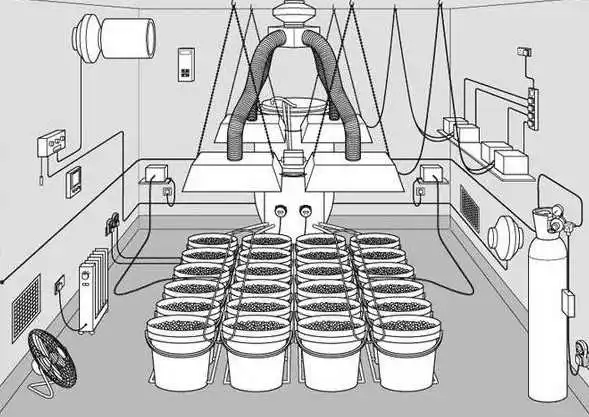
This grow-room sketch shows bucket spacing and equipment access. Use it as a planning reference rather than as a pump, ventilation or electrical specification.
Buying a used hydroponic system
A working timer and uncracked buckets are only the beginning. Check whether replacement parts are available and whether the whole circuit can be cleaned.
Look for brittle tubing, damaged seals, algae residue, warped trays, stuck valves, electrical damage and missing fittings. Avoid untraceable pumps or worn electrical components.
Clean components, reassemble with sound seals, run an extended plain-water test, and verify each emitter, flood height and drain return. Keep electrical connections away from leaks and splashes.
The earlier grow-room example used tray tables for mother plants and a 36-site, 55-gallon-reservoir ebb-and-flow arrangement for flowering. That describes one setup, not a recommendation for every room; reservoir and pump sizing depend on actual water volume, plumbing and irrigation design.
Continue exploring
References
For system definitions and maintenance principles, see Oregon State University Extension — Hydro hints, University of Missouri Extension — Hydroponic Farming and UC Master Gardeners — Hydroponics for the Home Gardener. For nutrient fundamentals, see Grow Nutrients.