
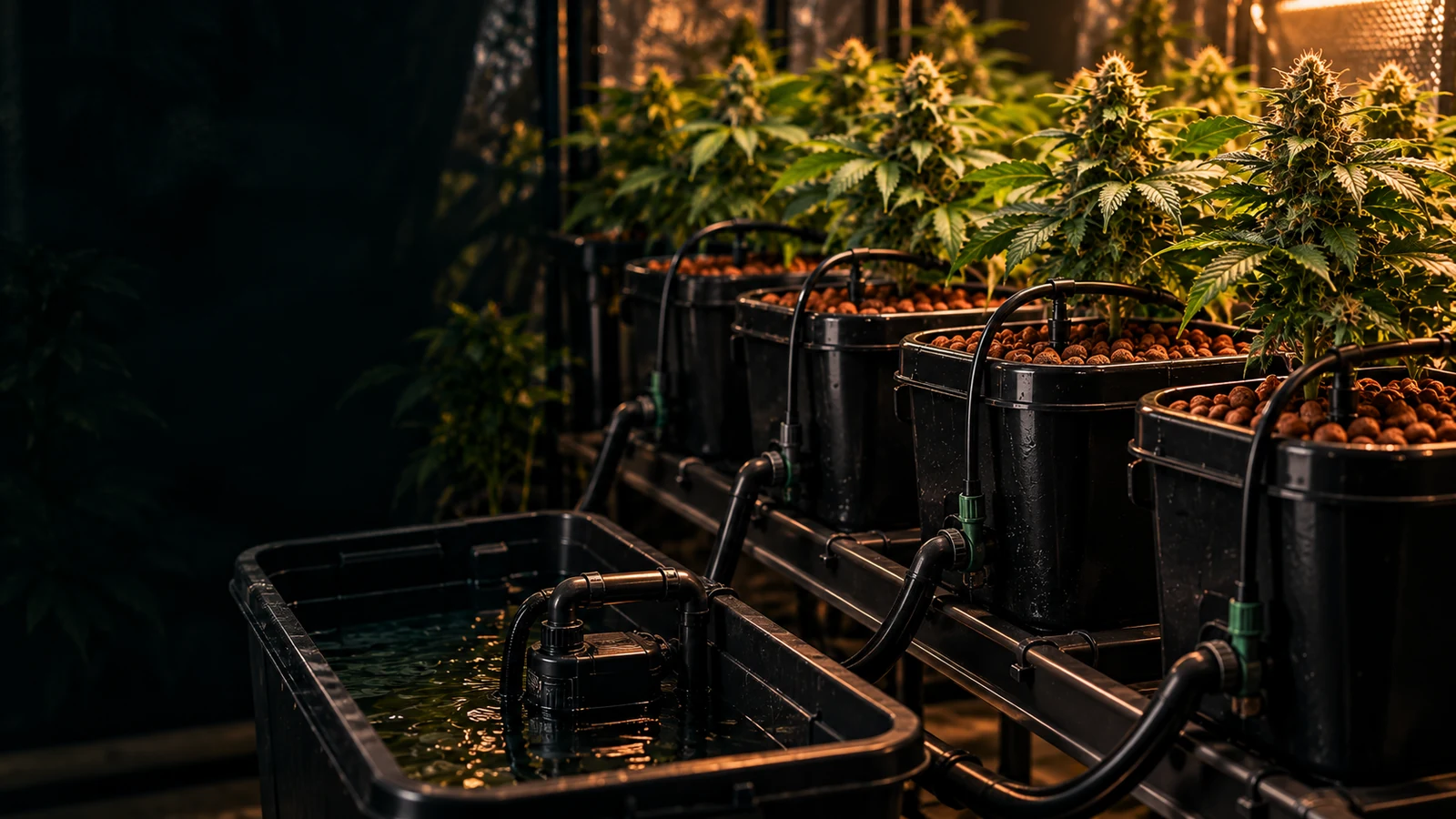
A recirculating drip-fed bucket system delivers nutrient solution from a central reservoir to media-filled plant buckets. Water moves through each bucket and returns through a low drain line, where it can be pumped around again. This is a top-feed recirculating system, not a deep-water-culture bucket with roots held in standing nutrient solution.
How a recirculating bucket system works
The key is the complete water path: the pump must deliver solution to the top of the growing medium, and the return plumbing must drain reliably back to the reservoir. Select a stage below to highlight the part of that path you want to inspect.
Reservoir: Place the pump below the solution surface and make room to check water volume, pH and EC. Return water changes the composition of the shared reservoir.
Pump and feed: Check that every emitter is delivering water to its intended growing medium. Dripper clogs or a loose line can leave one bucket dry while others appear normal.
Growing medium: Clay pebbles, perlite and other grades retain different amounts of moisture. Pump timing must match the medium, root development and environment—not a universal hours-on rule.
Drain return: Elevate or position the buckets so return water can flow downhill. Test for blocked fittings, standing water and a reservoir with sufficient spare capacity before leaving a pump unattended.
- Reservoir holds prepared nutrient solution.
- Pump sends solution through a feed line and drip emitter.
- Solution wets the growing medium around the roots.
- Drain plumbing returns excess solution by gravity.
What each component does
An opaque, drainable container holds the root-zone substrate. The return fitting and growing-medium particle size determine how water exits.
A shared reservoir supplies prepared nutrient solution. Pump sizing depends on head height, line losses and required emitter flow; old fixed GPH prescriptions are not universal.
Supply tubing routes water to each bucket. Keep emitters accessible so clogs or uneven delivery can be found and corrected.
The drain should return water without siphon surprises, leaks or back-ups. Leave access to inspect and flush return plumbing.
Why it is not the same as DWC or ebb and flow
Solution drips into medium-filled buckets; a return line carries excess back to a common reservoir.
Roots grow into a standing, aerated nutrient reservoir. Air delivery is the central component, rather than a medium-drip return loop.
A growing tray or bucket zone is periodically flooded and allowed to drain between cycles. The stage mechanics differ from a top-feed dripper.
What to check before leaving the system running
Feed distribution: All buckets receive solution at the expected rate. Check emitters individually rather than relying on pump noise.
Drain capacity: A blocked or elevated return can flood buckets and spill onto electrical equipment. Test full-flow conditions.
Reservoir changes: Monitor water volume, pH, EC and temperature. Recirculating water carries changes from every bucket.
Sanitation and power: Inspect biofilm, leaks, tubing, pump intake and backup plans. Fans alone do not remedy waterlogged roots.
Bucket layout example
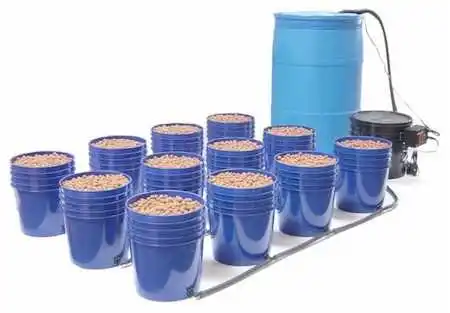
An example bucket arrangement. Actual hose diameters and pump requirements vary by build.
Further reading
For hydroponic media and drip-system fundamentals, see UC Master Gardeners' guide to hydroponics and University of Missouri Extension's hydroponic farming overview. This article describes equipment principles, not a guaranteed schedule, yield, or brand performance.
Related original TWS background: hydroponic grow systems and water and nutrient uptake.