
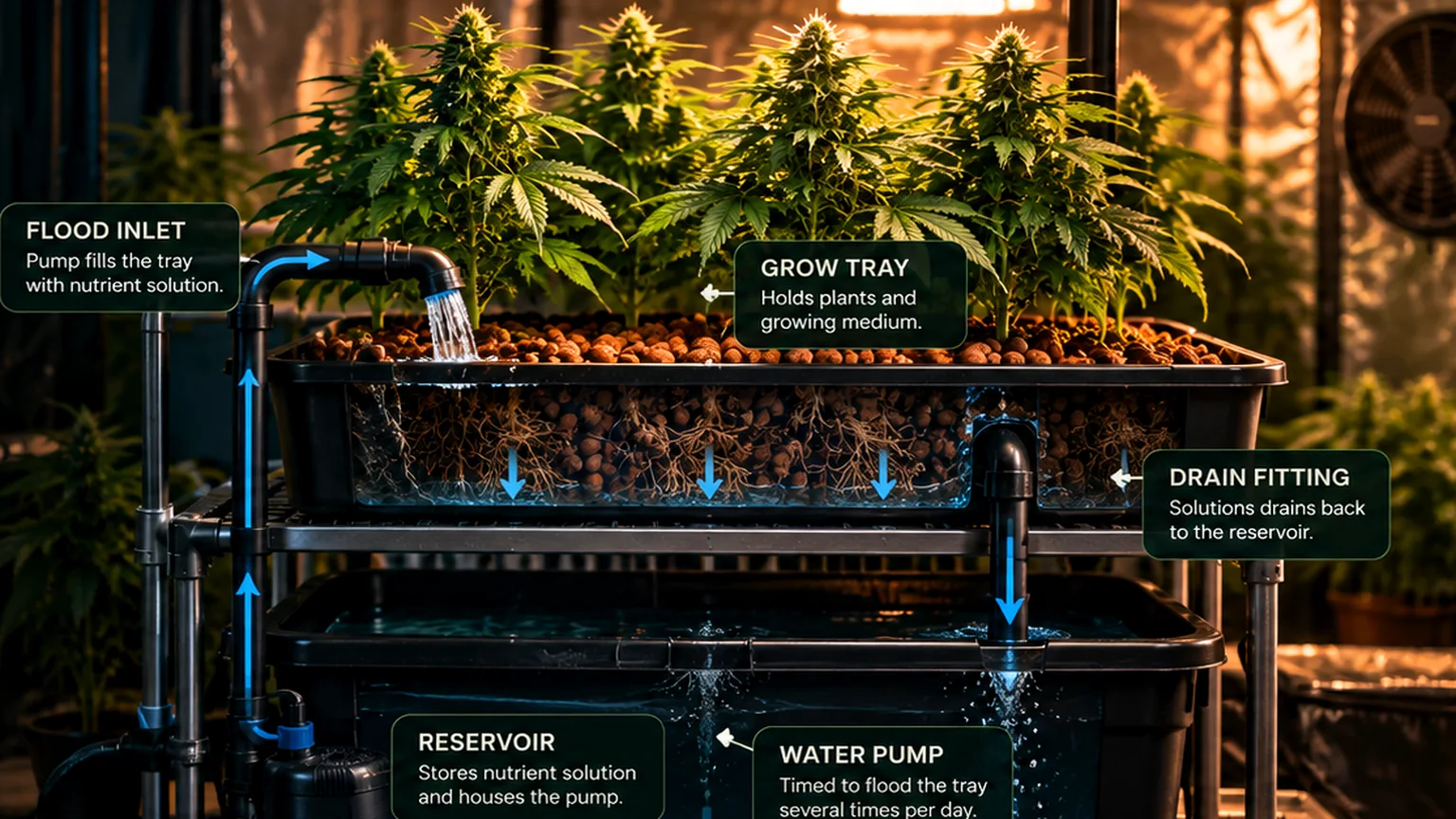
Ebb and flow (also called flood and drain) periodically pumps nutrient solution into a plant tray or connected pots. When the pump stops, the solution returns to the reservoir; the medium retains some moisture while pore space refills with air. The appropriate setup depends on the medium, irrigation reliability, and drainage—not a fixed number of cycles that fits every garden.
How does an ebb and flow system work?
The essential components are a reservoir below the growing area, an appropriately rated pump, a timer or controller, a water-tight tray or connected pots, and a route for solution to drain back safely. When the root zone empties, fresh air can reach spaces that were temporarily water-filled. Flood-and-drain is not a constant-flow system.
Follow one flood-and-drain cycle
Choose a stage to change the illustrative water level. The diagram shows the process, not a measured flood height or a recommended timer schedule.
- Fill. The timer powers the pump. Solution rises from the reservoir into the tray or connected pot network.
- Wet. Water reaches the intended flood level, controlled by fittings or the system controller; roots and medium contact the solution.
- Drain. The pump stops, and gravity or a controlled return pump moves solution back. The root zone must be able to empty.
- Rest. The medium holds moisture while the pores regain air before the next scheduled flood.
Illustrative stages only. Flood depth, duration and frequency must be validated against the actual system and growing medium.
The components that matter
Watertight tray or pots
Containers sit above or beside a reservoir. Every root zone needs a path for flooding and a reliable path for drainage. Check capacity and support for wet containers.
Reservoir, pump and tubing
The water pump must lift solution to the growing area without running dry. Accessible tubing, watertight fittings and adequate reservoir volume reduce preventable failures.
Overflow and return
An overflow or controller prevents unintended water heights. A return route must remain open even when roots, debris or displaced media obstruct the system.
Timer and monitoring
A digital timer or controller cycles the pump. Check that the pump actually starts, stops, and drains. Monitor nutrient solution and actual root-zone moisture rather than trusting presets alone.
Flood trays and controller buckets are different
A flood table or tray
Several containers share a periodically flooded table. Pumped solution reaches the tray, then flows back to a reservoir when the flood ends. Trays can simplify plant access and inspection; their layout must be level, supported, and protected from overflowing.
Connected bucket systems
Multiple pots share a controller and reservoir. Plumbing equalizes levels during fill and drain; some commercial designs use separate pumps and floats. The original article describes an Ebb & Gro-type setup, but a particular bucket count, drum size, or cycle interval is not universal.

Real equipment has to fit the room
Plan space for tubing routes, regular pump checks, access to the reservoir and safe electrical work around water. The equipment layout matters just as much as the flood cycle.

How often should it flood?
There is no universal flood interval. Coarse expanded clay generally drains and dries faster than a moisture-retentive medium; container size, roots, temperature, airflow and plant demand also change how quickly a pot loses water. Start with the equipment and substrate guidance, then observe the root-zone moisture, complete drainage, and reservoir behavior before adjusting the timer.
A frequent cycle that leaves the medium waterlogged is not an improvement. Conversely, a long gap that leaves roots dry can cause stress. More floods do not automatically mean faster growth, and a four-times-per-day schedule should not be treated as a rule for every system.
Failure points to inspect first
Floods too high or overflows
Confirm the overflow and float are correctly positioned and unobstructed; verify pump/controller cutoff before unattended use.
Water remains in the tray
Look for blocked drains, uphill return lines, unlevel trays or a malfunctioning return pump.
Roots dry between cycles
Check actual pump operation, reservoir level, substrate water capacity and the interval between floods.
Reservoir turns cloudy or smells
Check solution condition, temperature, light entering the reservoir, recirculation hygiene and any signs of root disease.
Where to go next
Further reading
For independent technical explanations, see Oregon State University Extension’s Ebb and Flow guide and Illinois Extension’s hydroponic systems overview. Specific manufacturer procedures can differ.