
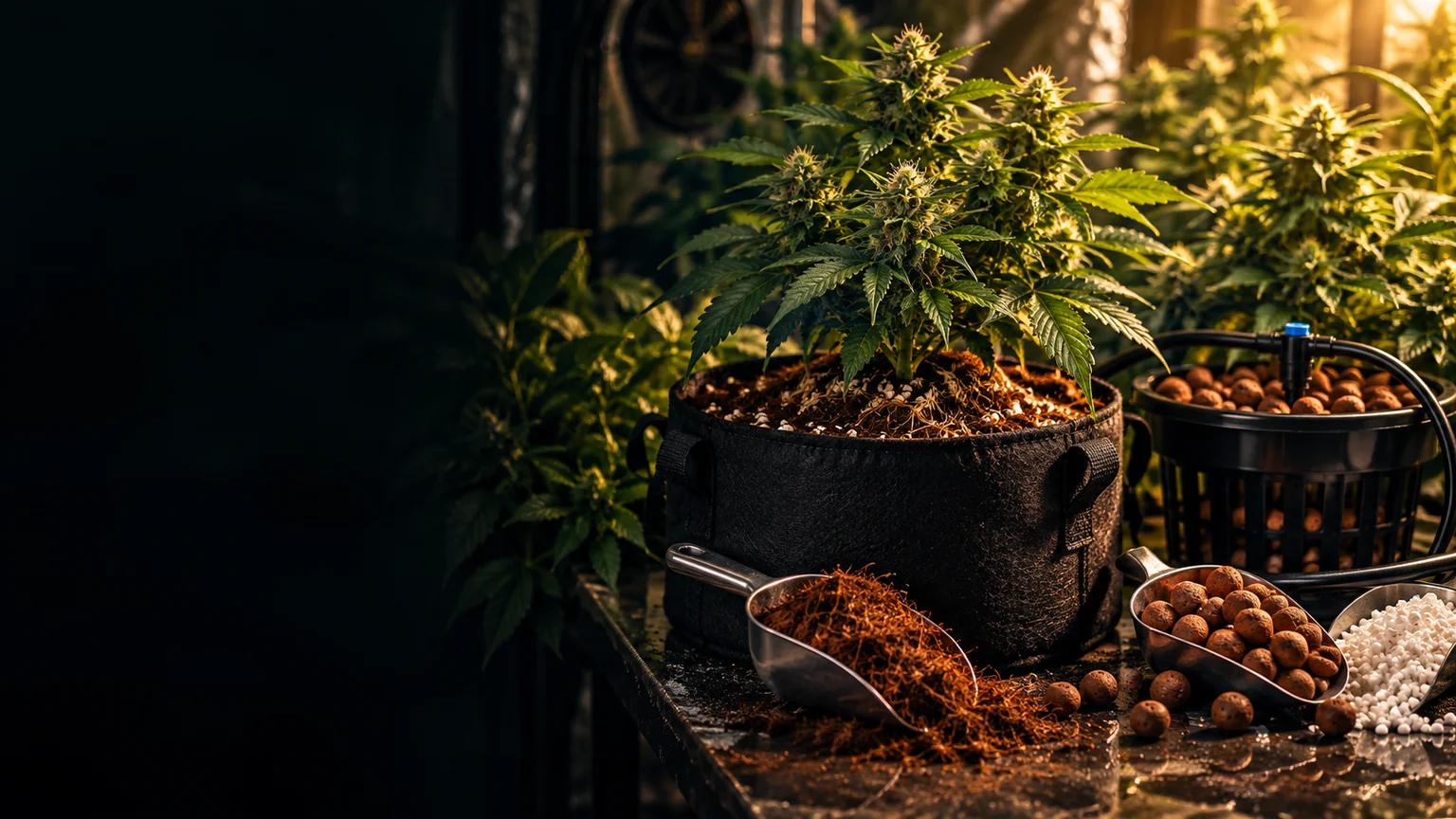
Choose a growing medium to fit the watering system and how much moisture you can reliably manage. No substrate is universally best: drainage, air-filled space, water quality, container depth, and irrigation all influence root conditions.
What does a soilless growing medium do?
A soilless medium anchors roots and changes how water, dissolved nutrients and air move around them. Some materials, such as coco coir, hold moisture between irrigations. Others, including expanded clay, are coarse and drain quickly. The container and watering routine matter as much as the material.
Soilless is not the same as nutrient-free. Some commercial potting blends include fertilizer, lime or other amendments. Review hydroponic cultivation basics and nutrient solution fundamentals when setting up the full system. Check the label and consider your source-water pH, EC and nutrient formulation before adding more feed.
What happens if a watering is late or a pump stops?
Will the container leave enough air space after irrigation?
Can you monitor salts, clean equipment and replace the medium responsibly?
Start with your irrigation setup
The visual below is a decision aid rather than a test result or a ranking of brands. Confirm the specific medium grade, container and watering cycle before treating any combination as suitable.

Before deciding, check the entire root zone
Container depth and drainage holes affect air space and water availability.
Measure incoming pH and EC, and account for nutrient additions and runoff.
Plan for pump faults, blocked emitters and missed manual watering.
Different grades, blends and manufacturers may perform differently.
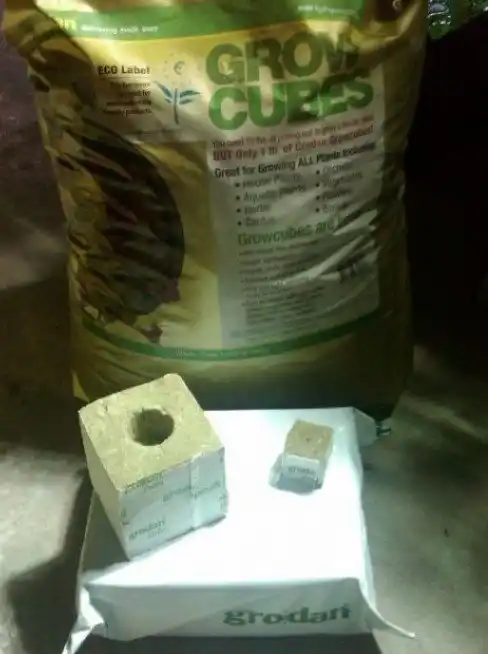
Match the medium to the equipment
A hydroponic installation combines the plant support, container, nutrient solution, water delivery, drainage and air supply. Evaluate the whole system rather than choosing a medium by reputation alone.
Can you clean or reuse soilless media?
Reuse is conditional, not guaranteed. Hard clay or gravel may be washed and disinfected according to suitable product guidance, provided the structure is intact and there is no unresolved disease risk. Coco, peat and stone wool may be difficult or impractical to reuse, depending on contamination, structure and local disposal options. Washing does not automatically make a used substrate sterile.
Wear appropriate protection when handling dry dusty materials. Avoid combining cleaning agents, and replace questionable substrate after a suspected root disease outbreak. For a more detailed explanation of individual media—including perlite, pumice, peat, vermiculite and water culture—use the hydroponic material reference.
Sources and further reading
General substrate properties are described by University of Florida IFAS: Common Media Used in Hydroponics and University of Kentucky: Selecting Growing Media for Soilless Systems. Water retention, air space and pH values vary by the product and system; this overview is not a laboratory measurement.