
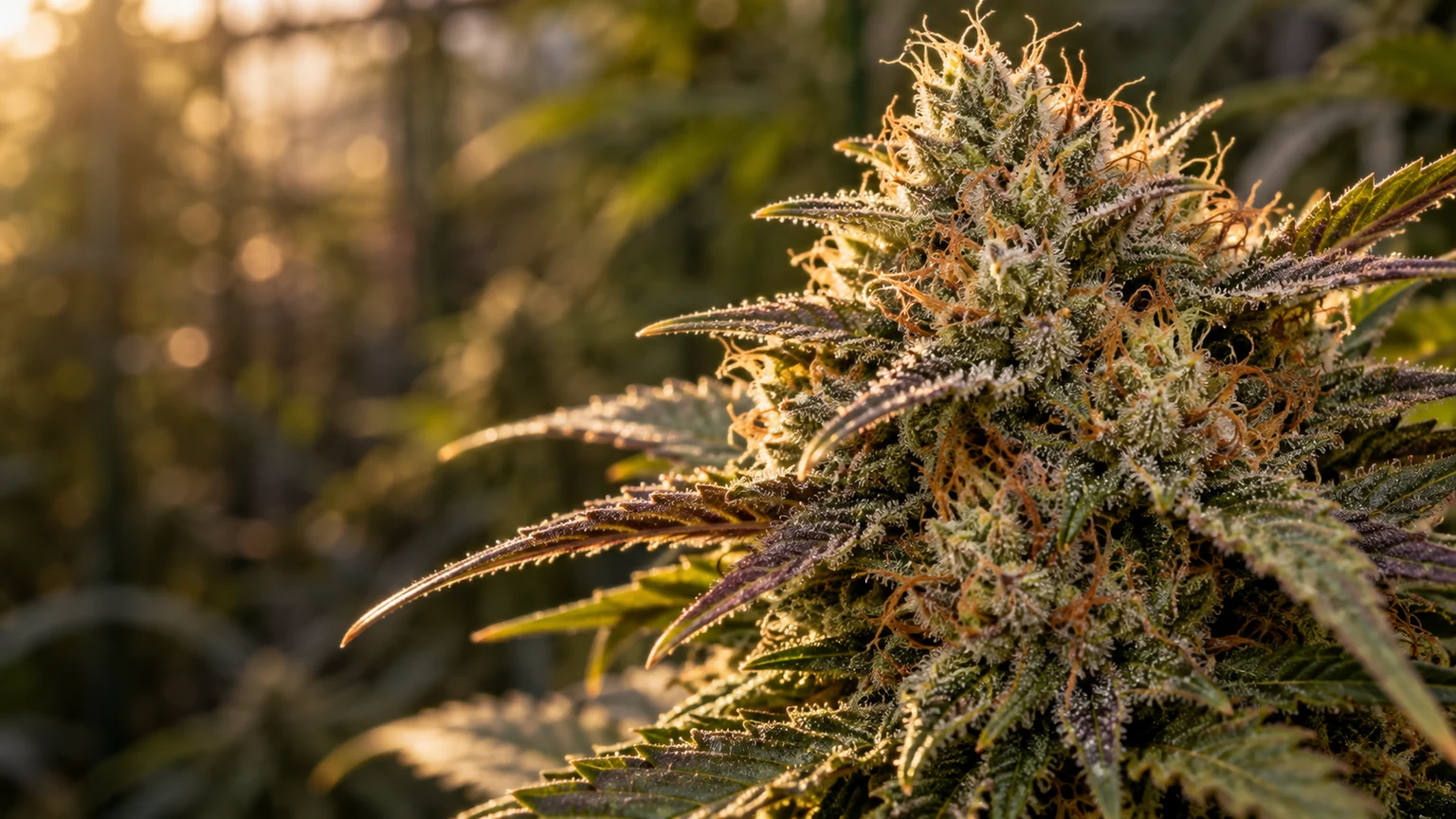
THE HARVEST FIELD GUIDE
Read the flower. Then make the call.
Harvest readiness is a judgment built from several observations: flower development, resin-gland appearance, plant condition and the cultivar’s expected flowering window. A calendar date or a few brown hairs cannot make the decision alone.
01 / OBSERVE CONSISTENTLY
Inspect more than the top cola.
Start with several representative flowers at different heights and light exposures. Use a hand lens or microscope that resolves the round gland heads, steady the view and compare under neutral light. Photograph the same locations over successive checks rather than relying on memory.
Flower bracts
The small structures surrounding the flower carry resin glands. Examine intact heads on several bracts, including flowers below the brightest part of the canopy.
A single sugar leaf
Resin on protruding leaves can look different from nearby flowers. Heat, light exposure and handling also affect what you see. An isolated amber head is weak evidence.
Watch the wider plant too. Is flower expansion slowing? Are fresh stigmas still appearing? Is leaf yellowing gradual, or is it accompanied by wilting, damaged roots or other stress? Compare with the earlier late-flowering observations.
02 / INTERPRET THE SIGNAL
Three appearances, no universal percentage.
These simplified gland-head symbols explain the visual terms. They are illustrations, not microscope photographs or a potency test.
Clear
Translucent heads are often seen earlier in development. Check whether flowers are still building and compare more than one site.
Cloudy
Opaque or milky heads are a useful maturity cue. They do not reveal a measured THC concentration or establish a guaranteed peak.
Amber
Brownish heads can accompany aging and changes in the resin. Their meaning depends on the plant, exposure and condition of the glands.
The hairlike parts commonly called pistils are stigmas. Their darkening can support the assessment, but do not confuse brown stigmas with amber resin heads. A multi-genotype stigma-color study likewise found that the best harvest stage depends on the genotype and the desired chemical profile.
03 / FIELD DECISION
Match the action to the evidence.
Growth continues; signals disagree.
Flowers are expanding, many observed heads remain clear, or one canopy area looks much further along than the rest. Record the locations and reassess; the seed packet’s estimate is a planning window.
Several observations converge.
Representative flowers show advancing gland maturity, flower growth is slowing and the plant’s development fits its expected window. Check the whole plant’s health, then arrange cutting, labeling and drying space.
Unusual browning, decay or fuzzy growth.
Suspected rot is a contamination problem, not evidence of desirable ripeness. Isolate affected material and obtain appropriate plant-health advice. Drying or curing does not make visibly moldy flowers safe to use.
Different branches can mature unevenly. If observations vary widely, inspect more sites rather than averaging the whole plant from one close-up. Measured cannabinoid goals require representative sampling and analytical testing; visual maturity cannot substitute for it.
04 / PLAN THE HANDOFF
Have the drying space ready before the cut.
- Record the plant and observations. Label the cultivar or plant ID, date and inspected flower locations. Keep photographs for comparison.
- Prepare clean tools and supports. Set up a clear work surface and a drying area away from electrical equipment. Keep different plants or batches identifiable.
- Choose the handling method. Whole plants, individual branches and wet or dry trimming have different space and labor needs. Follow the harvest and trimming overview.
- Monitor moisture after harvest. Flower density, branch size and environmental conditions change drying time. Follow the drying-space guide; do not treat a fixed day count or a stem snap as a contamination test.
This guide addresses when the standing plant looks ready. For the cutting and postharvest sequence, continue to the specialist guides below.