
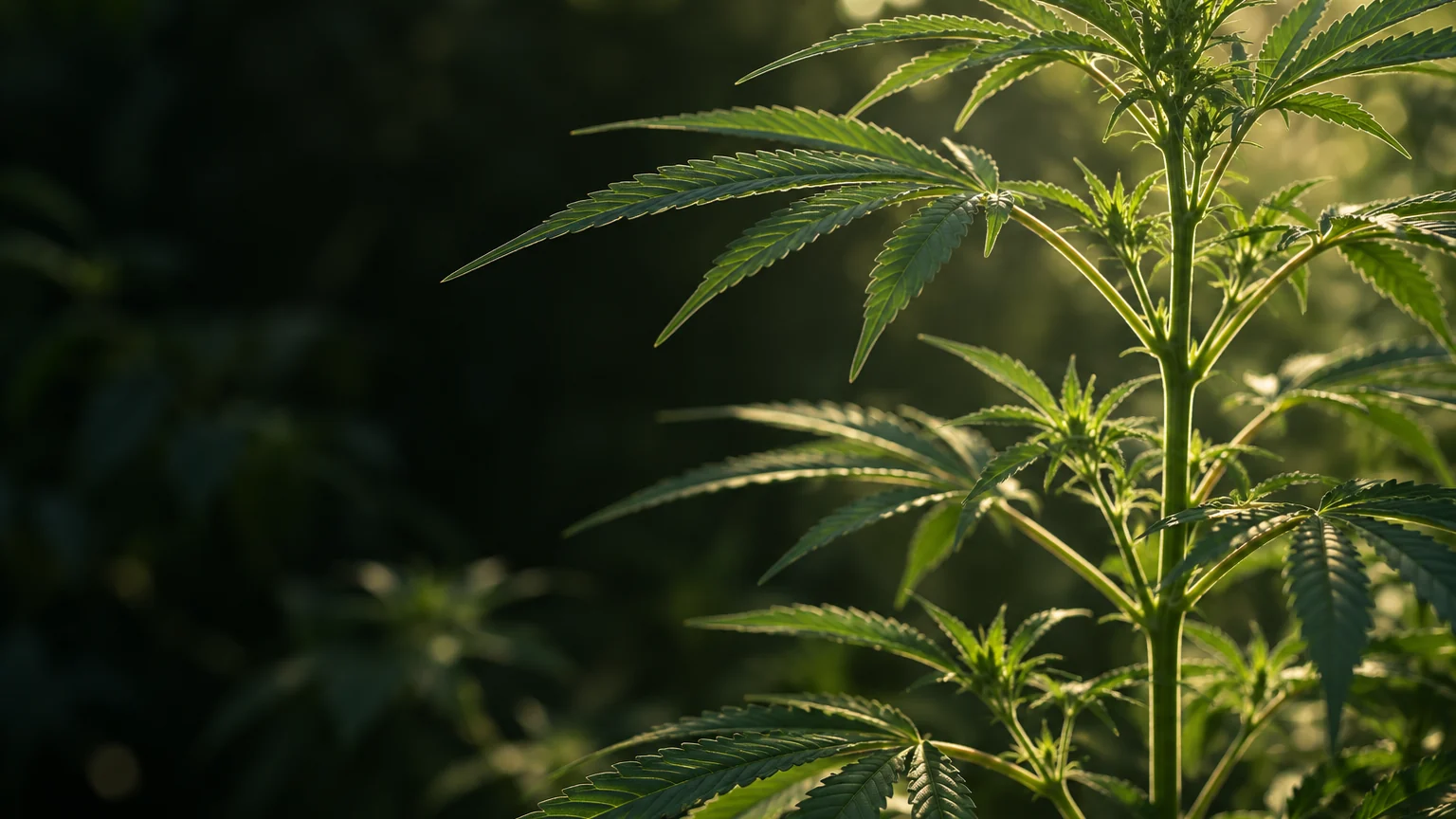
LIFECYCLE / THE TRANSITION
Watch the developing flowers, not a fixed node count.
Preflowering describes the appearance of early reproductive structures as a cannabis plant matures. Timing varies with genetics, plant development and growing conditions. Counting six nodes is not a reliable way to determine sex, and a small structure that is still developing may not be identifiable.
This guide covers the transition and what to do with an observation. For detailed male and female examples, use the plant-sex identification guide.
- Vegetative growthLeaves and branches expand
Observe the plant’s structure and normal new growth.
- Preflowers appearInspect the nodes
Look for developing floral structures beside the stipules.
- Flower developmentConfirm before deciding
Recheck uncertain structures and watch for mixed flower types.
BOTANICAL LANDMARKS
Find the node before trying to identify a flower
- Main stemThe upright support joining successive nodes.
- Inspection areaLook beside the node for developing floral structures.
- Pointed stipuleA normal structure that does not establish sex.
Inspect more than one node with good light and a hand lens. Female floral structures develop protruding stigmas; male flowers develop pollen-bearing structures. Early or ambiguous growth needs another inspection rather than a guess from overall height, leaf width or a pointed stipule.
Male flowers produce pollen. Seeds form on fertilized female flowers.
Male plants do not produce seeds by themselves. Pollination allows seeds to develop in female flowers. That matters when the goal is seedless flower, but it is also the basis of intentional breeding.
If the goal is seedless flower
Separate confirmed pollen-bearing plants from receptive female plants before pollen release. Keep checking the remaining plants; female plants can sometimes develop male flowers.
If the goal is breeding
Manage pollen and parent plants deliberately in a separate controlled setup. Keep records when comparing genetics; do not treat accidental pollination as a planned cross.
Keep stage changes separate from sex identification
For photoperiod-sensitive cannabis, day length influences flowering; autoflowering plants behave differently. Follow the light-cycle guide rather than changing a timer solely because a particular node has appeared.
Likewise, preflowers do not establish a need for a bloom booster. Review the medium, base fertilizer and NPK label before changing feeding. If you are beginning with seed, the seed-to-harvest overview puts this transition in context.
Questions about preflowering
- Can I tell sex at the sixth node?
- Not reliably. Node count alone does not establish whether identifiable flowers are present. Inspect the actual floral structures.
- Does finding a preflower mean full flowering has started?
- Not necessarily. Early reproductive structures and widespread flower development are different observations. Timing depends on genetics and conditions.
- What should I do if the structure is too small to identify?
- Keep a clear photograph and recheck as it develops. Avoid an irreversible decision based only on a stipule or an unclear image.