
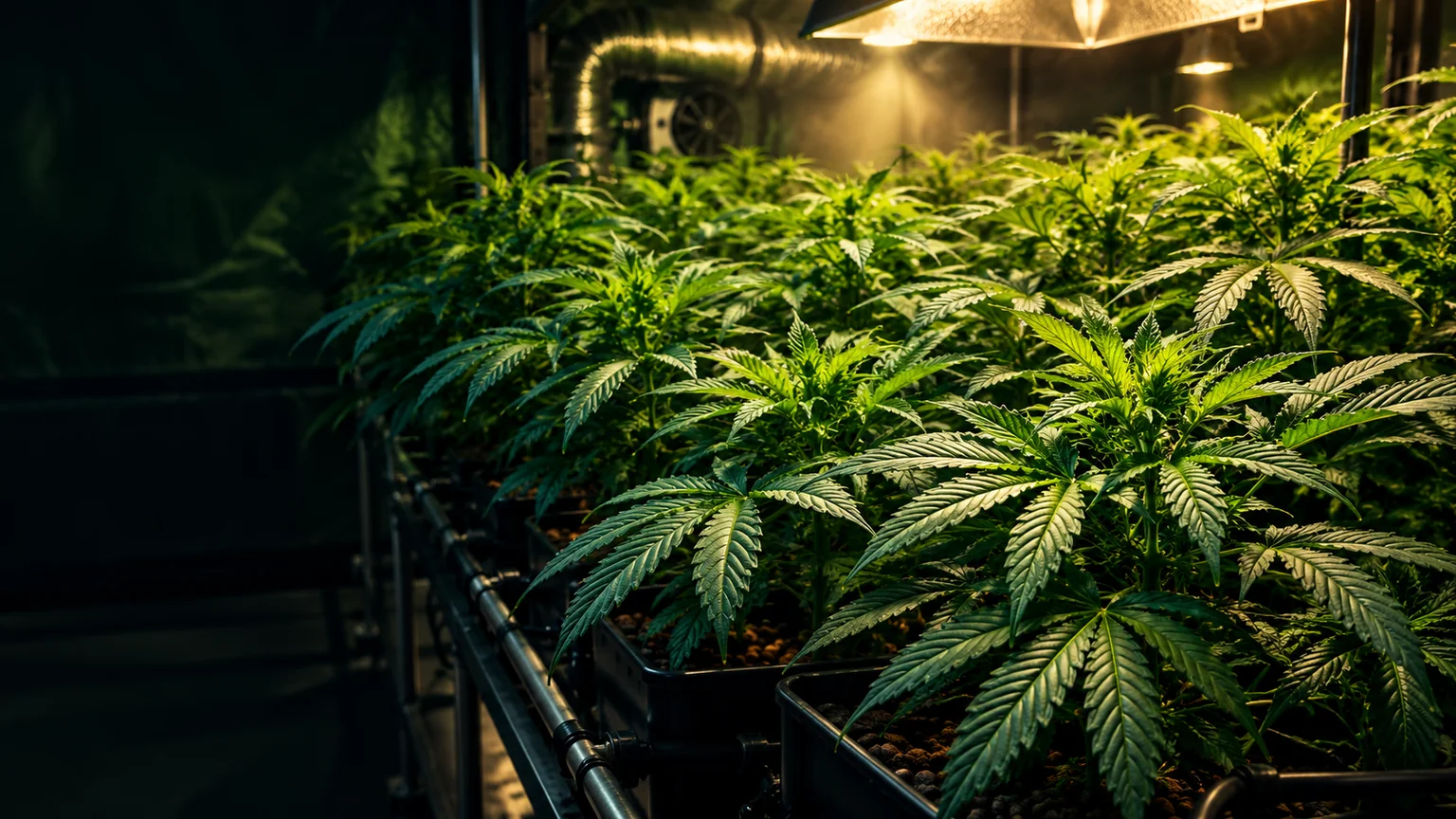
Vegetative Week 4
Week-four vegetative cannabis canopy nearing a potential flowering transition: assess healthy branching, root-zone stability, available space and light schedules before deciding when to change stages.
VEGETATIVE WEEK 4 / FIELD NOTES
Readiness before the flowering transition
A mature vegetative canopy can look ready long before the room is ready for it. Use this week to evaluate plant health, branch structure, available space and a workable flowering plan, not to follow a universal four-week deadline.
- 01Canopy space
Account for future growth above the lights and beside neighboring plants.
- 02Plant health
Look for consistent new growth without unresolved stress.
- 03Room stability
Check airflow, equipment access and root-zone conditions.
- 04Transition
Make the flowering decision from plant readiness, not the week number.
IN THIS GROW
Inside the Week 4 grow journal
In this sea-of-green growing journal, Week 4 marks the planned move toward flowering. The original note is specific to that setup. Other plants, environments and cultivars can need a different length of vegetative growth.

GROW JOURNAL
Growing marijuana in a sea of green Vegetative Week 4 is the time you transplant them to the flowering stage. Vegetative Week 4 Marijuana Plant Growing in hydroponics. Vegetative Stages Week by Week
Look at the space the plant will need next
Before considering flowering, look at the full canopy: height, branch spread, crowded interior leaves and the space between plant tops and fixtures. Photoperiod plants often continue stretching after the light schedule changes, although the amount varies considerably. A full vegetative canopy is not useful if it blocks airflow or becomes difficult to manage.
Make sure the roots can support more growth
Check the pattern of water use and whether the growing system still drains and aerates reliably. Roots and foliage should be assessed together: wilt, discoloration or a sudden change in uptake can have several causes. Correct an unstable root zone before combining it with changes in the lighting program or growing location.
Understand what changes at flowering
An 18-hour light and 6-hour dark cycle is a common vegetative reference and appears in the Week 4 FoxFarm soil chart. Many photoperiod varieties are prompted to flower by a longer uninterrupted dark period, commonly through a 12/12 schedule indoors. Changing the light cycle is distinct from moving a plant to another container or room. The appropriate timing also depends on genetics, health and space.
Use measurements instead of a calendar prescription
As plants develop, feeding decisions should follow the medium, source water, root health and visible plant response. The FoxFarm instrument panel below documents that manufacturer's fourth-week soil schedule; it does not establish the historical journal's exact feeding amounts and is not a general hydroponic recipe. Check whether the schedule matches your system before scaling the listed values.
View the Week 4 feeding referenceVegetative week 4
A field-friendly reference that pairs this stage with the current FoxFarm soil schedule. Scale the recipe to your actual watering volume with the calculator instead of doing the math in the grow room.
Schedule values are a reference to the current FoxFarm soil chart, not a universal prescription for every cultivar, medium or environment.
OBSERVATION CHECKLIST
What to assess before the transition
Height and clearance
Enough usable space remains for expected stretch and safe fixture placement.
Healthy foliage
The newest growth is stable, without a persistent unresolved stress pattern.
Air movement
The denser canopy allows circulation and access for inspection.
Root-zone consistency
Water uptake, drainage and relevant measurements are reasonably stable.
FLOWERING HANDOFF
Is this grow actually ready?
A flowering schedule is a management choice for a healthy photoperiod plant. Week 4 does not require every grow to change stages.
- The plants are healthy enough to tolerate a change in conditions.
- Canopy dimensions and potential stretch fit the available room.
- The lighting and dark period can remain consistent and uninterrupted.
- Airflow, irrigation and inspection access will still work with larger plants.
Growing references: University of Saskatchewan — Vegetative Growth and Indoor Lighting.