
PEST MANAGEMENT / MITICIDES
Confirm mites before choosing a miticide.
A miticide targets mites; it is not a universal treatment for every insect, fungus or unhealthy leaf. Some products work by direct contact, while others act differently. The exact formulation, permitted crop and application directions determine whether a product is suitable.
For cannabis, an approval for tomatoes, ornamentals or another crop does not by itself establish a permitted use. Check the container label and your jurisdiction’s current cannabis pesticide requirements before any application.
What to inspect first
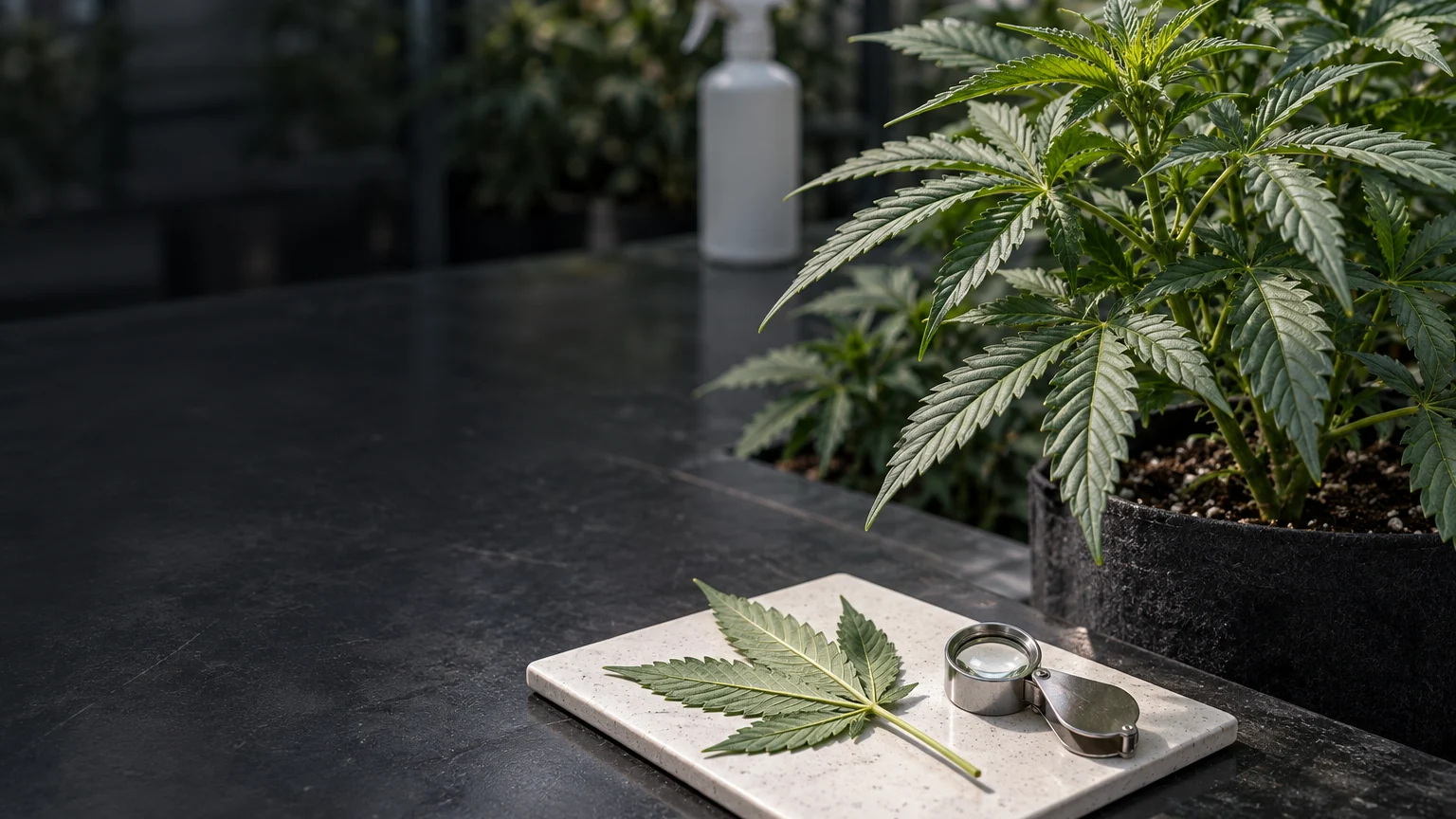
Spider-mite feeding can leave pale stippling, bronzing and, in heavier infestations, webbing. Use a hand lens to inspect leaf undersides and nearby plants. Absence of webbing does not rule out mites, and old damage does not prove live mites remain. The spider-mite guide covers identification in more detail.
Separate affected plants where feasible, remove plant debris and review plant arrivals and tool hygiene. Suitable predatory mites may be part of a control program, but species, conditions and compatibility with previous pesticides matter. Avoid indiscriminate sprays that can also kill beneficial organisms.
THE CONTAINER IS THE STARTING POINT
Six checks before any application
- Exact product identityTrade name, active ingredient, concentration and any registration number. Similar names can describe different formulations.
- Crop and locationConfirm the crop, indoor or outdoor use, treatment site and applicable local cannabis rules.
- Target and application methodThe pest and the proposed spray, dip or drench must match permitted directions. Do not turn a foliar product into a root treatment.
- Exposure precautionsFollow protective equipment, ventilation, storage and reentry directions. Keep people, animals and unrelated equipment clear as directed.
- Timing and compatibilityCheck crop-stage restrictions, repeat intervals, maximum applications, harvest limits and incompatibilities with earlier treatments.
- Mixing and disposalUse the labeled amount and method. Do not strengthen a mixture, add household soap or combine products without explicit permission.
If a spray appears not to work
Recheck identification, coverage requirements, product condition, timing and whether live pests are still present. Do not respond by increasing concentration or dipping the entire plant. Dips and drenches require their own permitted directions; they are not a fallback for an unsuccessful spray.
Plant injury varies by product, plant condition, temperature and application. The claim that every spray inevitably clogs stomata and slows growth is too broad. Check the label’s plant-sensitivity precautions and discuss persistent problems with a qualified adviser.
See pesticide categories for the wider comparison, AzaMax label considerations for that specific product, and airflow and climate monitoring for the growing environment.

Know the exact formulation
This pictured AzaMax container does not establish a permitted use. Read the current label for your exact product and location.
Questions about miticide sprays
- Does any insecticide kill spider mites?
- No. Mites are arachnids, and insecticides vary in their effects on them. Some broad-spectrum products disrupt predators and can worsen mite problems.
- Can I spray flowering cannabis if a product is allowed on vegetables?
- That alone is insufficient. Verify the exact product, crop-stage restrictions, local cannabis requirements and intended use. Do not invent a harvest waiting period.
- Should I increase the dose when mites return?
- No. Follow the label. Recheck the pest and treatment program rather than increasing concentration or application frequency.