A PLANT’S LIFE / SEVEN OBSERVABLE STAGES
Follow development, not a rigid week count.
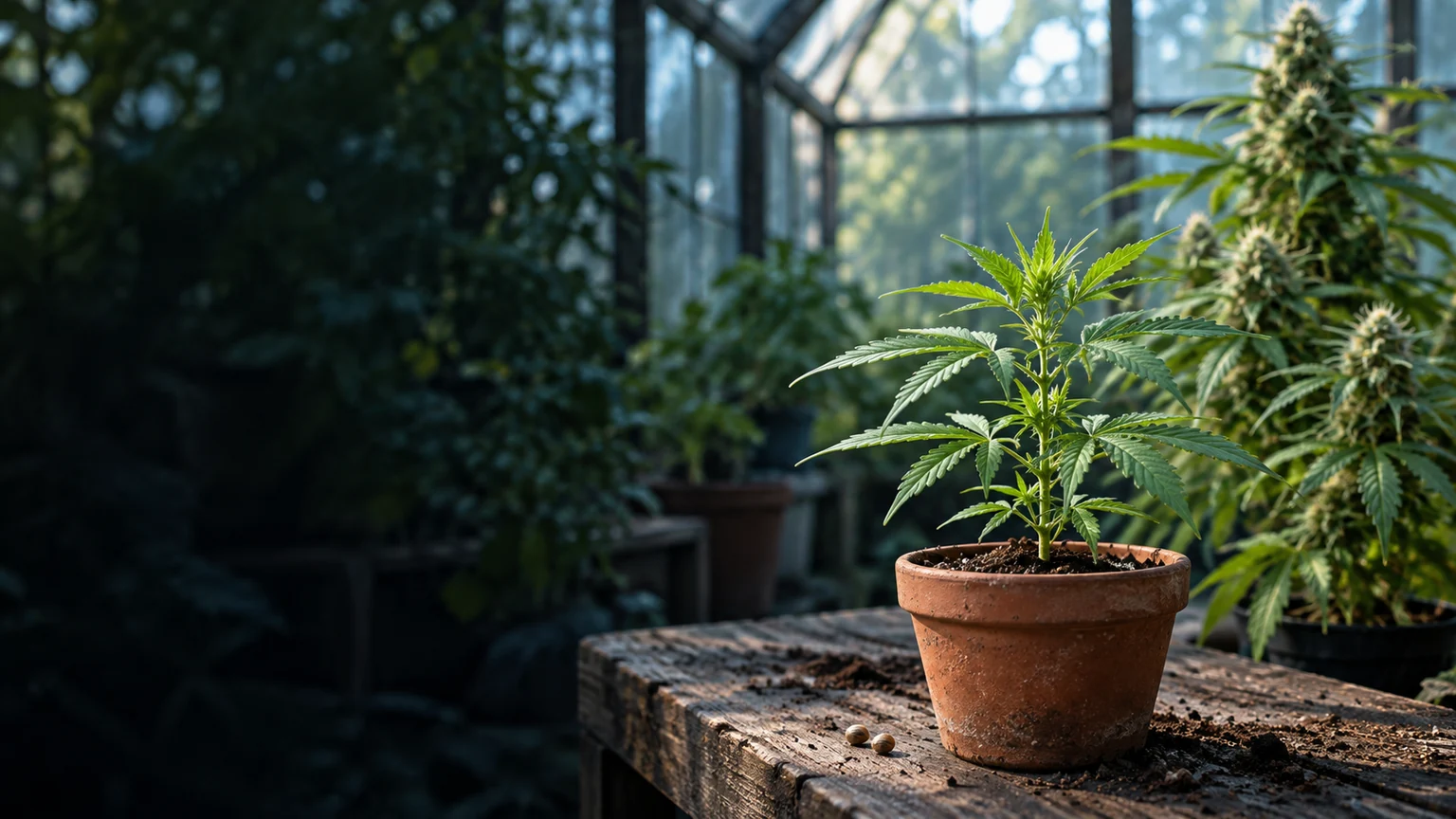
A cannabis seed becomes a seedling, builds roots and branches, then develops flowers. Harvest, drying and storage follow the living plant’s growth. Genetics, environment and cultivation method affect the pace; one calendar cannot describe every plant.
01 / THE FIRST ROOT
Germination
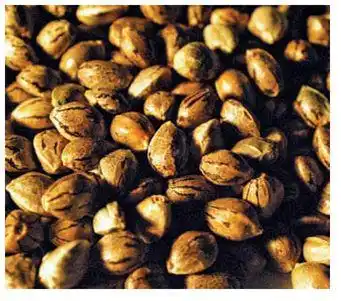
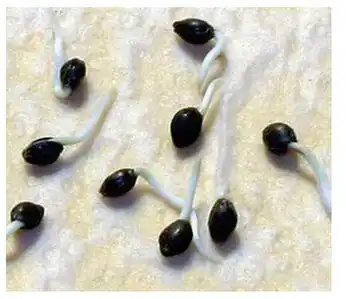
A viable seed absorbs water and the emerging root breaks through the seed coat. Moisture, oxygen and suitable temperature matter; a saturated medium can deprive the new root of air. An emerged root is fragile, so avoid unnecessary handling.
Regular, feminized and autoflowering describe different seed characteristics, not three germination stages. Compare seed types before choosing a germination method.
Look for A root emerging, followed by a shoot establishing above the medium.
02 / FIRST LEAVES
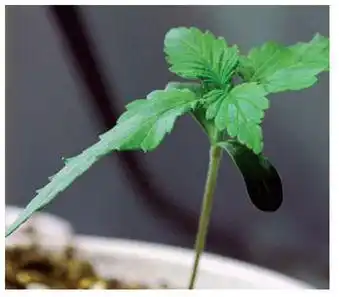
Seedling establishment
The first paired seed leaves are cotyledons. Serrated true leaves follow as the root system develops. Leaf shape and leaflet count vary; a neat sequence of three, five and seven leaflets is not a test every healthy plant must pass.
At this scale, sudden changes in moisture, heat or light can overwhelm a small root system. Watch the plant and medium together rather than watering by the clock. See the seedling-growth guide.
Look for Upright new growth, expanding true leaves and establishment in the medium.
03 / ROOTS, STEMS & BRANCHES
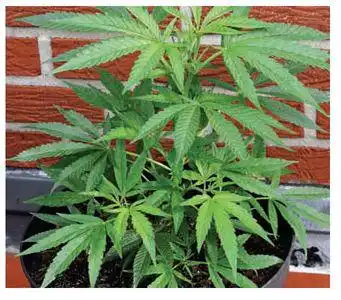
Vegetative growth
The plant builds its canopy and root system. New nodes, branches and leaves provide a clearer picture of progress than height alone. Watering and feeding needs change with container size, growing medium and environment.
A clone starts from existing plant tissue rather than repeating seed germination. It still needs to establish roots before behaving like an established plant. Compare vegetative growth with water and nutrients for cuttings.
Look for New nodes and branching; assess structure, root-zone condition and available space.
04 / THE ROUTE INTO FLOWER
Photoperiod and autoflowering take different paths.
Responds to the light–dark cycle
Lengthening uninterrupted nights promote flowering in mature plants. Indoors, a 12-hour light / 12-hour dark schedule is common; critical day length and response differ among cultivars. Outdoor timing depends on latitude, season and genetics.
Development is less tied to day length
These plants begin reproductive development largely according to age and genetics rather than requiring a short-day switch. They still need appropriate growing conditions; “automatic” does not mean a guaranteed finish date.
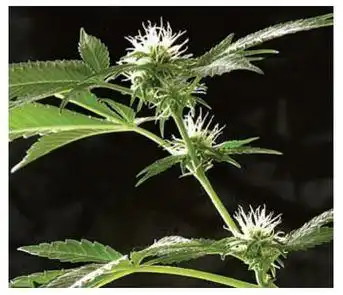
Preflowers can reveal reproductive structures before the main flowering display. Inspect the actual flowers rather than assuming plant sex from seed appearance or leaf shape. Read preflowering, flower identification and flowering light cycles.
05 / FLOWER DEVELOPMENT
From first stigmas to resinous flower clusters.
Early flowering can include rapid stem elongation. Female flower clusters then enlarge and develop resin glands. Duration varies substantially among cultivars; six to twelve weeks is not a universal limit.
Cannabis commonly has separate male and female plants, but plants can express both kinds of flowers. Pollination can produce seeds in female flowers. Seedless female flowers are called sinsemilla; seedlessness does not guarantee a particular yield, THC percentage or longer flowering period.
Look for Flower structures, cluster development and changing resin glands. Follow flower development for a closer view.
06 / THE READINESS DECISION
Harvest when observations align.
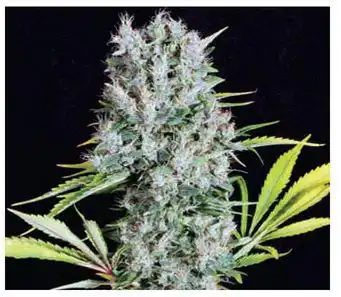
Use the cultivar’s expected window to plan inspections. Assess representative flowers, gland-head appearance and overall plant condition together. Brown stigmas, yellow leaves or one amber trichome cannot establish readiness on their own.
Decide when to cut separately from how to process the plant. The harvest-readiness field guide explains the decision; harvesting and trimming covers the next work.
Look for Converging maturity observations across more than one flower site.
07 / AFTER THE LIVING PLANT
Drying, conditioning and storage.
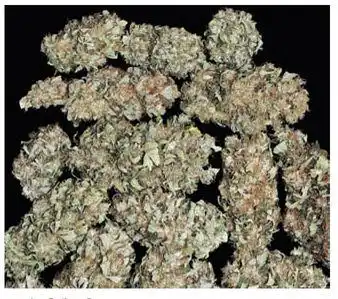
Cut flowers still contain substantial moisture. Drying changes their mass and texture; time depends on the material and environment. Conditioning and storage follow, with continued attention to moisture and contamination.
Keep batches identified, inspect regularly and avoid sealing material while it is still too wet. Curing does not make moldy material safe. Use the drying guide and wet-to-dry weight calculator for the separate postharvest questions.
Look for A controlled drying process and stable storage conditions, rather than a fixed deadline.