
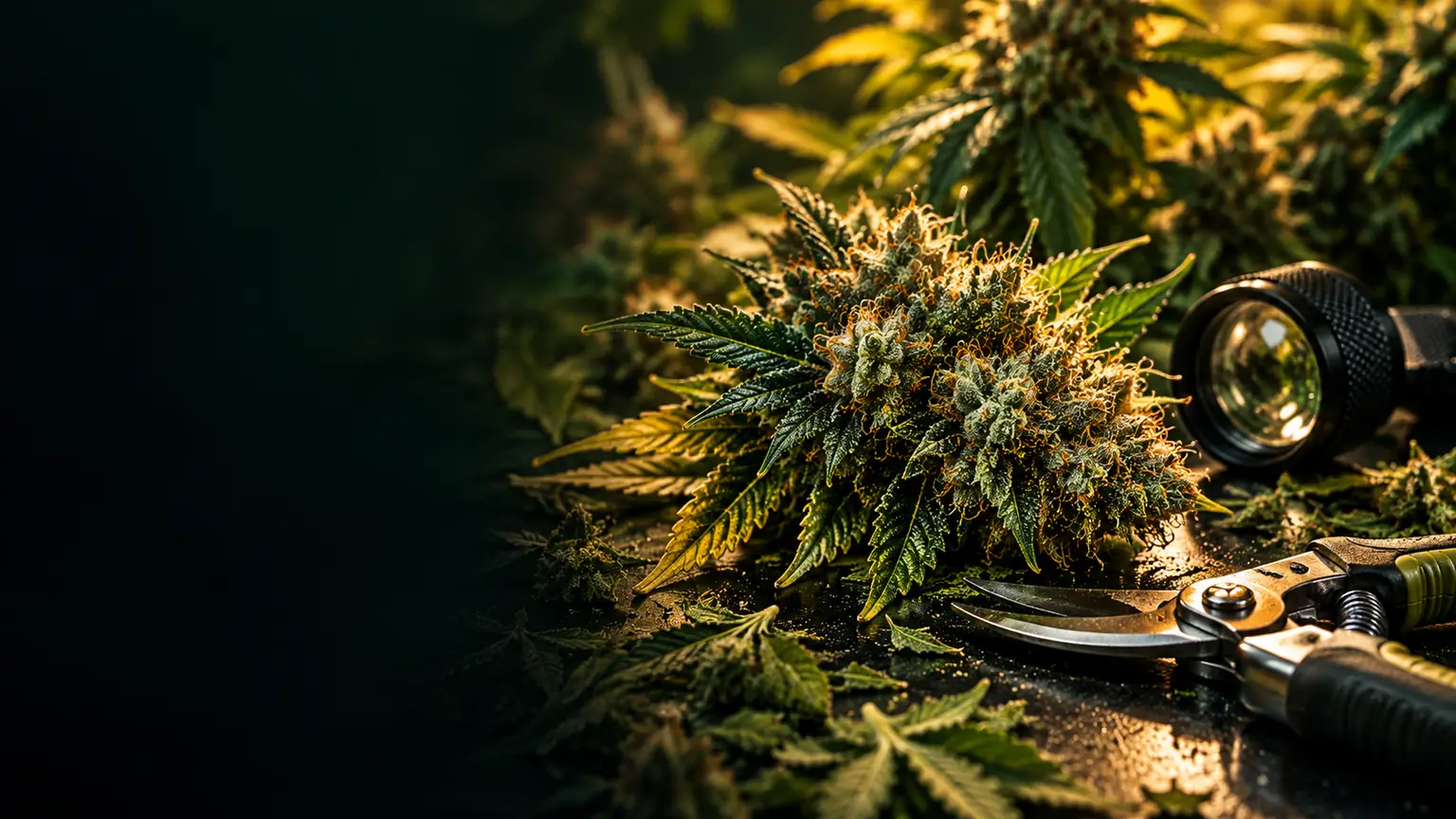
Harvest readiness / trimming / drying
Harvest starts before the first cut. Watch how flowers develop, check multiple parts of the plant, and prepare a clean space for trimming and drying. Trichome appearance provides useful context, but it cannot establish potency or determine an exact harvest day on its own.
How do you know cannabis is ready to harvest?
Look at the flowers themselves, not only the age of the plant. A magnifier helps you observe glandular trichomes on the flower bracts. Pistil appearance and changes in growth can add context, but neither is a reliable stand-alone test for cannabinoid composition.
Trichome appearance
Check several developed flowers. Clear, cloudy-looking and amber-looking resin glands can coexist, and color is not a laboratory measurement.
Growth and maturity
Compare flower development across the plant. Lower and upper sites may mature differently.
Crop health
Inspect for mold, pests and damage before cutting. A visually mature flower is not necessarily safe to use.
The harvest workflow, from inspection to storage
Five stages to plan for
- Assess readiness. Observe flowers at more than one site rather than relying on a single calendar date.
- Prepare a clean workspace. Sanitize cutting surfaces and tools, and check for visible spoilage.
- Cut and organize plants. Keep material identifiable and avoid crushing flowers during handling.
- Choose a trimming approach. Wet and dry trimming have different handling and space requirements.
- Dry, then cure appropriately. Monitor moisture and air movement; curing does not make visibly moldy cannabis safe.
What happens after the plants are cut?
Drying removes moisture from harvested flowers. Its pace depends on flower density, airflow and the environment. Curing is a separate controlled-storage stage after suitable drying. Rushing either process increases the chance of inconsistent material or moisture-related problems.
Trimming decisions
Removing large fan leaves is different from shaping the smaller resin-bearing leaves around a flower. Learn how wet and dry trimming compare.
Drying expectations
A fixed number of days cannot guarantee readiness. Check moisture conditions and inspect routinely for off-odors or visible fungal growth.
Harvesting cannabis plants: field view

From standing plants to finished flower
Harvest planning involves more than judging when a plant is mature. Trimming, drying space and clean handling all affect what happens after cutting.
Crop safety: Discard visibly moldy or contaminated plant material. Appearance and trichome color cannot confirm chemical safety, and local cultivation and possession laws vary.
Go deeper into each stage
Harvesting Marijuana Buds
Flower maturity and the original harvest demonstration.
HAND TRIMMINGTrimming & Manicuring
Understand trimming choices and the flower structures you remove.
FLOWER DEVELOPMENTFlowering Week 6
Review how late-flowering plants develop.
PLANNING TOOLWet-to-Dry Calculator
Estimate the dry-weight range from your harvest weight.