
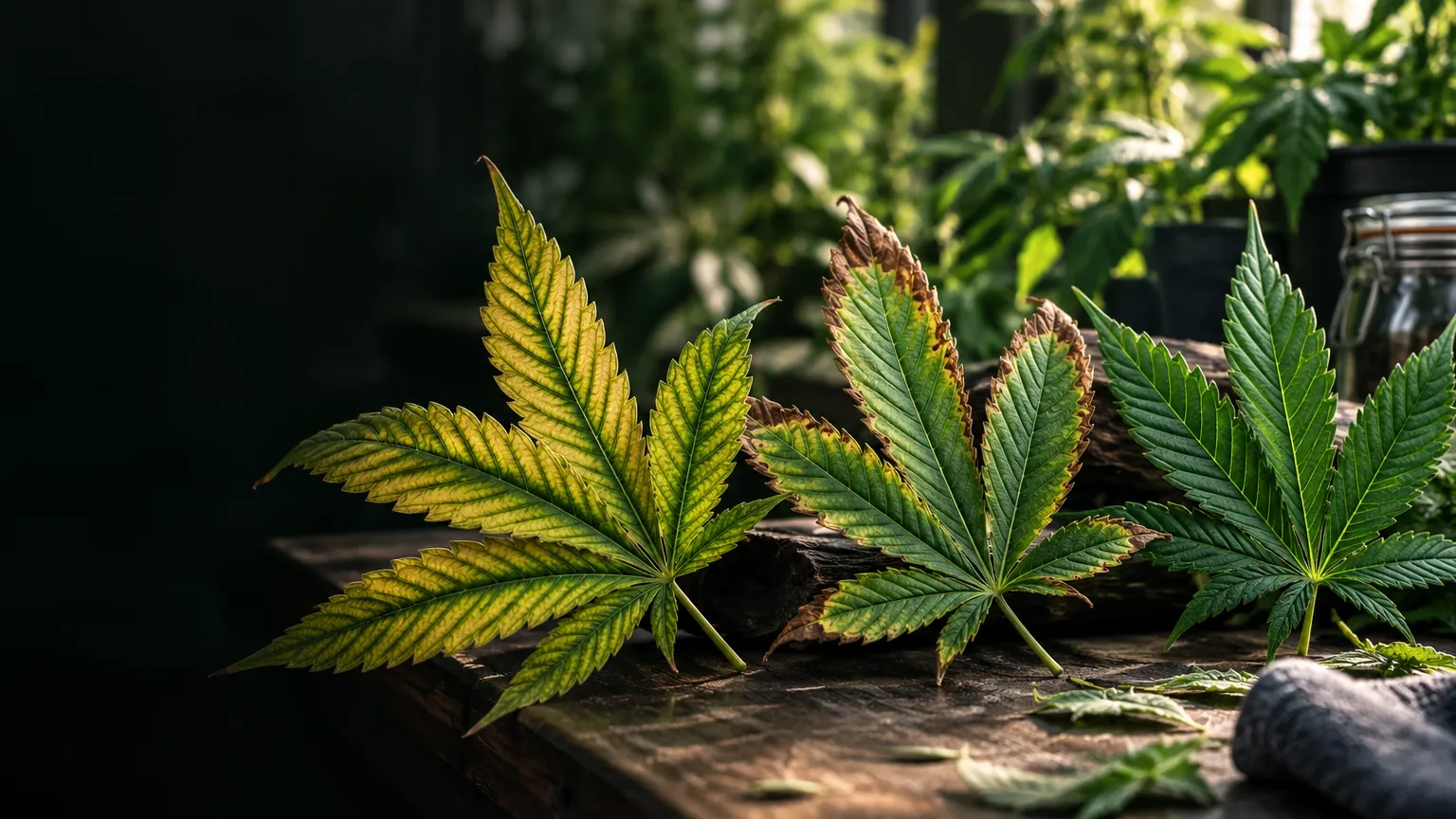
Yellow leaves, dark spots and burned margins are symptoms, not diagnoses. Start with where the damage appears, check the root environment, then look for insects or disease before changing fertilizer. A single leaf cannot tell you exactly which nutrient—if any—is missing.
Older or newer growth? One plant or the entire canopy?
Check watering, drainage, substrate pH and salinity.
Inspect leaf undersides, light exposure and recent changes.
What do common leaf symptoms mean?
Look for a pattern across several leaves and plants. The examples below are clues that narrow an investigation, not a visual test that confirms a particular deficiency.
Older leaves fade yellow
Possible nitrogen shortage, but wet or damaged roots, insufficient light and natural aging can look similar. Check the plant's growth stage, cultivar and overall vigor.
Yellow tissue, greener veins
Interveinal chlorosis can suggest magnesium in older leaves or iron-related uptake issues in new growth. Root-zone pH and other conditions can produce the same effect.
Brown margins or tips
Possible potassium imbalance, excess salts, inconsistent watering, heat or root injury. Do not assume every scorched tip means the plant needs more fertilizer.
Pale or distorted new leaves
Explore root problems, micronutrient availability and pest injury. Rare deficiencies should not be treated by guesswork or automatic addition of trace minerals.
A reliable way to investigate the problem
- Record where symptoms begin. Photograph older and newer leaves, the whole plant and affected neighbors. Note whether damage is spreading.
- Inspect the plant, not just the discoloration. Look beneath leaves and along stems for webbing, insects, feeding marks or unusual lesions.
- Review the root environment. Check watering frequency, drainage, aeration, substrate condition and actual root-zone pH. Check electrical conductivity (EC) or salinity when appropriate to the growing medium.
- Compare feeding against the label. Review the formulation, dilution and recent changes. Avoid layering nutrient products onto an unknown problem.
- Confirm before correcting. Use a reliable pH/EC instrument and, where appropriate, substrate, irrigation-water or tissue testing. Make one measured correction at a time and watch new growth for improvement.
Why does leaf position matter?
Plants can move some nutrients from older tissues toward growing points, while other nutrients are less mobile. This is one reason a symptom may appear on old leaves first or on new leaves first. But mobility alone cannot identify the cause, and the same nutrient can produce different symptoms across species and conditions.
Nitrogen and magnesium
Older foliage may fade or develop interveinal chlorosis. Check root health and overall plant condition before adjusting supply.
Iron and some micronutrients
Pale young leaves can reflect nutrient availability rather than a shortage in the fertilizer bottle, particularly when root-zone pH is unsuitable.
How can you tell a pest problem from a deficiency?
Neither a leaf chart nor a photograph is enough on its own. Spider mites may leave small stippled marks and fine webbing, particularly under leaves; other insects may produce clustered feeding damage. Nutrient or water stress often develops in broader patterns, but overlap is common. See the dedicated spider mite identification guide before considering an intervention.
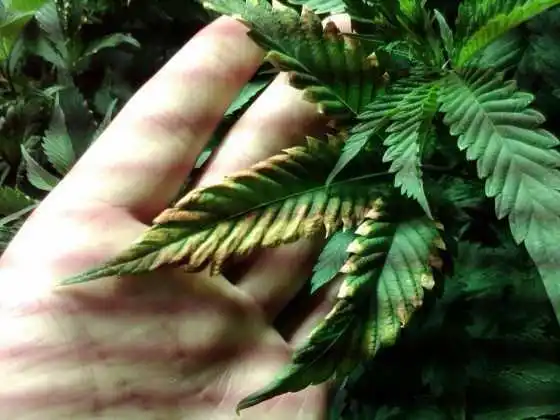
One leaf, several plausible causes
The pictured plant shows distinct discoloration on a cannabis leaf. The photograph documents what the symptom looks like—not its laboratory-confirmed cause. Examine the rest of the plant and the growing conditions before making a diagnosis.
Should you add fertilizer when leaves turn yellow?
Not automatically. Excess fertilizer can raise salinity and injure roots, creating additional symptoms. Some deficiencies occur even with sufficient nutrients present because poor drainage, unfavorable pH or impaired roots restrict uptake. Diagnose the underlying condition first; then follow the measured requirements of the medium and plant.
Never use homemade pesticide mixtures or crop treatments solely because a photograph looks similar. Check pest identity, product registration and label restrictions for edible or inhalable crops where cultivation is legal. Isolate visibly infested plants as appropriate, and do not use moldy or contaminated material.
Continue the plant-health diagnosis
Sources and further reading
University of California Integrated Pest Management: nutrient deficiencies, nutrient disorders and root-zone conditions, and other causes of yellowing leaves. These general plant-diagnostic principles are useful starting points; they do not replace crop-specific testing.