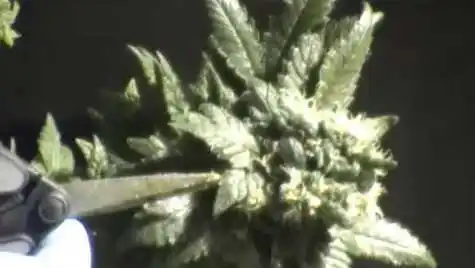

POST-HARVEST / FLOWER PREPARATION
Trim for the flower—not just the shape.
Trimming removes large fan leaves and, when desired, the smaller sugar leaves around the flowers. A careful manicure gives a neater finished bud without cutting away healthy flower or crushing resin glands. The main choice is when to trim: immediately after harvest or after drying.
Choose the timingUse clean, sharp toolsHandle by the stem
01 / THE DECISION
Wet trim or dry trim?
BEFORE DRYING
Wet trimming
Cut branches and remove fan leaves and selected sugar leaves while the plant is still fresh. Foliage is easier to see and handle; removing it early generally speeds drying.
Useful whenSpace is limited, humidity is harder to control, or you want to finish the detail work on harvest day.
TradeoffSticky flowers and shears, more labor immediately after cutting, and the need to avoid drying too quickly.
AFTER DRYING
Dry trimming
Remove large leaves as needed, hang plants or branches to dry, then manicure the flowers once drying is complete. Leaving more foliage on may slow moisture loss.
Useful whenYour room is relatively dry and you can control moisture and airflow without overcrowding the hanging material.
TradeoffDried leaves may curl against flower surfaces and require more patience to cut neatly.
Neither method is automatically more potent. Choice depends on local humidity, available time, cultivar structure and drying-room control. University of Saskatchewan compares both approaches.
02 / THE ANATOMY
Know what you are cutting.
A
Fan leaves
Large leaves with long stalks extending away from the flower. They are usually removed during harvest and trimming.
B
Sugar leaves
Smaller leaves growing between the flower bracts, often carrying visible trichomes. Trim their protruding portions to your preferred finish without cutting deeply into the bud.
C
Flower bracts
The resinous flower tissue that makes up the bud. Support the branch by its stem and avoid unnecessary handling or damage to these surfaces.
03 / ON THE TRIM TABLE
Five deliberate steps.
- Set up your tools.Use a clean tray, fine-tipped trimming scissors, sturdy branch shears, gloves and a comfortable work surface. Check lighting and ventilation.
- Inspect the crop.Look for mold, damaged material and foreign debris. Set suspect flower aside; trimming cannot make contaminated flower safe.
- Remove large fan leaves.Clip at the leaf stem rather than pulling through the flower. Keep the cut material off your finished-bud tray.
- Manicure around the bud.Turn the branch carefully and snip protruding sugar leaves to the desired finish. Do not gouge flower tissue in pursuit of a perfectly rounded shape.
- Move to the next stage.Put freshly wet-trimmed branches into the prepared drying space, or move dry-trimmed flower to appropriate post-drying handling and storage. Continue to monitor moisture and cleanliness.
The trimming schedule should fit the drying room. It is easier to preserve flower quality when clean tools, available hanging space and humidity control are planned together.
04 / WORKSTATION DETAILS
Protect the crop and the trimmer.
Sharp, comfortable shears
Use separate sturdy cutters for thick branches. Small spring-action shears can reduce unnecessary hand strain during repeated detail cuts.
Clean surfaces and collection trays
Keep clean flower, plant waste and tools separate. Follow tool-maker cleaning directions and allow cleaning agents to dry before tools touch flowers.
Gentle handling
Support flower by the stem where possible. Excess pressure, abrasion and overworking can dislodge or break trichome heads.
Breaks and airflow
Long trimming sessions are repetitive. Use comfortable seating, take regular breaks and avoid breathing dust or material from damaged or moldy plants.
Never salvage visible mold by trimming around it.Material with suspected contamination should be isolated and handled according to appropriate safety and legal requirements.
FROM TRIM TABLE TO HARVEST ROOM
Continue with the complete harvest process.
Practical references