
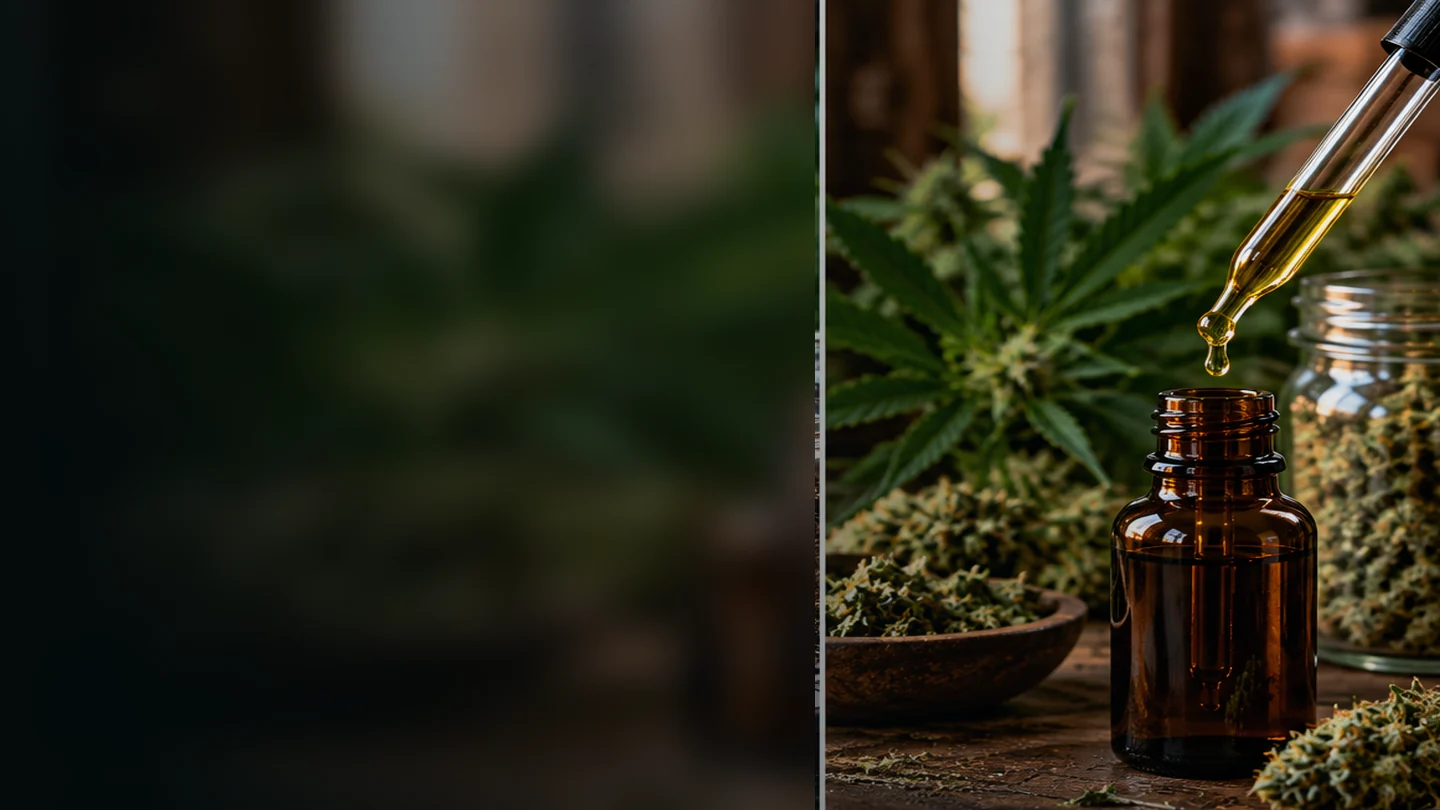
CANNABIS PREPARATIONS / LIQUID EXTRACTS
A cannabis tincture is a liquid preparation containing extracted cannabinoids, usually dispensed in measured drops or milliliters. Some products contain ethanol; others are oil-based drops labeled as tinctures. Their strength, ingredients, onset and intended route of use can differ significantly.
Alcohol extracts and oil-based drops are not the same thing
Alcohol-based tincture
Ethanol is used as a solvent to extract constituents from cannabis plant material. The alcohol content of finished products varies, and home preparation creates additional handling, potency and contamination uncertainties.
Oil-based cannabis drops
Cannabinoid extract can be diluted in a carrier oil. These are often sold alongside tinctures but do not have the same ingredients or absorption characteristics as alcohol formulations.
Descriptions such as full-spectrum, CBD-rich and THC-rich do not tell you the dose by themselves. For a dedicated look at cannabidiol preparations, see the CBD tincture article and verify any product-specific medical claims against current sources. A trustworthy product should identify its cannabinoids in milligrams and state the bottle volume or concentration. Product testing and local regulations matter.
Understand strength before using a dropper
A reliable comparison uses milligrams of THC or CBD per milliliter, not the number of drops, a teaspoon estimate or a claim about how much plant material was used. Drop sizes vary by dropper and liquid. With a labeled, tested product, the calculation is straightforward:
For example, a tested 30 mL bottle labeled as containing 300 mg THC has an average labeled concentration of 10 mg/mL. This is an arithmetic illustration, not a recommended amount to consume. A homemade batch has no verified concentration without appropriate testing; a guessed extraction yield is not a safe substitute. The THC potency calculator can illustrate estimates, but calculated numbers are not laboratory results.
Fresh cannabis contains cannabinoid acids such as THCA as well as other constituents. Heating can convert THCA into intoxicating THC through decarboxylation, but the degree of conversion and cannabinoid losses vary. It is incorrect to promise a fixed extraction efficiency or a fixed final THC percentage for any home recipe.
How quickly can a cannabis tincture take effect?
It depends on formulation, how the product is used and the individual. Liquid held under the tongue may behave differently from a product swallowed with food. Swallowed cannabis can have delayed, unpredictable effects, sometimes taking 30 minutes to 2 hours to become noticeable and lasting much longer than expected. Do not assume a one-hour wait proves a product has finished taking effect.
Intoxication can impair attention, reaction time and coordination. Do not drive or operate equipment after using intoxicating cannabis. Alcohol, sedatives and certain medications can increase risks; CBD can also interact with medicines. Speak to an appropriate healthcare professional about interactions, especially when using prescriptions.
Safety considerations for homemade tinctures
Alcohol extraction is not a risk-free kitchen task. High-proof ethanol is highly flammable, and evaporation creates ignitable vapors. Do not heat or intentionally evaporate alcohol near flames, pilot lights, sparks or household electrical equipment. Home production can also leave an unknown cannabinoid concentration or contaminants. Local laws governing extraction vary; regulated, independently tested preparations are easier to assess for labeled strength.
Keep all cannabis liquids in clearly labeled, child-resistant containers, secured from children and pets. Never store them in beverage containers. For exposure concerns, contact Poison Help; call emergency services for severe symptoms.
The CDC warns that cannabis edibles and infused liquids can lead to unintentional overconsumption when their effects are delayed or strength is unknown. The FDA also cautions that unapproved cannabinoid products may have inaccurate labels, contamination or drug-interaction risks.
Common tincture questions
- Is a cannabis tincture always alcoholic?
- No. Some products are ethanol-based; others are cannabinoid extracts in carrier oil. Read the ingredients rather than relying on the word “tincture.”
- How many drops make one dose?
- There is no reliable universal drop count. A measured volume and verified milligrams per milliliter are needed to assess labeled strength; individual use decisions depend on product directions and medical considerations.
- Can I determine homemade tincture potency from the weight of flower?
- Only as a rough theoretical estimate. Cannabinoid content, conversion, extraction losses and final volume all introduce uncertainty; a calculation cannot confirm the finished concentration.
- How should tinctures be stored?
- Follow the label for the specific formulation, keep the container tightly sealed and protected from children and pets, and avoid excessive heat and light. Storage requirements depend on ingredients.
Health and labeling information: CDC: Cannabis and poisoning and FDA: Cannabis-derived products. For related food preparations, see cannabis recipes.