
ROOT-ZONE EQUIPMENT / AERATION
Small bubbles. An important job.
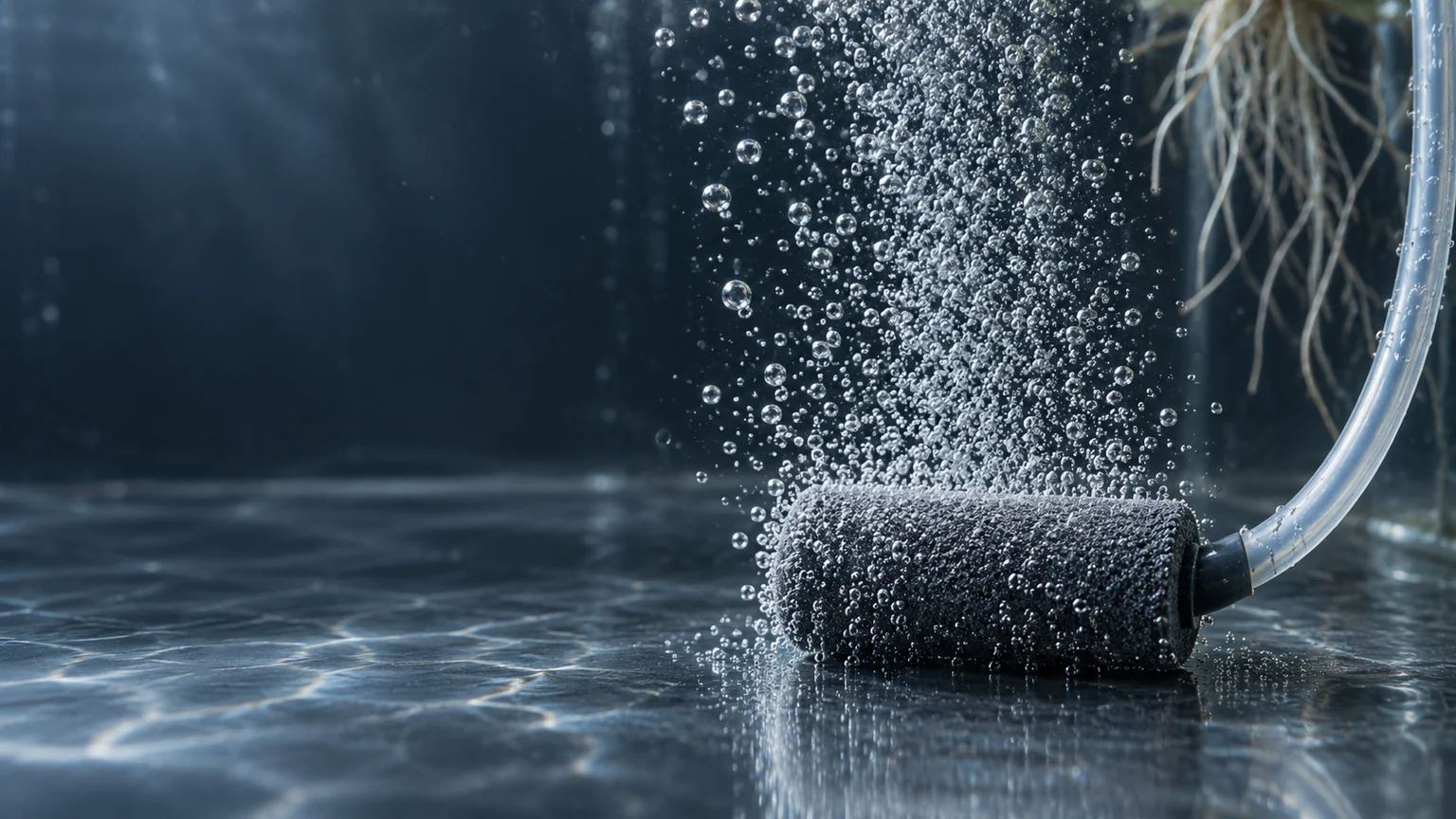
An air stone is a porous diffuser connected to an external air pump. It breaks the incoming air into bubbles that help aerate a hydroponic nutrient solution. The stone does not filter the water or sterilize it.
Start with a compatible pump, an unobstructed airline and a stone that distributes air through the reservoir. A dramatic bubble column alone does not tell you how much oxygen is dissolved in the water.
FOLLOW THE AIR
From pump to root zone
The pump stays dry. Air travels through tubing and a check valve, then leaves the submerged diffuser as bubbles. Bubbles and water movement promote gas exchange; roots still depend on the condition of the whole solution.
- Air pumpDry air supply
- Check valveBackflow protection
- Air stoneSubmerged diffuser
- Root zoneRoots and nutrient solution
MATCH THE SYSTEM
Choose for the pump and reservoir
Connection
Match the stone’s inlet to the airline. A loose connection leaks; a pinched tube restricts air.
Working depth
Check the pump’s operating depth and diffuser requirements. A pump’s maximum flow rating is not a promise of flow through every stone at every depth.
Distribution
Choose a shape and placement that spread air where it is needed. Keep the tubing accessible for inspection and the diffuser clear of dense root tangles.
Maintenance
Consider whether the diffuser can be cleaned as its maker directs or is intended to be replaced. Avoid assuming every material tolerates the same cleaner.
Use the air-pump guide for the equipment that supplies the air. A water pump has a different job: moving liquid.
WORK FROM THE SIMPLEST CHECK
When the bubbles become uneven
- Check the line.Look for a disconnected fitting, kinked tubing or a check valve facing the wrong direction.
- Inspect the diffuser.Debris and buildup can restrict pores. Follow the stone’s cleaning instructions; replace a damaged or persistently blocked unit.
- Check the supply.If every outlet is weak, inspect the pump and its intake as the manual directs. Do not increase restrictions to compensate for a failing pump.
- Recheck the reservoir.Observe root condition, solution temperature and water chemistry. Measure dissolved oxygen when a verified oxygen reading is needed.
Keep electrical equipment dry and protect the installation against back-siphoning. Use a suitable check valve and follow the pump’s placement, drip-loop and maintenance instructions.
QUICK ANSWERS
Before you add another stone
- Does an air stone keep nutrients clean?
- No. Aeration is not sanitation, and it does not prevent every nutrient from precipitating or settling. Manage nutrient preparation, water quality and reservoir hygiene separately.
- Does every hydroponic system need one?
- No. Deep-water systems often use active aeration, but other designs supply oxygen differently. Choose for the root-zone design, rather than adding equipment by default.
- Is more bubbling always better?
- No single bubble pattern proves an oxygen target. Match the equipment to its specifications and assess the solution itself.