
GROW / PLANT ANATOMY
Look at the node. Read the flower, not the silhouette.
Male and female cannabis plants develop distinct reproductive structures where a leaf stalk or branch meets the main stem. Male flowers form pollen-bearing sacs; female flowers develop a small bract around the flower, often with a pair of fine, pale stigmas extending out. A young plant with no clear flowers cannot be sexed reliably from leaf shape, height or a single pointed stipule.
01 / FIELD COMPARISON
Male vs. female preflowers
These simplified botanical illustrations emphasize the structures that matter for identification. Use them alongside the original grow photographs further down.
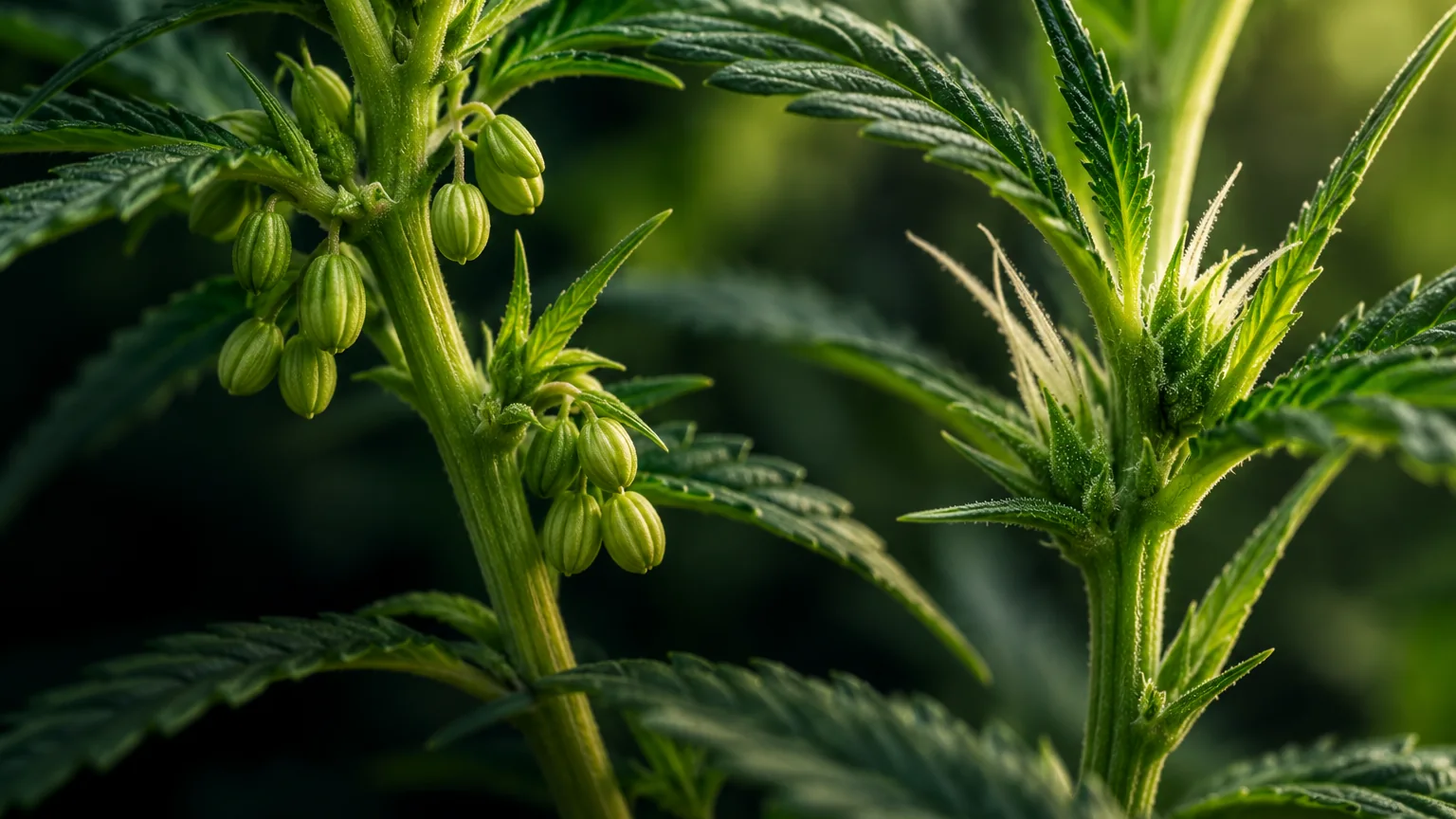
Small, rounded sacs
Young male flowers are often smooth, rounded or oval buds, sometimes on tiny stalks. Clusters become easier to recognize as they develop. A male flower produces pollen; it does not produce cannabis seeds by itself.
Useful clue: Sac-like structures without a pair of threadlike stigmas.
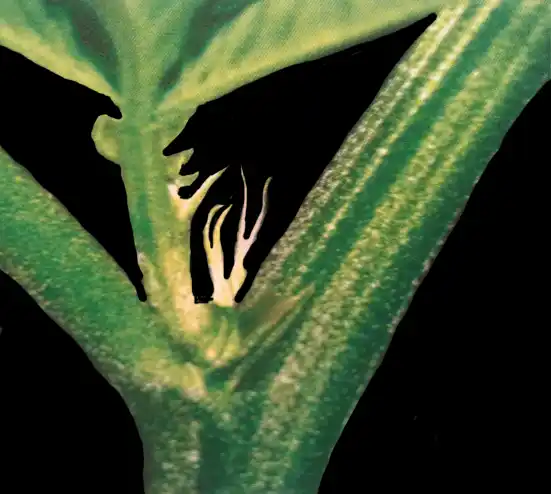
Bract with fine stigmas
A small, tear-shaped floral structure may show two delicate white, cream or sometimes tinted stigmas. Growers often call the visible hairs “pistils”; anatomically, they are the stigma-bearing parts of the female flower.
Useful clue: Fine paired filaments emerging from the floral bract.
The slender pointed green projection at a node is a stipule. Male and female plants can both have stipules. If the only visible feature is a stipule or an undeveloped nub, return later rather than making a confident call.
02 / INSPECTION
Where should you look?
Find a node
Inspect where a leaf stalk or side branch joins the main stem. Check several upper and middle nodes rather than one leaf tip.
Look beside the stipule
Use adequate light and a hand lens if structures are tiny. Distinguish the pointed leaflike stipule from a developing flower.
Confirm the actual flower
Look for rounded sacs or female stigma-bearing flowers; if the structure is inconclusive, document it and inspect again as it develops.
03 / PHOTO REFERENCE
Compare actual male and female plants.
The photographs below belong to The Weed Scene's original flowering-stage documentation. They show more developed sex structures than the earliest possible preflowers.

04 / WHEN + WHY
There is no one-week deadline for showing sex.
Preflowers can appear during vegetative growth once a plant is mature enough; other plants become easier to identify after flowering begins. Sex-expression timing depends on genetics, age and light conditions. The original article's fixed “first two weeks of flowering” and “six to eight weeks old” should not be treated as universal benchmarks.
Why male and female plants matter
Male flowers release pollen. Pollen can fertilize receptive female flowers and result in seeds developing in those flowers. If seedless flower is the goal, growers generally prevent unintended pollen exposure; breeding projects manage pollen intentionally. Consult the plant-sex overview for that broader distinction.
What about mixed flower structures?
Some plants form both staminate and pistillate flowers. Inspect suspected pollen-bearing parts closely; do not infer sex from one ambiguous green growth. If pollination is consequential, maintain separation while identification is confirmed.
For the surrounding growth stages, see Vegetative Growth Stage, Flowering Cannabis and Flowering Week 1. For propagation rather than pollen, explore mother plants and cloning.
CONTINUE EXPLORING
Follow the plant from growth to flowers.
References: Utah State University Extension — Cannabis FAQ; UC Davis — Hemp Reproductive Plant Parts; University of Saskatchewan — Vegetative Growth.