
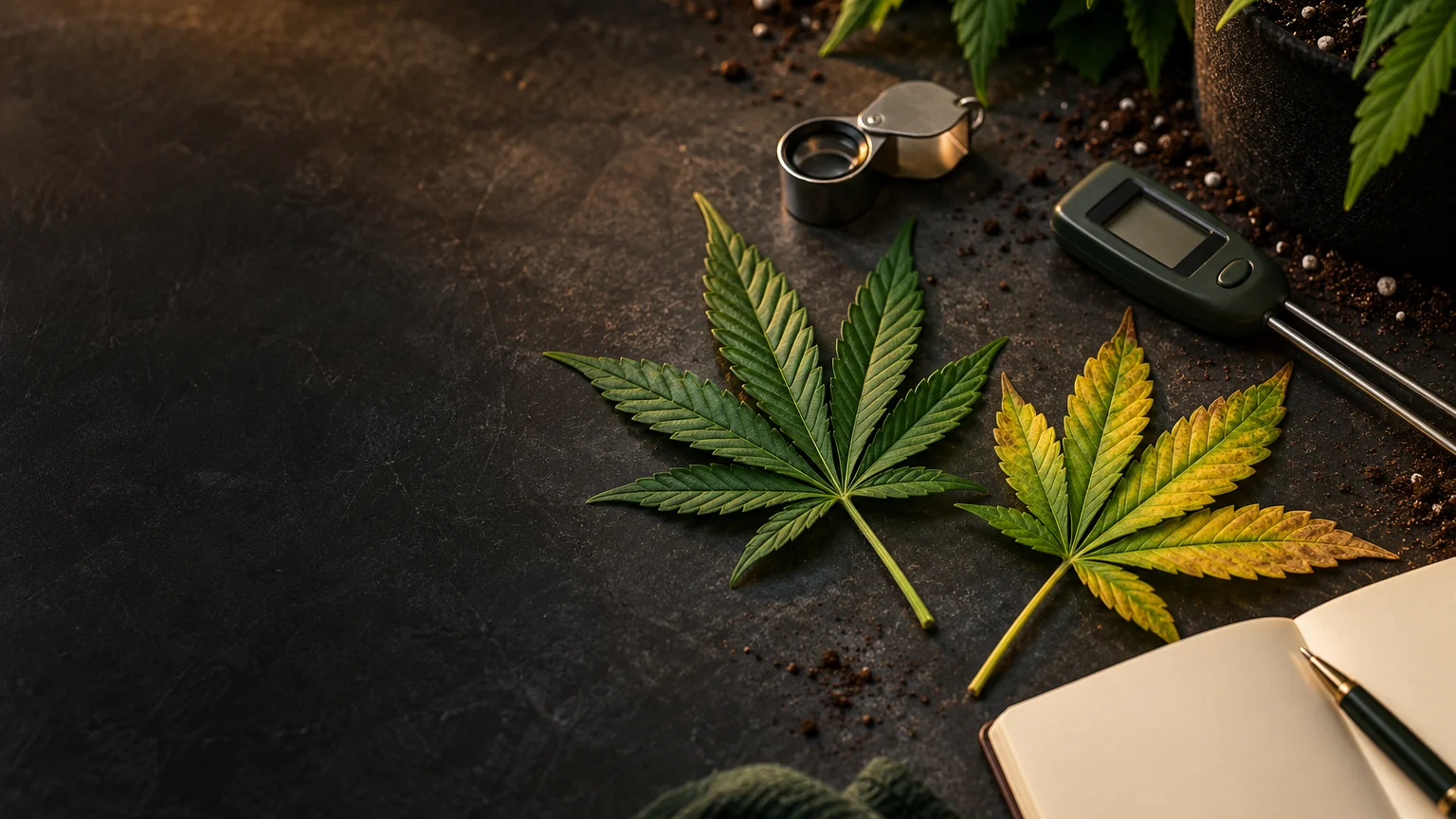
THE PLANT HEALTH WORKBENCH
Turn a symptom
into a better next question.
Start with what you can see and measure. Build a short inspection plan, compare the reference chart, then keep a record of what changes. Similar-looking damage can have different causes.
01 / A GUIDED START
What are you seeing?
Choose the closest observations. This tool organizes your next checks; it does not identify a deficiency, pest or disease.
YOUR NEXT INSPECTION
Start with three observations.
Compare the plant, its root zone and recent changes.
Selections changed. Build the plan again before copying or printing.
- Locate the damage on the whole plant, not just one leaf.
- Check moisture, drainage and actual irrigation delivery.
- Record changes to light, feeding, temperature or sprays.
Do not stack several corrective products or assume that every wilted plant needs water.
02 / READ THE WHOLE PLANT
Location is a clue.
Context gives it meaning.
- New growth & exposed topsCompare developing leaves with mature leaves and shaded areas. Note which tissue was affected first.
- Older leaves & leaf undersidesDescribe the pattern: uniform yellowing, spots, damaged edges or stippling. Look for an organism or its traces.
- Root zone & water deliveryCheck moisture and drainage. Verify that irrigation reaches the intended container; do not infer delivery from a timer setting.
SYMPTOM
The plant’s response
Wilting, yellowing or a browned edge tells you that something changed. It does not, by itself, establish the cause.
SIGN
Something you can inspect
A moving pest, eggs, webbing or visible growth gives you different evidence. Confirm what you are looking at before selecting a treatment.
Diagnostic approach: Colorado State University Extension. The diagram is a map of inspection points, not an identification key.
03 / THE REFERENCE CHART
Six patterns.
Specific things to check.
Use the pattern to choose an inspection, then compare it with the plant’s history. Several causes can occur together.
Drooping or wilted leaves
InspectCheck root-zone moisture, drainage, temperature and whether irrigation is actually reaching the plant.
Next checkCompare soil and container conditions before changing the watering schedule.
AvoidDo not automatically water a container that is already wet.
Yellowing older leaves
InspectRecord which leaves yellowed first, whether the change is uniform, and the recent feeding and irrigation history.
Next checkCompare leaf symptoms and root-zone pH. Nutrient supply and a root system’s ability to take nutrients up are different questions.
AvoidDo not treat yellowing as confirmation that more nitrogen is needed.
Brown tips or leaf margins
InspectCompare the onset with changes to fertilizer mixing, root-zone moisture, heat exposure or sprays.
Next checkReview the mix record and EC measurements, including units and the sampling method.
AvoidDo not add several products to correct an unconfirmed cause.
Pale speckles or webbing
InspectUse a hand lens on leaf undersides. Look for moving mites, eggs and webbing; speckling alone is not an identification.
Next checkUse the spider-mite inspection guide to compare what is present.
AvoidDo not choose a pesticide from leaf damage alone.
Damage nearest the light
InspectCompare exposed tops with shaded leaves. Record fixture height, settings, canopy conditions and recent adjustments.
Next checkUse the lighting checks and the fixture’s operating instructions.
AvoidDo not use distance alone to declare an intensity safe for the plant.
Powdery growth or rotting tissue
InspectDistinguish a surface deposit from growth or tissue breakdown. Record the affected area and how quickly it spreads.
Next checkKeep suspect plants or material separate where practical and seek a qualified assessment.
AvoidDo not consume visibly moldy material or assume that a spray makes it usable.
04 / MAKE THE NEXT LOOK COUNT
Keep a record you can compare.
Wide. Close. Underneath.
Photograph the whole plant, the affected area and both leaf surfaces in neutral light. Include a healthy comparison when possible. Repeat from the same position.
Record the conditions.
Note the medium, irrigation events, actual products and amounts, measurements with units, and the most recent change.
Follow new damage.
Mark when symptoms appeared and whether they are spreading. Previously damaged leaves may remain marked; track new tissue as well.
Photo guidance: University of Minnesota Extension. Contact a laboratory before collecting or sending samples.
Add a date and plant ID, what you found, measurements with units and the next check. Notes stay in this tab until you leave or reload.
A mother plant problem can affect its cuttings. After harvest, use drying-room guidance for a different set of checks.
05 / COMMON QUESTIONS
Before you reach for a correction.
Can a chart tell me exactly which nutrient is missing?
No. Similar symptoms can result from roots, irrigation, pH, pests or nutrient supply. Use the pattern to guide checks; testing may be needed.
Should I flush every unhealthy plant?
No. Extra irrigation can worsen a waterlogged root zone. Check the medium and measurements before making a large change.
How soon should damaged leaves turn green again?
Some damage is permanent. Follow symptom progression and new growth rather than using one old leaf as the only measure of recovery.
Does a pH or EC reading identify the problem?
A reading describes the sample and method used. Record the medium, sampling method, units and meter checks. Compare the reading with the growing system’s guidance; neither number identifies every possible cause.
What if the guided plan does not fit what I see?
Return to the complete chart, document the mismatch and seek an assessment. The workbench covers six observation patterns, not every disorder, and it does not replace a plant diagnostic laboratory.
Sources behind the checks
These references explain general plant-diagnostic methods. They do not establish a diagnosis or a cannabis-specific treatment schedule.
Plant inspection record
The Weed Scene — Plant inspection record
https://theweedscene.com/troubleshooting-chart/

Record the plant, its conditions and what changed before selecting a correction.