
CONFIGURATION BEFORE CAPACITY
The bucket is the container.
The water path defines the system.
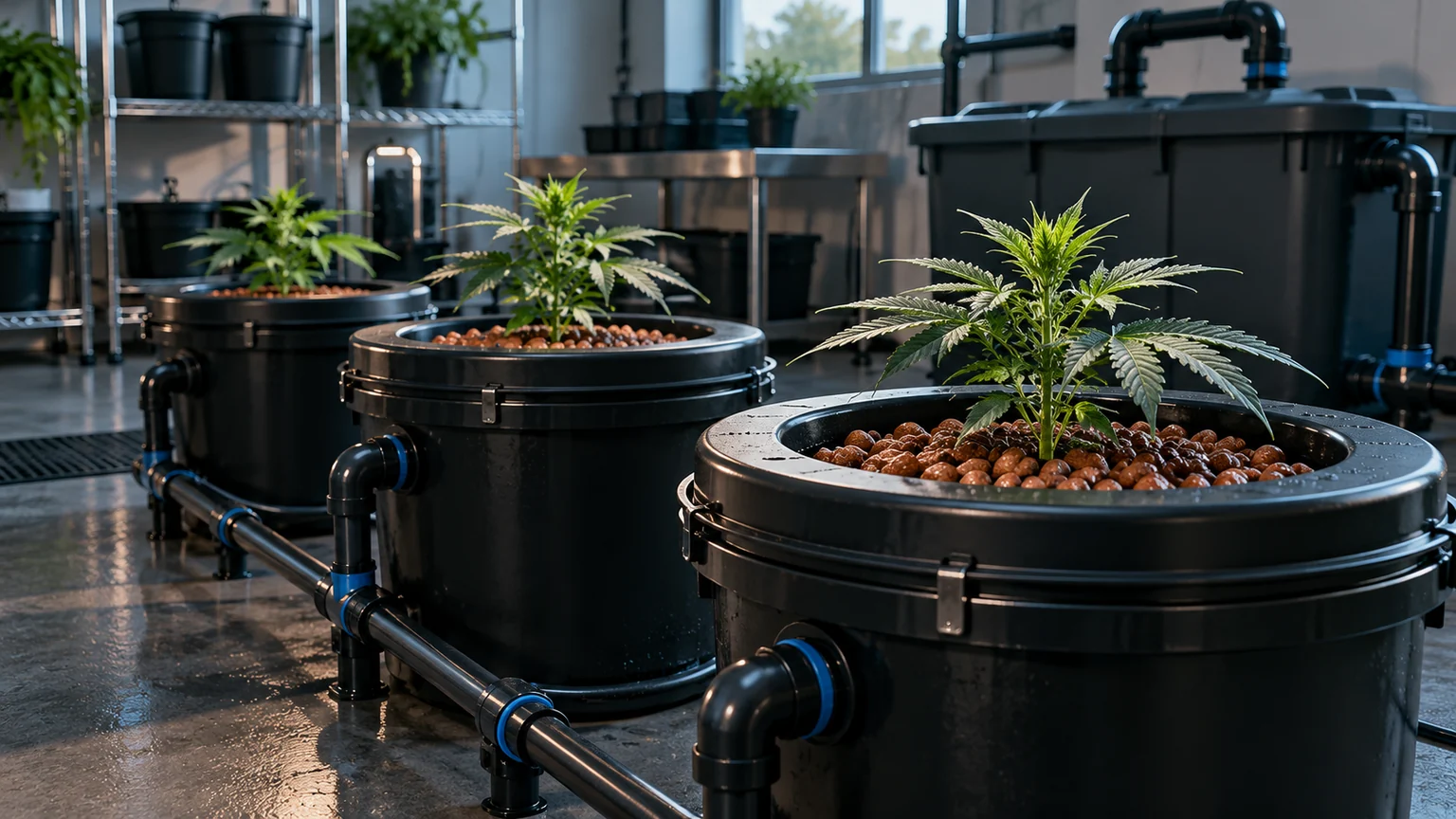
Similar black buckets can hold very different hydroponic systems. Identify how nutrient solution reaches the roots, how it leaves, and how the roots receive oxygen before comparing plant counts or equipment.
This guide compares bucket configurations. For a closer look at one recirculating layout, use the top-feed bucket guide; for flood timing and drainage, see ebb-and-flow grow systems.
01 / THREE DISTINCT ROOT ZONES
What happens inside each bucket?
Top-feed / drip
Solution is delivered above the growing medium. Drainage either returns to a reservoir or goes to a separate collection point.
- Roots
- Supported in a drained medium
- Critical check
- Each feed outlet and return path
Flood-and-drain
Solution enters from below, rises through the medium, then drains between irrigation events. Some bucket systems use a separate control bucket.
- Roots
- Wetted periodically in medium
- Critical check
- Fill level, controller and complete drainage
Deep water culture
Roots hang into aerated nutrient solution. Separate buckets can operate independently; recirculating DWC connects them through a shared water circuit.
- Roots
- Suspended in oxygenated solution
- Critical check
- Aeration, solution level and circulation
02 / FOLLOW THE CIRCUIT
Water movement, at a glance.
These simplified schematics show three principles, not interchangeable plumbing plans. Arrows describe the direction of water or air; actual fittings and levels depend on the equipment.
Top-feed return loop
Controlled flood & drain
Independent DWC
03 / SIZE THE WHOLE SYSTEM
Leave room for water to return.
A bucket count does not specify reservoir capacity. Allow for the solution held in the plant sites, return flow when pumps stop, and enough operating depth for the pump. Test the maximum return with clean water before adding plants.
Keep lids, drain points and connections accessible. Adding buckets increases both the volume to move and the places where leaks or blockages can develop. A connected bucket is no longer freely movable without checking its tubing.
04 / RELIABILITY IS MAINTENANCE
Automation still needs inspection.
- Watch a full cycle.Check the furthest site, the return path and the final water level. Do not judge delivery from pump noise alone.
- Inspect the root zone.Roots, loose medium and deposits can restrict inlets or returns. Leave service access around every bucket.
- Track the solution.Record level, temperature, pH and EC. A shared reservoir connects the plants’ nutrient management and can also spread problems.
- Plan for interruptions.Check timer settings, controller operation and the manufacturer’s power-loss behavior. DWC requires particular attention to loss of aeration.
Bucket systems do not guarantee healthy plants or a larger harvest. Root oxygen, irrigation, nutrition, light and the condition of the equipment all matter. For propagation before transplanting, see cloning cannabis.