
 Video · YouTubeFlowering Week 2Watch the original video on YouTube.Cannabis videos may require YouTube age verification.Watch on YouTube ↗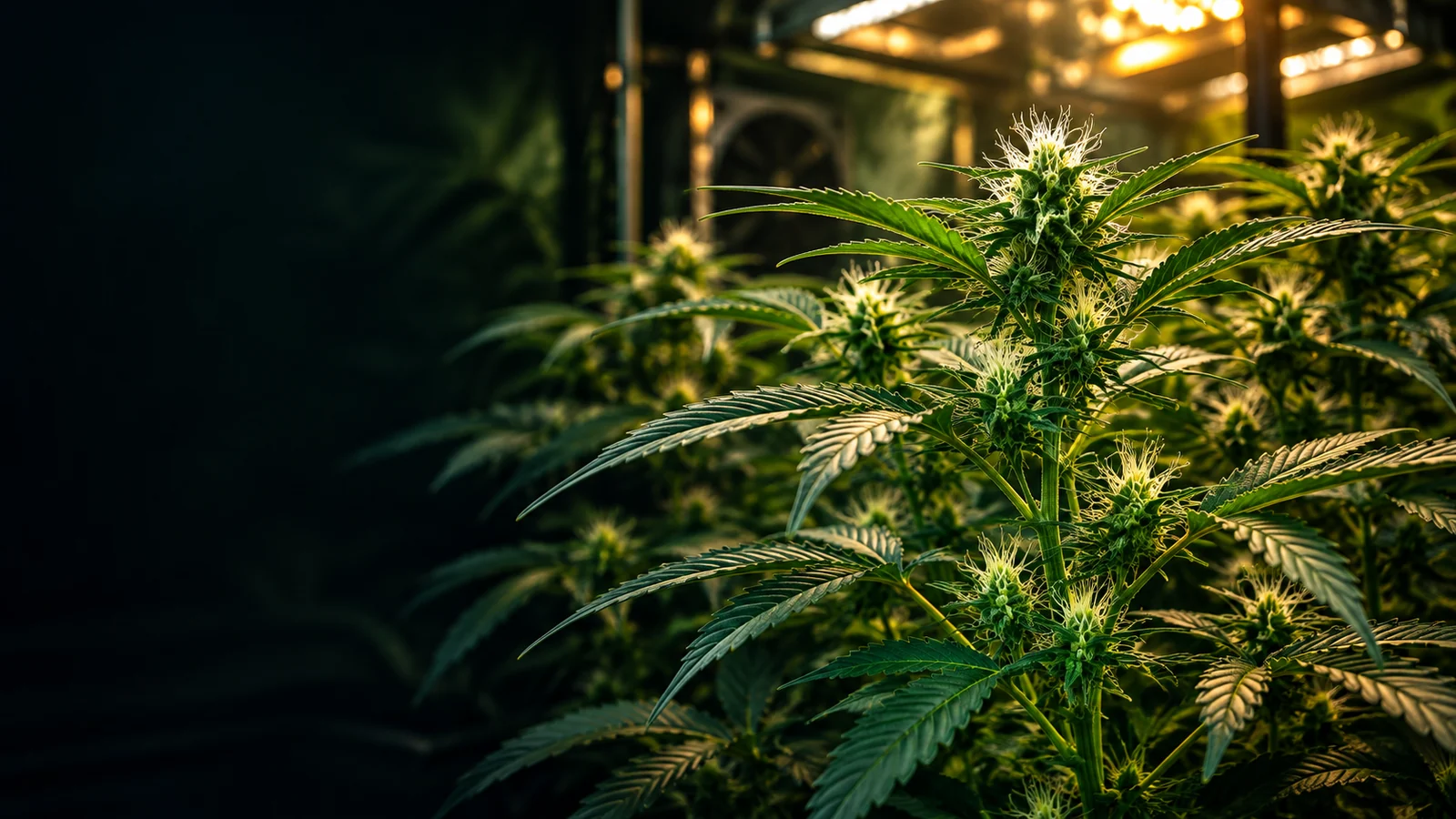
Flowering Week 2
Flowering week two shows early cannabis bud sites: learn how to recognize white pistils, track stretch, maintain the dark period, and distinguish manufacturer feeding charts from actual plant needs.
FLOWERING WEEK 2 / FIELD NOTES
Recognizing early flower sites
The second week often brings clearer pistil clusters and continued branch growth. Inspect developing tips and leaf condition over several days rather than expecting each plant to make the same-size buds by a fixed date.
- 01Pistils
Fresh white stigmas may show at nodes and tips.
- 02Stretch
Some shoots are still lengthening.
- 03Airflow
Keep growing flower sites inspectable.
- 04Consistency
Watch the canopy and root zone together.
IN THIS GROW
The early flowering canopy
At this stage the original grow journal describes newly visible white pistils and the start of bud formation. The first flowers are small; a canopy that looks leafy can still be progressing through its reproductive transition.
During Flowering Week 2 the cannabis plants are just starting to form marijuana buds. The first sign is the white pistols (hairs) that come sprouting out from the inside the leaf structure. The plants are feeding with nutrients designed for flowering marijuana buds.
01 / FLOWER SITES
What white pistils actually indicate
Pistils are part of the female flower's reproductive structures; white hairlike stigmas can appear at branch nodes and growing tips. A few pistils do not mean a mature bud has formed. Look for developing clusters over time and distinguish stigmas from leaf hairs or new shoots. If pollen sacs appear, examine them before making assumptions about the plant.
02 / CANOPY & SPACE
Make room for flowering growth
Many photoperiod plants continue to stretch early in flowering. Compare the distance from plant tops to lights, branch crowding and airflow through the canopy. Growth rate and final height depend on genetics and conditions, so avoid a single universal stretching rule.
03 / THE FLOWERING ROOM
Keep the dark period predictable
For indoor photoperiod plants, a 12-hour uninterrupted dark period is commonly used to maintain flowering. Check timers and accidental light exposure instead of changing the schedule repeatedly. Temperature, ventilation and moisture conditions still influence overall plant health as developing flowers become denser.
04 / FEEDING & ROOTS
Let the plant and medium guide feeding
Extra fertilizer cannot compensate for poor root aeration, unsuitable pH or irrigation problems. Watch foliage and the trend of water uptake before adjusting concentrations. The instrument chart below shows FoxFarm's sixth soil-schedule week, used here as a manufacturer reference—not the exact hydroponic feeding record for this pictured grow.
View the Week 2 feeding referenceGrow stage instrument panel
Flowering week 2
A field-friendly reference that pairs this stage with the current FoxFarm soil schedule. Scale the recipe to your actual watering volume with the calculator instead of doing the math in the grow room.
StageFlowering · 2TWS week-by-week grow path
ScheduleFoxFarm week 6Reference mapping
Light12 hManufacturer schedule
Big Bloom3 tsp/galFoxFarm soil schedule · week 6
Grow Big2 tsp/galFoxFarm soil schedule · week 6
Tiger Bloom1 tsp/galFoxFarm soil schedule · week 6
Cal-Mag1 tsp/galFoxFarm soil schedule · week 6
EC target2.50-2.90Manufacturer schedule
700 PPM1750-2030Manufacturer schedule
Schedule values are a reference to the current FoxFarm soil chart, not a universal prescription for every cultivar, medium or environment.
OBSERVATION CHECKLIST
Four useful signs to compare
Emerging pistils
Fresh white stigmas at developing reproductive sites.
Branch extension
Any ongoing stretch and how it affects available height.
Leaf response
Persistent discoloration or droop rather than momentary changes.
Room airflow
Accessible, inspectable sites without heavily crowded wet pockets.
WHAT COMES NEXT
Into Flowering Week 3
As flower sites become easier to identify, follow the trend rather than promising a particular bud size.
- The dark cycle remains consistent.
- Room for further canopy development is available.
- New flower sites are beginning to cluster.
- Root-zone and leaf health remain steady.
Compare Flowering Week 1, continue to Flowering Week 3, or open the flowering overview. The flowering-cycle video is a separate visual reference.
Reference: University of Saskatchewan — Flowering.