
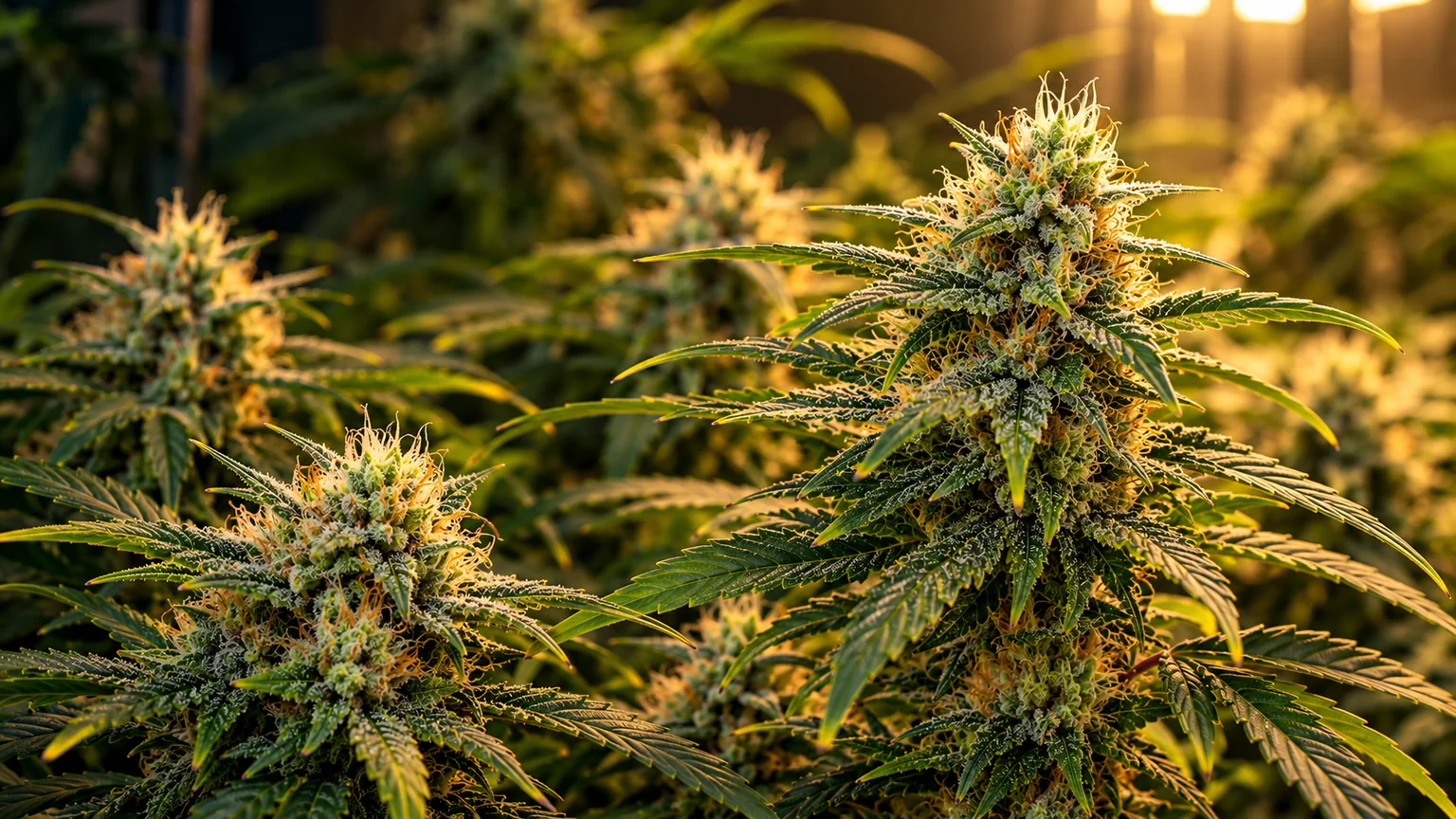
Flowering Week 4
Flowering week four can bring fuller, heavier bud clusters and changing canopy airflow needs: learn to inspect flowers, maintain steady light and root-zone conditions, and prevent moisture problems.
FLOWERING WEEK 4 / FIELD NOTES
Developing flowers and the change from stretch to density
Flower clusters can grow more substantial as stem elongation slows. Examine the actual buds, canopy and environment rather than assuming every cultivar reaches the same phase on the fourth numbered week.
- 01Flower mass
Watch clusters accumulate bracts rather than counting days.
- 02Stretch trend
Check whether the canopy is still gaining height.
- 03Air and moisture
Inspect developing colas for persistent dampness.
- 04Root response
Keep feed and irrigation tied to observations.
IN THIS GROW
A hydroponic flower-stage snapshot
The original grow journal describes indoor hydroponic plants in their fourth flowering week, with a link to the grower's separate feeding program. It is one setup, not a prediction of how every plant should look or when its flowers will mature.
For the original system context, see the site's General Hydroponics feeding notes; the FoxFarm soil chart below is a separate manufacturer reference.

Marijuana plants Flowering Week 4, growing in hydroponics are very amazing at this age. This video shows you what the plants look like and what to expect during this stage of the flowering cycle. You still need to follow the feeding schedule for the nutrients you are using to feed the plants. I am simply just showing a very quick and easy to understand video on my marijuana harvest at the 4 week stage.
Compare the buds rather than the calendar
Female flower bracts continue developing at tips and nodes, and previously separate sites may form longer clusters. Some plants are already moving beyond the stretch; others continue to extend. Photograph or inspect the same few sites over several days to see what is actually changing.
Make space for increasing flower weight
New flower mass may make tall branches lean. Provide gentle support when needed, keep the canopy away from hot fixtures and avoid unnecessary late heavy training. Do not assume that greater bud size, or orange pistils in one area, proves readiness to harvest.
Check for moisture trapped inside dense clusters
As flowers become less open, still humid pockets can favor gray mold. Maintain functioning ventilation and inspect inner buds for brown, gray, mushy or unusually dead tissue. Remove suspect material carefully and do not consume moldy flowers. Check humidity and temperatures in the actual canopy rather than relying only on a room-average reading.
Maintain a stable light cycle and measured feeding
Photoperiod plants usually remain on a stable 12-hour light and 12-hour uninterrupted dark schedule. Feeding depends on medium, water, leaf condition and measured runoff or reservoir trends. The FoxFarm panel below reproduces the manufacturer's soil-schedule week 8; its high EC range is not an automatic target for this hydroponic grow or every cultivar.
View the Week 4 feeding referenceFlowering week 4
A field-friendly reference that pairs this stage with the current FoxFarm soil schedule. Scale the recipe to your actual watering volume with the calculator instead of doing the math in the grow room.
Schedule values are a reference to the current FoxFarm soil chart, not a universal prescription for every cultivar, medium or environment.
OBSERVATION CHECKLIST
Four checks worth repeating
Bud cluster growth
Compare bracts and new flower sites across the same stems.
Branch support
Note leaning branches and maintain safe lamp clearance.
Canopy moisture
Inspect shaded interior flowers and ventilation function.
Root-zone trends
Follow water uptake and persistent leaf responses before changing feed.
NEXT CHAPTER
Into Flowering Week 5
Increasing resin or colored pistils alone do not determine harvest timing. Continue watching the whole flower and the cultivar's actual progression.
- Flower clusters remain accessible for inspection.
- Branches have support where developing flowers add weight.
- Ventilation and the dark period stay dependable.
- Feeding changes are backed by root-zone and plant observations.
Reference: University of Saskatchewan — Flowering.