
LIQUID CONCENTRATES / NUTRIENT SELECTION
Start with a complete base fertilizer. Add bottles only for a reason.
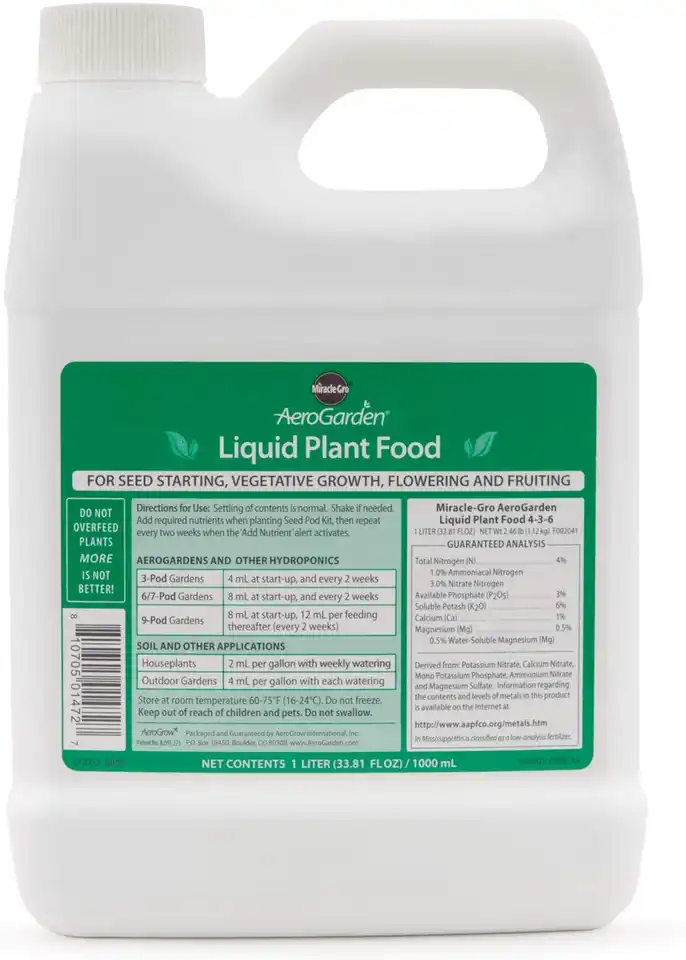
Liquid fertilizers are pre-formulated concentrates. Some products form a complete base feed when used together; others are optional additives. The right choice depends on your water, growing medium and the current product label—not a promised harvest boost.
Use graduated measuring equipment and verify whether the label uses gallons or liters.
Add concentrates individually to the appropriate volume of water and mix between components.
Measure the final solution when appropriate; EC alone does not identify which ions are present.
01 / WHICH BOTTLES MATTER?
Know whether a product is a base fertilizer or an additive
One-part and multi-part formulas
A complete fertilizer program aims to deliver all essential nutrients at suitable concentrations. Some concentrated two-part products keep calcium separate from phosphates or sulfates so they do not precipitate in the bottle.
See a multi-part nutrient example →Boosters, enzymes and supplements
An additive is not necessarily a complete fertilizer. Check the guaranteed analysis and whether a claimed benefit has convincing independent evidence before stacking products.
Understand PK booster claims →02 / FROM BOTTLE TO RESERVOIR
A safe, repeatable mixing sequence
Know the volume and source water quality; follow product-specific directions.
Read mL/L versus mL/US gallon carefully. Use a clean, graduated tool.
Stir or circulate between additions. Never pour concentrated A and B components directly together.
Measure pH and EC if appropriate, then observe plants and roots over time.
At high concentration, calcium can react with phosphate or sulfate compounds to form insoluble deposits. Commercial formulas may therefore split incompatible components into separate bottles. The University of Florida's greenhouse nutrient guidance describes this chemical compatibility problem.
University of Florida IFAS nutrient guidance ↗03 / CHECK THE FORMULA
Five things to verify before purchasing
For more on what electrical conductivity readings mean, see EC in irrigation water. For the same essential nutrients supplied as soluble powders, compare dry nutrients.