
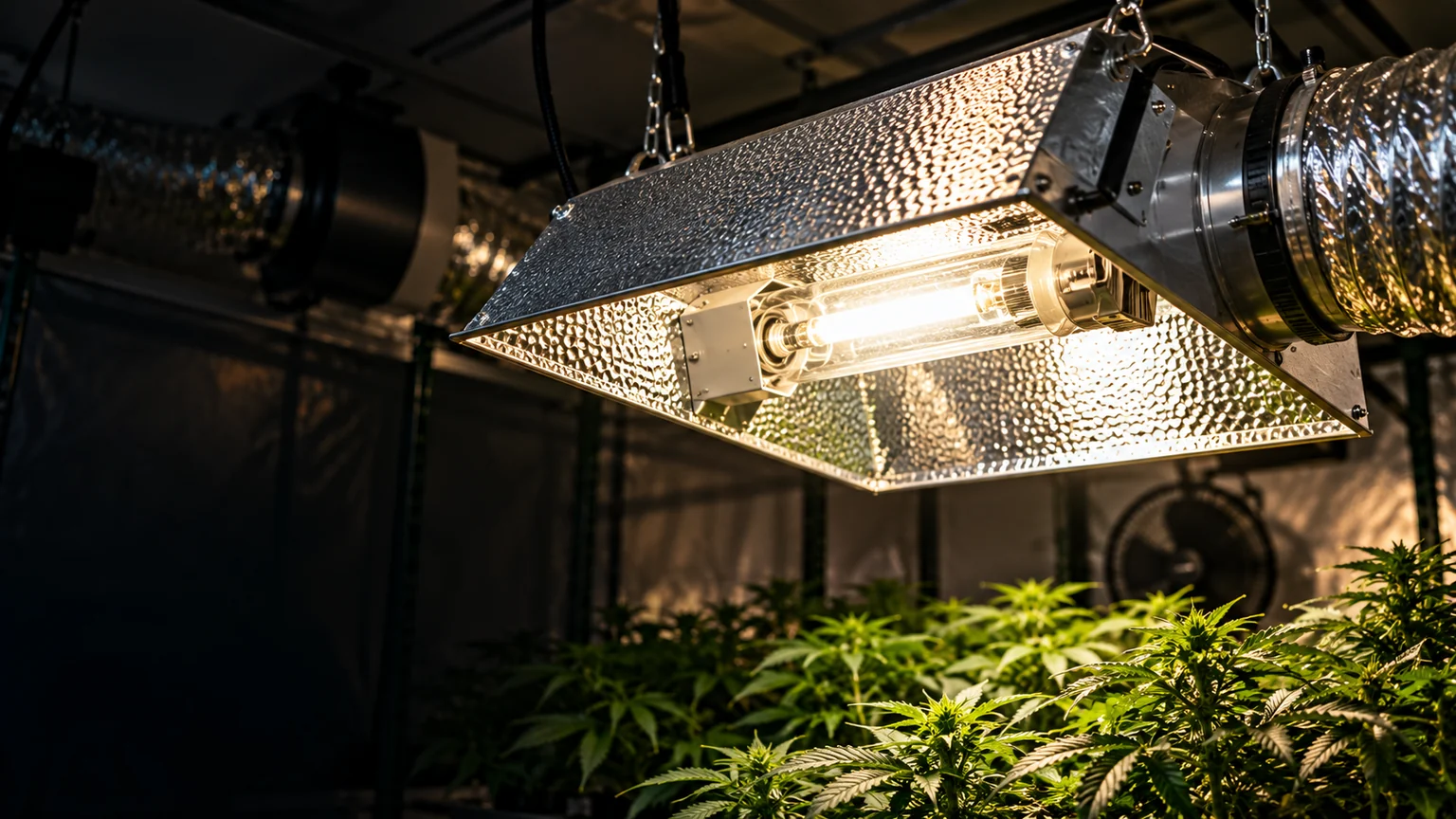
Shape the light. Not just the fixture.
A reflector helps determine where light reaches the canopy, where it falls short, and how much radiant heat the fixture brings into the room. The right shape depends on lamp geometry, growing area, clearance and ventilation—not a promise of more yield on a product box.
Four reflector designs, four different tradeoffs
Old HID systems commonly use open wings, air-cooled hoods or large parabolic reflectors. Integrated LED fixtures distribute light differently and generally do not need an interchangeable HID-style hood. The measured light pattern—not the marketing name—decides whether a fixture fits the canopy.
Open-wing hoods
Simple lamp access and wide distribution. Heat from the exposed lamp is released directly into the room; glare and edge spill depend on shape and mounting height.
Best question: how even are the edges?Air-cooled hoods
Enclosed glass and duct connections can carry some lamp heat away. Glass, duct restrictions and dirty lenses can affect delivered light; cooling is not free.
Best question: does the tested map include the glass?Parabolic reflectors
Larger shells can spread light over a broad footprint when matched with the approved lamp position. They still need headroom, secure attachment and measured coverage.
Best question: can the room support the dimensions?Integrated LED optics
Current LED fixtures may use board geometry, bars and lenses to shape the pattern rather than a separate HID reflector. Compare fixture-level PPFD maps and true input wattage.
Best question: how uniform is light at the plant surface?Important distinction: A reflector is not a substitute for a matched ballast, approved socket or safe enclosure. Never assume MH, HPS and ceramic MH lamps are interchangeable. See the metal halide equipment guide for lamp and ballast fundamentals.
The same lamp can illuminate two very different canopies
Reflector curvature, lamp position and hanging distance affect how light spreads across the growing surface. A high reading directly beneath a fixture can hide weak edges. A manufacturer's PPFD grid—measured at the stated height and footprint—is more useful than a claimed coverage area without test conditions.
Seven things to verify before a reflector goes overhead
- Approved lamp and socket: the connector, wattage, enclosure and lamp type must match the fixture's documentation.
- Reflector dimensions: confirm headroom, canopy footprint, door clearance and space for duct connections.
- Independent mounting: use structurally rated supports and correctly rated hangers; do not support fixture weight with a power cord.
- Enclosure and guard: comply with any lamp restrictions on open versus enclosed operation and use approved protective glass where required.
- Thermal clearance: follow manufacturer instructions for distances from combustible material, foliage and ventilation hardware.
- Electrical condition: reject damaged cords, improvised adapters, burned sockets and signs of moisture or overheating.
- Serviceability: check access for cleaning, lamp replacement, duct inspection and safe disconnection before maintenance.
Use listed equipment according to its manufacturer instructions. High-intensity discharge lamps can be hot, pressurized and contain mercury; disconnect power, let them cool, and follow local recycling requirements. Electrical modifications belong with a qualified electrician.
An air-cooled hood moves heat. It does not eliminate it.
A sealed glass hood connected to the right ducting and fan may remove part of a discharge lamp's heat from the growing space. Fan resistance, duct bends, dirty glass and room airflow still matter. The fixture's electrical energy eventually becomes heat somewhere; cooling changes where it goes.
Dust, glass and hanging height
Reflector grime, glass films and changes in canopy height can all change light delivery. Clean and inspect only after disconnecting power and allowing equipment to cool, following the manufacturer's process.
For room-wide estimates, use the grow room builder. For lamp running costs, use the lighting electricity calculator.
Recognizing traditional reflector hardware
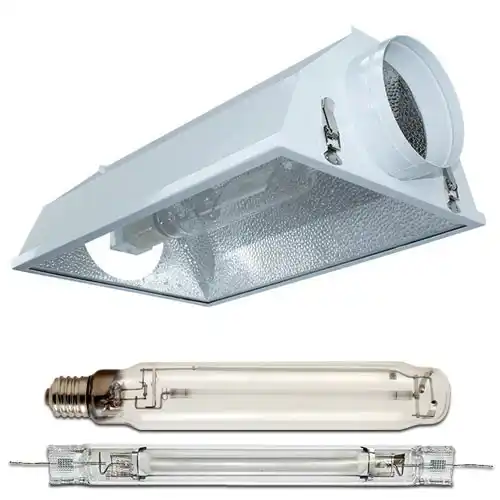
This photograph shows the reflector hardware associated with this guide. Older fixtures can still be informative for identifying hood geometry, sockets and cooling connections, but their original model descriptions and listed prices are not evidence of current availability.
When considering secondhand HID equipment, locate the exact manufacturer label and manual before using it.