
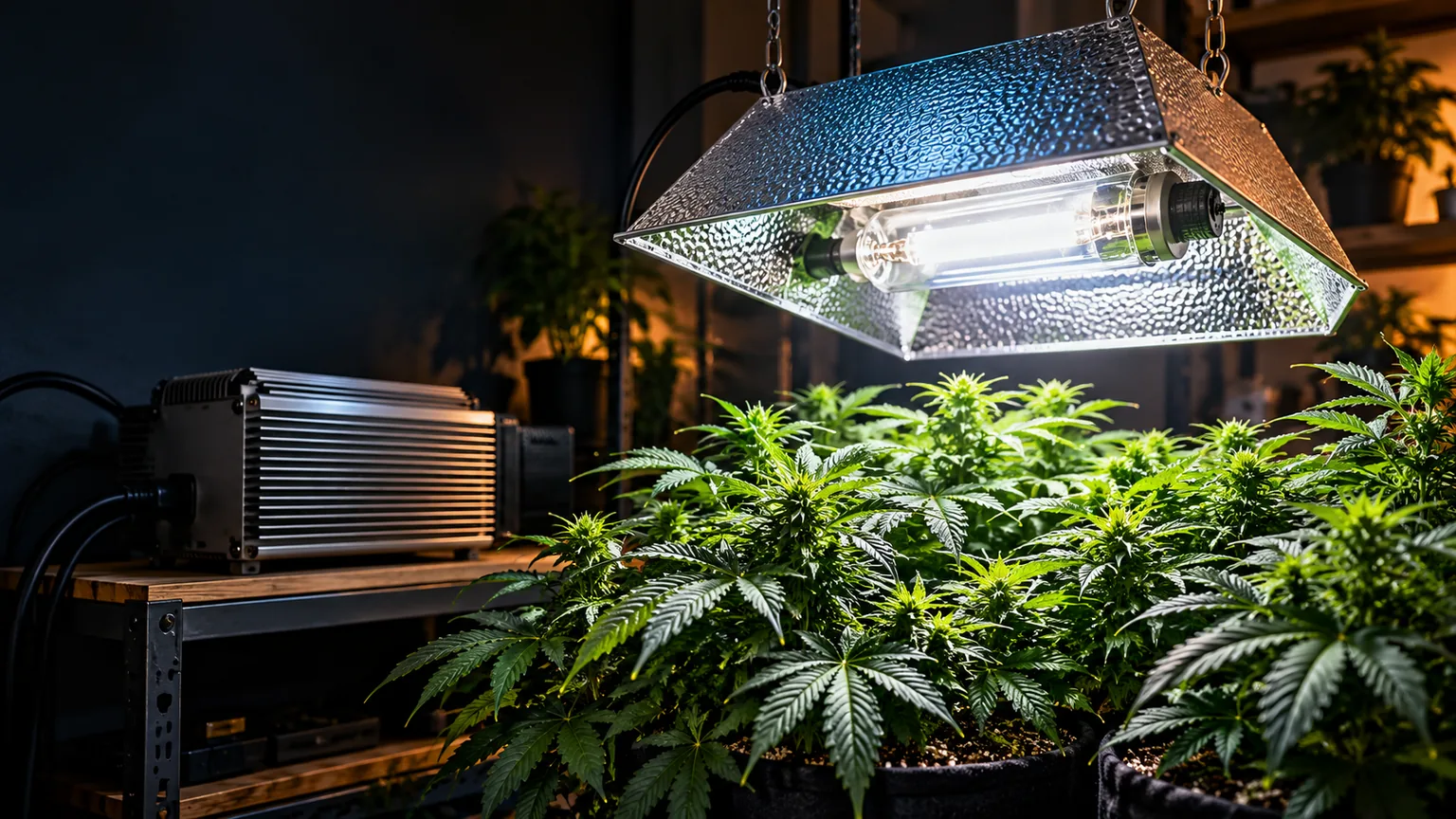
A small reflector does not mean a small electrical load.
Compact metal halide fixtures combine a high-intensity discharge lamp with a tight reflector and a matched ballast. The footprint may be smaller than a traditional hood, but bulb temperature, clearance, circuit load and ventilation remain serious considerations. Start with the entire system—not just the wattage printed on a bulb.
250W, 400W or 1000W: what actually changes?
Wattage describes the lamp's nominal power, not the light received at the edges of your canopy. A compact hood changes the beam shape; ballast losses increase wall power. Fixture coverage and safe distance must come from the actual lamp, reflector and manufacturer measurements.
Lower nominal lamp load than 400W or 1000W systems, but still needs a compatible ballast, secure mounting and clearance from nearby material.
Check the measured wall draw and the reflector's light map. A higher wattage cannot guarantee even coverage or an acceptable canopy temperature.
Requires serious consideration of electrical capacity, air conditioning and the physical space available. It is rarely the starting point for a compact room.
MH vs. CMH: Conventional quartz metal halide (MH) and ceramic metal halide (CMH) use different lamp constructions. They are not interchangeable simply because they have similar wattages or bases. Always match the approved lamp, socket and ballast designation.
Four parts. One safe, matched assembly.
The ballast starts and regulates the arc. The lamp produces intense light and heat. The reflector determines distribution, while the enclosure and suspension help prevent a dangerous installation. The canopy is where usable light should be measured.
Check the label before you buy the light.
Many old listings advertise a “universal” ballast or simply name a lamp's wattage. Neither establishes compatibility. Ask for the actual model number, installation manual and approved lamp codes; do not wire mismatched HID parts together.
Verify conventional MH versus ceramic MH, ballast operating specification, rated wattage, socket and input voltage.
Follow manufacturer instructions for mounting, lamp shielding, fixture orientation and clearances from combustible surfaces.
Prefer a PPFD map with tested height and area. A single center reading can disguise a weak edge or intense hotspot.
Inspect electrical listings, cord integrity, enclosure, corrosion, replacement lamps and parts. Don't improvise repairs on damaged equipment.
Electrical and lamp safety: HID lamps operate at high temperature and can contain mercury. Turn power off and allow full cooling before servicing; use the manufacturer’s lamp and disposal guidance. The USDA engineering handbook explains HID ballasts and lamp compatibility.
Calculate power at the wall—not on the box.
A 400W lamp may draw more than 400W when ballast losses are included. Suppose a complete fixture measures 430W, runs 18 hours daily, and operates for 30 days:
That is an illustrative energy calculation, not the measured consumption of a specific product; fans and cooling add more. For your actual rate and schedule, use the grow-light electricity calculator or the grow room builder.
Would a modern LED be the better purchase?
For a new setup, often yes. Efficient horticultural LEDs can deliver more usable photosynthetic photons per joule and reduce radiant heat compared with many conventional HID systems. Compare independent efficacy, PPFD maps, warranty and complete cost—not marketing wattage equivalence.
Compare LED grow lightsRecognizing a previous-generation fixture
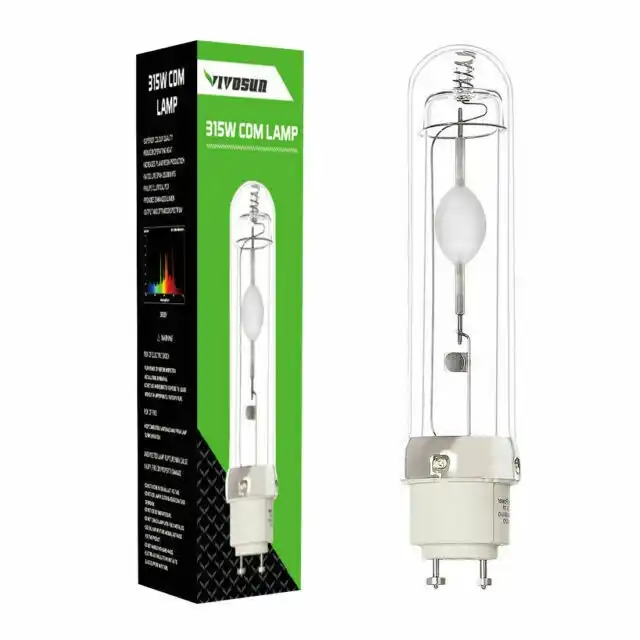
The original equipment photograph documents a previous generation of compact metal halide hardware. It can help identify the form factor, but it is not a reliable guide to current specifications, available replacement parts or buying prices.
For a broader explanation of metal halide lighting and its use alongside vegetative growth, compare the main technology guide instead of relying on old product listings.