
TRAYS / FLOOD TABLES / DRAINAGE
Start with what the tray needs to hold—and how the water leaves it.
A shallow propagation flat, a runoff catch tray and a flood-and-drain table can look similar, but they are not interchangeable. Before purchasing, check the usable inside dimensions, depth, drain fittings, support beneath the tray and how the return water reaches the reservoir.
Leave space for the pot footprint, bulkheads, plant access and plumbing.
Confirm every fill and drain connection works at real operating water levels.
Wet media, water and containers can outweigh an empty tray by a wide margin.
01 / THREE COMMON USES
Choose the tray type for the job.
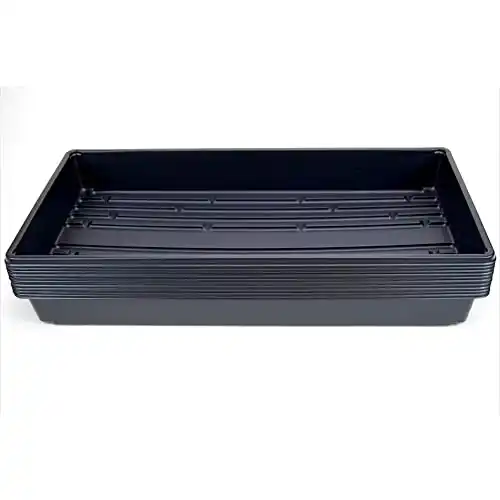
10 × 20 nursery flat
Compact trays can catch water under propagation plugs, seedlings or clones. Solid and perforated inserts serve different roles; a shallow solid tray does not become a flood table just because it has no holes.
Verify compatibility with inserts or humidity domes by the actual product dimensions.
Catch and collection tray
Supports potted plants and manages occasional drain-to-waste runoff. Select a washable material and sufficient depth without assuming the tray can support the pots without framing below.
Decide where overflow or spilled water can safely go.
Hydroponic flood table
Purpose-built flood tables use fill/drain fittings, an overflow and a reservoir. Channels or a patterned floor can improve return drainage, although fitting height and tray level still matter.
Plan a complete flood, shutdown and emptying cycle before adding plants.
02 / PHYSICAL DIMENSIONS
Size the tray, reservoir and stand as one system.
Check both measurements
Outside rims and drain fittings consume space. A tent marked 2 × 4 feet does not guarantee that every nominal 2 × 4 flood table fits inside it. Verify the manufacturer's outside dimensions and physical door clearance.
A full tray is heavy
One U.S. gallon of water weighs about 8.34 lb. Support for the full working water load, wet medium and plants must come from a properly rated bench, not an unsupported plastic rim.
A simple rectangular estimate is 24 × 48 × 1 ÷ 231 ≈ 5.0 U.S. gallons, or about 42 lb of water. Real trays have channels, tapered walls, pots and displacement; use actual measured fill volume to determine usable reservoir capacity.
Check that the reservoir can supply the intended flood volume and hold the returned volume without overflowing. Test those levels before putting nutrient solution or expensive equipment into service.
03 / EBB & FLOW
Water must return when the pump stops.
An ebb-and-flow system floods the tray periodically. When the pump turns off, gravity returns the solution to a lower reservoir; the medium drains and air re-enters the root zone. Flood timing depends on substrate, root development, water demand and the actual system—not a universal timer setting.
Match the bulkhead, gasket, standpipe and tubing to the manufacturer's tray design. The overflow must limit water depth and route it safely back.
Check where water stands after draining. Uneven supports, raised fittings or blocked channels can leave stagnant pockets.
Test pump shutoff, blocked returns, loss of power and the highest possible reservoir level in a controlled environment before use.
Change timing based on the medium's drying behavior and plant response, not an arbitrary number of floods per day.
Oregon State University's peer-reviewed hydroponics guide emphasizes full wetting, drainage and timing according to the medium and plant, rather than one fixed schedule.
Read OSU Extension's ebb-and-flow guide ↗04 / SPECIFICATIONS TO VERIFY
Compare actual trays—not old storefront prices.
Use these manufacturer listings as examples of different product purposes. Confirm current dimensions, fittings, material and availability with a seller before purchasing.
Before installing the table, check water-pump capacity at actual lift, hydroponic system design and reservoir aeration. Keep drains accessible for cleaning and inspect them between crops.