

At a glance
Brush a thin layer of miso-maple glaze over the salmon. Roast at 425°F (220°C) until the thickest part reaches 145°F (63°C), then add the citrus-scallion dressing to each plated fillet.
Miso Salmon with Citrus-Scallion Dressing
Prep 15 min · Roast 15 min · Total 30 min · Yield 4 fillets
Ingredients & directions
Maple-miso salmon with orange, lime and scallions
Ingredients
Salmon and glaze
Citrus-scallion dressing
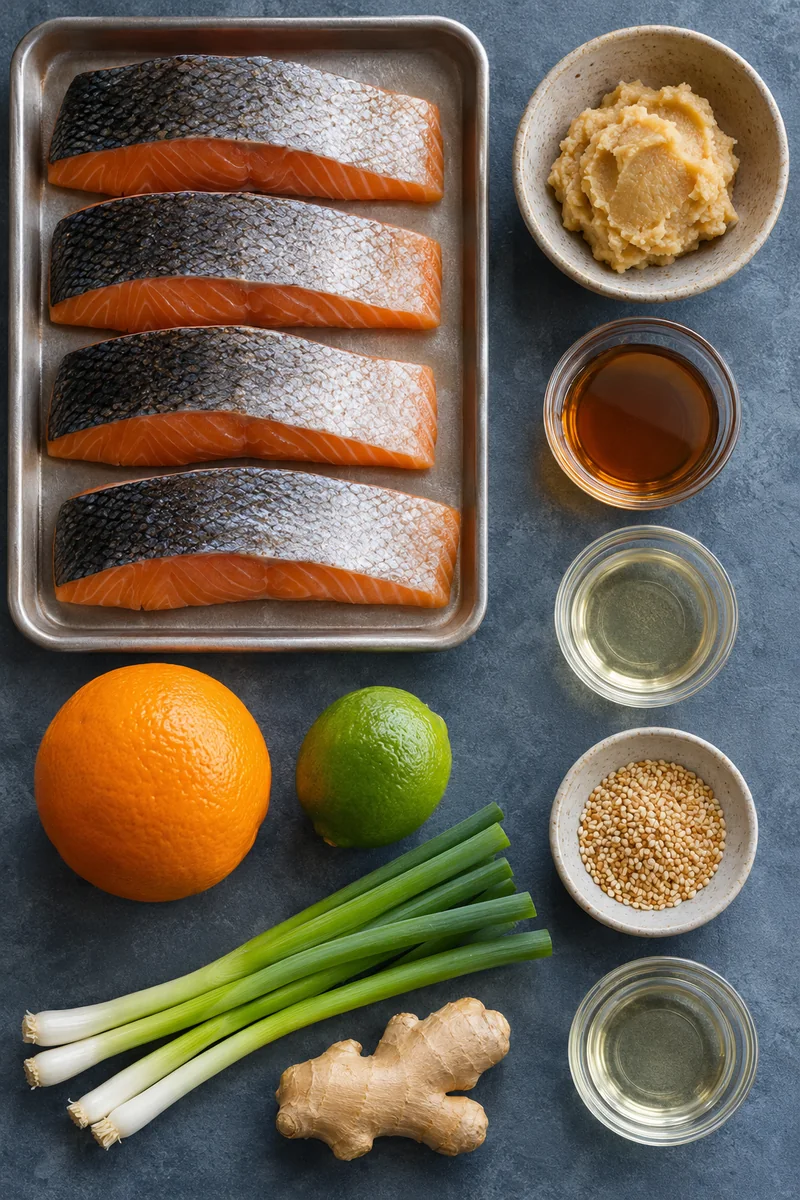
Use a 13 × 18-inch rimmed sheet pan, parchment rated for 425°F, a pastry brush, a small whisk, four small cups, a wide spatula and an instant-read thermometer. For even cooking, choose pieces of similar thickness. Thaw frozen salmon in the refrigerator before using it.
Directions
-
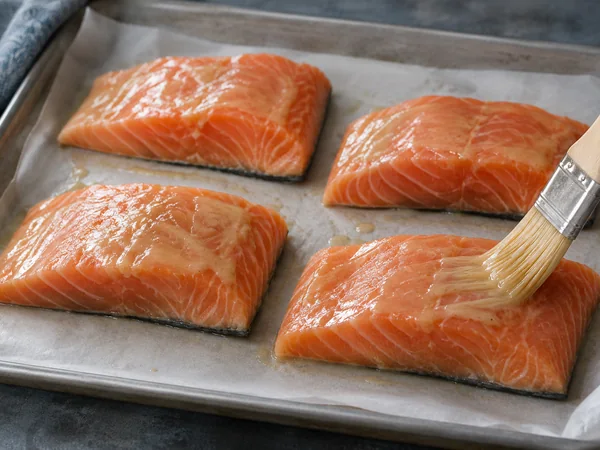
Brush on a thin miso glaze
Heat the oven to 425°F (220°C) with a rack in the middle. Line the pan with parchment and brush four spots with the 1 teaspoon plain oil. Pat the salmon dry, check for pin bones and space the pieces skin-side down on the oiled spots. Whisk the miso, maple syrup and vinegar, adding water a teaspoon at a time only if needed to make it brushable. Coat the tops thinly. Once the brush touches the raw fish, discard any remaining glaze in the bowl. Wash your hands, brush and work surface.
-
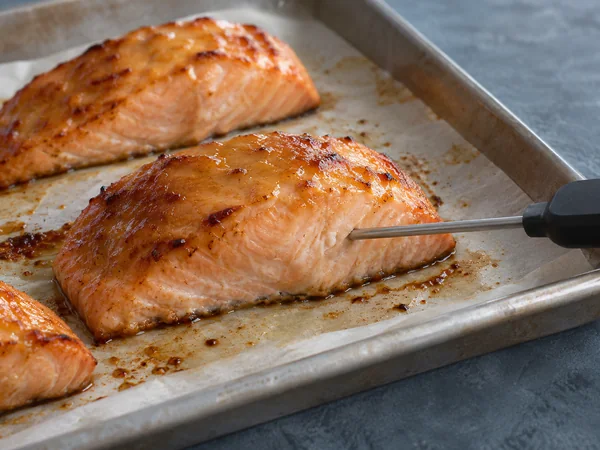
Roast to 145°F
Roast for about 9 to 15 minutes, depending on the thickness. Start checking at 8 minutes. Slide an instant-read thermometer in from the side so the tip reaches the center of the thickest part without touching the pan. The salmon is ready at 145°F (63°C). Look for opaque flesh that separates into flakes with gentle pressure. If the glaze darkens too quickly, loosely tent the pan with foil until the fish is done.
-
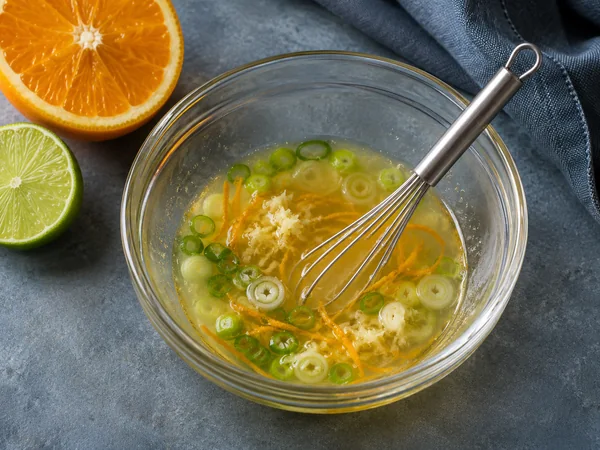
Mix the citrus and scallions
While the fish roasts, whisk the orange zest, orange juice, lime juice, scallions and ginger in a clean bowl. Divide the mixture among four small cups. Give it a few minutes for the citrus to soften the bite of the scallions.
-
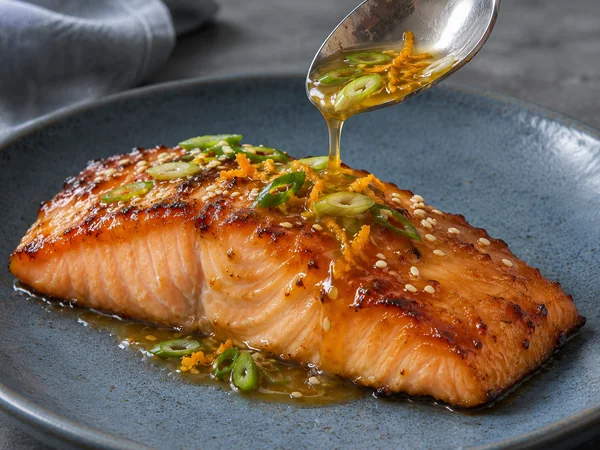
Dress each fillet at the table
Use a wide spatula to move a fillet to each plate. For a plain portion, whisk 1 teaspoon (5 mL) plain oil into its cup of dressing. For an infused portion, measure the labeled oil first and top up with plain oil to 1 teaspoon total. Spoon the dressing over that plate and divide the sesame seeds among all four fillets. Identify any infused plate before serving.
Storage Refrigerate plain salmon in a shallow container within 2 hours (1 hour above 90°F/32°C), at 40°F (4°C) or colder. Use within 3 days. Reheat to 165°F (74°C) if serving warm. Chill the plain dressing separately and use within 2 days. Dress the salmon just before serving.
Serving with THC Use only a labeled oral product for consenting adults of legal age where permitted. Health Canada suggests choosing 2.5 mg THC or less if you are new to edibles. Effects can take up to 4 hours to fully develop. Avoid taking more during that time. Do not drive or operate machinery after using cannabis. Label infused food, keep it apart from plain food, and lock it away from children and pets.
Kitchen notes
Keep the glaze glossy and the fish tender
If the glaze browns too fast
Use a thinner coat next time. Miso and maple can darken before a thick fillet is ready. Tent with foil and use the thermometer to judge the center.
If your portions vary in thickness
Check the narrowest fillet first and lift each piece off the pan as it reaches 145°F (63°C). Return the thicker ones to the oven.
Keep the dressing balanced
Each plate gets 1 teaspoon total dressing oil. If your measured infused oil would exceed that, use plain oil for the plate.
Make it without cannabis
Use plain neutral oil in each cup of dressing. The miso glaze stays the same. This dish contains fish, soy and sesame.
Use the product label
Estimate THC in a portion
Enter the infused oil you measured for one fillet. Leave the plain oil used for the pan and the dressing top-up out of the estimate. Use the same unit for the label amount and the amount used.
The estimate is for what you add to one serving. Product variation and any finish left on the spoon can change the amount consumed.
THC in one portion = label THC (mg) × amount used ÷ label amount.
For example, a hypothetical label of 10 mg THC per 20 mL and a measured 2 mL give 10 × 2 ÷ 20 = 1 mg THC added. Enter the values from your own product.
Serve it plain if you cannot verify the label or measure the amount in the label’s units.